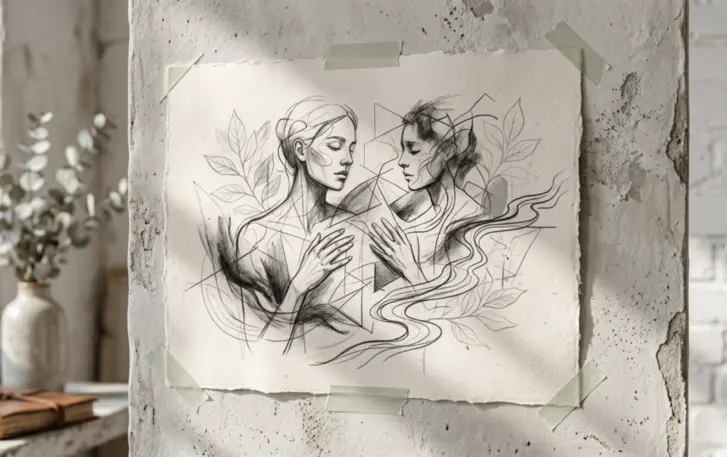
My Best Friend Died and She Keeps Hugging Me in Sleep

You felt it.
Not the memory of it. Not the brain reconstructing what it used to feel like from stored information, assembling the sensation from its components the way memory assembles images. The actual thing. The specific weight of her arms, the particular way she held, the quality of her warmth and the warmth of her specifically — not warmth in general, her warmth, the warmth that belonged to her and no one else.
You woke up and she wasn’t there. The room was ordinary and she was gone and the grief was already present before you had finished understanding what you had just lost again. But something stayed in the body that didn’t dissolve immediately with the dream. Something that had the quality of having been held.
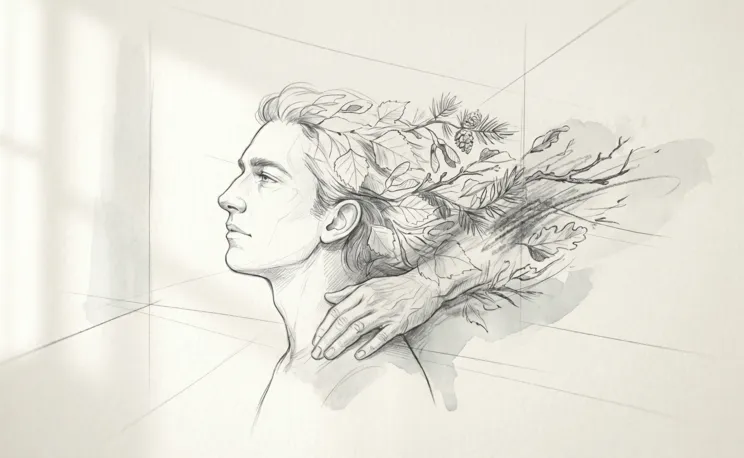
This is the specific territory of the hug dream — the grief dream that operates not through image or narrative but through touch. Through the most primary form of contact the nervous system knows. Through the body’s own language for love, which is older than thought and older than language and which the brain, in sleep, can run at full resolution in a way that waking memory cannot.
The body remembered her. Not abstractly. Specifically. In the way that only the body can remember — without interpretation, without narrative, without the filtering that conscious memory applies to stored sensation. Pure somatic recall of the specific quality of being held by her.
That is what happened last night. And it is one of the most significant things the grief processing system can produce.
Quick Answer
- The hug dream is the nervous system accessing somatic memory — the body’s stored record of physical contact — at full resolution during REM sleep, without the filtering that conscious memory applies to sensation
- The feeling is not a memory of the hug; it is the hug, generated from the complete somatic archive of what her physical presence felt like; the body doesn’t distinguish between the stored sensation and the current one the way the mind does
- The specific quality of her — not generic warmth but her warmth, not any arms but her arms — is accurate retrieval from the archive; the brain stored the somatic signature of her presence with precision proportional to how significant the contact was
- The hug that keeps returning is the processing system returning to the deepest available form of connection — the one that predates language, predates explicit memory, predates the part of the nervous system that knows she is gone
- Waking from this dream produces a specific form of grief: the grief of a body that was held and is no longer held; physical in a way that other grief dreams aren’t; located in the chest and arms and skin before it becomes located in the mind
- The best friend relationship carries a specific quality in the somatic archive — different from family, different from romantic partners — the chosen closeness, the physical ease of a friendship that had moved past self-consciousness into something more fundamental
- When the hug keeps coming back, the body is telling you something specific: that the physical dimension of this relationship — the actual, literal closeness — is what the processing is currently working on
- The hug dream is among the most complete retrievals the grief system produces because it accesses the archive at the level below language, where the presence of someone is stored not as memory but as felt sense
- The specific grief after this dream — the body grief, the arms grief, the skin grief — is real physiological information about what was lost; it deserves to be treated as the specific form of loss it is, not generalised into the broader grief of absence
- The fact that she keeps coming back in this form — not just as image or voice but as touch — is the processing system telling you that what was most real about her was the specific quality of her physical presence; the body knew this before the mind did
Common Scenarios
- She holds you the way she always held you — the specific embrace that belonged to her friendship — and the specificity is what makes the waking hard. Because the specificity is accurate. The brain didn’t generate a generic hug and assign it her name. It retrieved the somatic signature of her specific contact — the particular way she held, the specific quality of what it felt like to be in her arms — from the body’s own archive. The specificity is not your mind being cruel with precision. It is the archive being accurate.
- She holds you and says nothing and the nothing is fine — the hug is the whole thing. Because with her, sometimes it was. The friendship had reached the level where physical presence didn’t need verbal content to carry meaning. The dream is running the relationship at the layer where it was most itself — the layer of simply being in the same space, in contact, without anything that needed to be said.
- She holds you and you can feel her laughing — not hear it, feel it, the specific way laughter moved through her body into yours when you were close enough. The body stored this. Not as a description of the sensation but as the sensation itself. The nervous system encoded the specific kinesthetic quality of her laugh at a level of detail that conscious memory rarely surfaces. The dream accessed it directly.
- She holds you and you know, somewhere underneath the dream, that she is dead — and the holding happens anyway. This is one of the most specific versions. Both truths are present simultaneously: she is gone, and she is here, holding you. The dream is not resolving the contradiction. It is holding both at once — the knowledge of the loss and the reality of the contact — because both are real and both are part of what the processing is working with.
- She holds you and you hold her back and the holding has a quality of knowing it is ending even while it’s happening. The dream is running the grief inside the contact — the specific experience of holding someone while knowing the holding is finite. Whether this refers to the actual ending or to the ending of the dream, the quality is the same: love and loss present simultaneously, the holding and the grief of holding inseparable.
- You feel her before you see her — the arms around you before the dream has assembled a visual. Because the somatic archive activates before the visual one. Touch is older in the nervous system than sight. The body receiving her presence before the eyes arrive is the brain accessing the archive at the layer it reaches first. The body knew she was there before the dream told you.
What Your Body Already Knows
- Woke up and the feeling was in the arms before it was anywhere else → because the somatic memory was accessed directly; the body was still carrying the residue of the contact; this is real neural data, not imagination metabolising itself
- The warmth stayed for a few minutes after waking → because the nervous system doesn’t instantly clear somatic states generated during REM; the body was still in the physiological condition the dream produced; what you felt was real sensation persisting past the dream’s boundary
- Felt, briefly, not alone → because the archive is real and the contact accessed from it is real in the way that matters; the not-alone is accurate to what the dream delivered; it belongs to you even after she is gone
- The grief that arrived on waking was physical first — in the chest, in the arms — before it became thought → because somatic grief is faster than cognitive grief; the body registered the loss of contact before the mind assembled the narrative of it; this ordering is accurate to how the nervous system works
- Something in the body is still reaching → because the somatic archive contains the orientation toward her — the body’s learned posture of being close to her — and the dream activated that orientation; the reaching is the body still running the archived response
What the Body Stores That Memory Doesn’t
There are two kinds of knowing a person.
The first is the kind that lives in explicit memory — the stories, the conversations, the particular moments that formed into narrative over time. The photographs-in-the-mind version of a friendship. The things you could describe to someone who didn’t know her.
The second is the kind that lives in the body. The felt sense of her physical presence — the specific weight of her, the quality of her warmth, the particular way contact with her felt against your skin and in your arms and through the entire somatic architecture that learned, over the duration of the friendship, exactly what she felt like. This knowing was never verbal. It was never narrative. It is stored not as memory but as muscle memory, as somatic imprint, as the body’s own record of contact that predates and outlasts the mind’s version of the same relationship.
The brain has two corresponding systems for storing significant people. The explicit memory system stores the narrative, the images, the events. The implicit somatic system stores the felt sense — the kinesthetic, proprioceptive, tactile record of physical proximity. These systems can operate independently. You can access one without the other.
During REM sleep, the somatic system becomes directly accessible at a level it rarely reaches during waking. The prefrontal cortex — which usually mediates between the somatic archive and conscious experience, translating body sensation into something the cognitive mind can process — goes significantly offline. What remains is more direct access to the body’s own records. The somatic archive of someone significant can be run at full resolution — not as a description of what they felt like, but as the felt sense itself.
This is what happened when she held you last night. The brain didn’t construct the hug from memory. It ran the somatic archive of her physical presence directly — bypassing the translation process that produces the attenuated, mediated version that waking memory provides. What you felt was the body’s own record of her, accessed at the resolution it was recorded at.
You become aware of being held before you are fully inside the dream. The arms are there — the specific quality of them, the weight and the warmth, hers specifically and not anyone else’s — before the dream has assembled a setting, before there is a where or a when. Your body is already in the response it learned to have in her presence: a particular settling, a specific relaxation in the chest and shoulders, the easing of a body that recognises the contact and adjusts to it. The dream builds itself around the hug rather than building the hug into a scene. The contact is first. Everything else is context.
The Friend Who Was Also Body
Best friends are different from family in the somatic archive. Different from romantic partners too, though perhaps less obviously.
Family contact is early — encoded before self-consciousness, before the body learned to manage its presentation to the world. Romantic contact carries its own specific charge and its own specific encoding. But best friend contact has a quality that belongs to chosen closeness — to a physical ease that developed alongside the friendship itself, that wasn’t there at the beginning and grew as the trust grew, that eventually reached the level where the body stopped performing anything and simply was.
The hug from a best friend at a certain stage of friendship is the hug of someone your body trusts completely. Not the managed contact of social proximity. Not the charged contact of romantic attachment. The specific ease of a body that is close to another body it has chosen, that has chosen it back, that has been close enough long enough that the closeness became its own form of home.
The nervous system encoded this. It has the full somatic record of what that specific ease felt like. The dream is accessing that record because the record is real and because the processing system has reached the layer where the physical dimension of the friendship is what needs to be worked on.
The grief that belongs to this — the body grief, the skin grief, the specific grief of a body that learned what her contact felt like and now doesn’t have access to it except in sleep — is a real and specific form of loss. It deserves its own name. It is not the same as the general grief of missing her. It is the grief of a somatic archive that is full and that has nowhere to go with what it holds.
Why the dead visit our dreams — the complete guide to visitation dreams maps what the brain accesses when it retrieves the internal presence of someone who has died — and why the body’s archive runs alongside and sometimes deeper than the mind’s.
Why She Keeps Coming Back This Way
The hug recurs because the somatic processing isn’t finished.
Not because the grief is stuck. Not because the attachment is unhealthy. Because the body’s archive of her physical presence is substantial — encoded across years of real physical contact — and the processing of that archive through grief requires returning to it repeatedly, the way the processing of any significant stored material requires repetition.
Each time the dream retrieves the somatic archive of her presence, something in the processing completes a layer of the work. The body runs the held sensation, the felt sense of her contact, and the nervous system integrates it — adds it to the accounting of what was real and what is now carried internally rather than externally available.
The hug that keeps coming back is the body’s version of what the mind does with memories: returning to them, running them, integrating them, updating the archive to reflect the current reality while preserving the record of what was true when it was true.
The recurrence will diminish not when the love diminishes but when the body’s processing of the physical dimension of the relationship reaches completion. The archive of her somatic presence will remain — the body doesn’t delete what it encoded. What changes is the urgency with which the processing system returns to it. When the body has done its work, the dreams become less frequent. When they come, they carry a different quality — less like grief and more like contact. Less like processing and more like visiting.
The dream where they’re alive again and you forget they’re gone works with the temporal layer of grief dreams — what the brain is doing when it accesses the pre-death archive directly, and why the most complete retrievals feel more real than memory.
When the Hug Carries Something Unfinished
There is a version of this dream where the holding has a quality of trying to say something that the contact alone can’t carry. Where the hug is complete but underneath it there is something that needed to be said, or done, or acknowledged, that the physical contact is reaching toward but can’t fully deliver.
The last time you saw her. Whether the goodbye was a goodbye. Whether there was a hug then, and whether it was the kind of hug that knew it was the last one or the kind that didn’t. Whether there are things you needed to give her or that she needed to give you that the ending didn’t allow for.
This version of the dream is working on more than the somatic archive. It is working on the relational layer that the physical contact was carrying — the things the hug was always holding that went beyond warmth and closeness into the specific weight of what existed between you.
The body remembers the hug. The processing is asking whether the hug was enough. Whether what needed to pass between you made it through the contact, or whether some of it is still in the archive waiting for somewhere to go.
If the hug in the dream feels complete — if the contact is full and settled and simply itself — the body is reporting that the physical dimension of the relationship was sufficient. What existed between you reached you. The processing is integrating it.
If the hug feels like it is holding something additional — something that is almost but not quite arriving — the dream is the body’s way of continuing to reach toward what the contact was trying to carry. This version requires patience. The body is working on something specific. It will complete when it completes.
Dream Timestamp
- Early dreams carry the sharpest physical residue on waking → the somatic charge is highest in the acute phase; the body was closest to her in terms of recent physical memory; the contrast between the archive and the absence is most acute
- The hug dreams often arrive before other forms of visitation → because somatic memory is accessed at a different layer than explicit memory; the body sometimes finds its way to her before the narrative processing does
- Recur when something activates the body’s memory of her outside of sleep → a smell, a texture, a piece of music that the body associates with her presence; the activation during waking carries into sleep and the dream retrieves what was activated
- The quality of the holding shifts over time → early dreams tend toward urgency or grief; later dreams tend toward settledness; the shift is the processing completing layers of the work
- Arrive with particular frequency around dates the body encoded with her presence → the somatic archive keeps its own calendar; the body registered the anniversaries before the conscious mind arrived at them
The Sentence This Dream Was Trying to Say
“The body remembers her in a language older than grief — the specific weight of her, the particular warmth of her, the felt sense of what it meant to be held by someone who chose you and was chosen back. That language is still fluent. The dream is where it gets to speak.”
The Morning After
The warmth is still there. Not memory-warmth — the actual residue of the somatic state the dream produced. Before it metabolises completely into the ordinary temperature of the morning, notice it. Let it be what it is: the body reporting accurately on what it holds, what it stored, what it has been carrying since the last time she held you in a way that was real.
The body remembered her last night more completely than the mind usually allows itself to. The felt sense of her — the specific quality of her physical presence, encoded across years of real contact — was accessed at the resolution it was stored at, without the attenuation that conscious memory applies to somatic records.
Before the day begins, one question in the body rather than the mind: what specific quality of her physical presence — not what she looked like, but what being close to her felt like — does the body still carry?
Not as a description. As a sensation. The body knows this. It demonstrated last night that it knows. The morning after is when that knowing is closest to the surface, before the ordinary management of the day covers it again.
She held you. The body held that. The holding is yours now.
FAQ
What does it mean when you dream about a deceased friend hugging you? It means the brain accessed the somatic archive of her physical presence — the body’s stored record of what contact with her felt like — at full resolution during REM sleep. The hug is not a memory of contact. It is the nervous system running the somatic imprint of her presence directly, at the level where it was encoded, without the filtering that conscious memory applies to physical sensation. The body stored her. The dream gave you access to what the body holds.
Why does the hug in the dream feel so real? Because it is real, in the sense that matters most: it is generated from the actual somatic archive of her physical presence. The brain doesn’t construct the sensation from a description of what hugging her felt like. It runs the body’s own record — the kinesthetic, tactile, proprioceptive encoding of her specific contact — directly. The realness is not your imagination working at its most vivid. It is the body’s archive running at full resolution.
Why does my best friend keep hugging me in dreams after she died? Because the somatic processing of the physical dimension of the relationship is ongoing. The body stored years of her physical presence — the specific quality of her contact, the particular felt sense of her closeness — and that archive requires the same processing work that the relational and emotional dimensions of the loss require. The hug recurs because the body is working through what it holds, returning to the somatic archive the way the mind returns to memories, integrating what was real into the ongoing structure of carrying her forward.
Is it normal to physically feel the hug after waking up? Completely normal, and significant. The somatic state generated during REM sleep doesn’t clear instantaneously at waking. The warmth, the chest-feeling, the specific physical residue of the dream contact persists for minutes after consciousness returns. This is real physiological data — the nervous system still in the state the dream produced — not the imagination extending the dream into waking. What you felt was real. It belonged to the archive. The body was reporting accurately.
What does it mean if the hug felt like she was saying goodbye? The dream was accessing the layer of the relationship where the physical contact carried the weight of the ending — either the literal goodbye, if the last time you saw her included a hug, or the body’s own sense of the finality of the loss. The goodbye in the hug is the processing working on what the contact was always carrying between you — the love, the chosen closeness, and ultimately the grief of something that was real and is now carried differently. A goodbye hug in the dream is not the brain manufacturing false closure. It is the somatic archive completing something that the ending left open.
Why do I feel more grief after this dream than after other grief dreams? Because the hug accessed the deepest somatic archive of her presence — the body’s own record of what it meant to be physically close to her — and the waking removed that access. The grief of waking from a hug dream is body grief: the grief of a nervous system that was held and is no longer held, that has the complete somatic memory of contact and no current access to the contact itself. This form of grief is specific and physical in a way that other grief dreams don’t always produce. It belongs to the body’s own language of loss.
Next Stages
Why the Dead Visit Our Dreams — The Complete Guide to Visitation Dreams — the full architecture of what the brain accesses when it retrieves the internal presence of someone who has died — including the somatic layer the body stores independently of explicit memory
Someone I Lost Appeared in My Dream and It Felt Too Real to Ignore — when the visit arrives in full and the realness is the thing that can’t be dismissed — what the brain was actually accessing and why it feels different from ordinary dreams
The Dream Where They’re Alive Again and You Forget They’re Gone — the companion dream — when the whole pre-death archive runs without the knowledge of the loss overlaid on it, and the waking is its own form of the grief
They Died But in the Dream They Didn’t Know It — the asymmetry version — when you know and they don’t, and the watching of someone you love live without knowing is its own specific grief
My Dad Came to Me in a Dream After He Died — if the person appearing was a parent rather than a friend — the particular depth of paternal presence and the things that go unsaid
I Lost Someone and They Never Appear in My Dreams — Why? — the opposite experience — when the somatic archive is withheld entirely and the body waits for a contact that hasn’t yet come