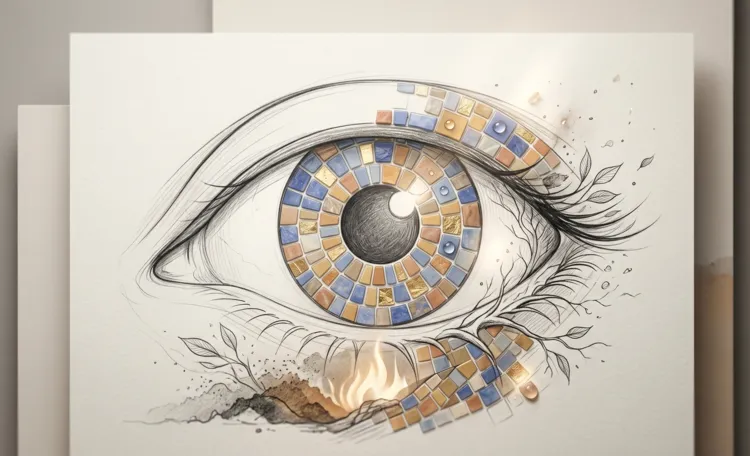
Grief & Visitation

They don’t arrive the way other dreams arrive.
There’s no buildup, no narrative logic, no gradual assembly of scene and circumstance. One moment you’re asleep. The next they’re there — with their specific weight, their particular way of occupying a room, the quality of presence that belongs only to them and that you would recognize anywhere, in any context, even here, even now, even after everything that has happened since.
And then you wake up. And the room is ordinary. And they are not in it.
What stays isn’t the dream. What stays is the feeling of them having been there — specific, physical, too precise to be invented. The nervous system doesn’t generate that level of detail for things that didn’t matter. It generates it for the people who shaped how it learned to be in the world. The people whose presence it encoded so deeply that even their absence carries a weight the body still knows how to recognize.
This is what grief dreams are. Not symbols. Not metaphors. Not the mind processing loss in abstract imagery. The actual internal presence of someone whose external presence ended — surfacing during the one window when the filters that manage daily functioning are offline, when the brain can finally run what it’s been carrying without the conscious mind intercepting it.
The dead visit in sleep because the living aren’t finished with them yet. Not because something is wrong with the grief. Because the relationship doesn’t end when the person does. It transforms. It moves inside. It becomes part of how the nervous system navigates everything that comes after — and it needs, sometimes, to be processed directly. To be felt at full resolution. To be given the space that waking life, with all its forward movement, doesn’t always allow.
Some visits bring peace. Some bring the specific grief of losing them twice — once in life, once at the moment of waking. Some bring the unfinished conversation, the thing that needed to be said, the closing that the circumstances didn’t allow. Some bring nothing but their presence, which is sometimes the only thing that was ever needed.
Here you will not find reassurance that the visits are real, or reassurance that they aren’t. What you will find is the most precise available account of what the brain does when it carries someone it loved — and what it looks like when that carrying finally surfaces into a dream.
The body knows how to grieve. It has been doing it since before you understood what loss meant. This cluster is where that knowledge speaks.