Dreaming About Giving Birth
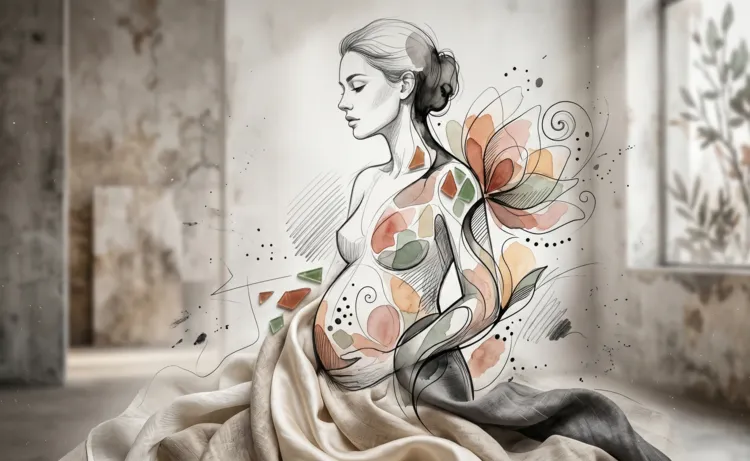
Something left you last night.
Not in the sense of loss — though there is grief in it, and the grief is real and belongs there. In the sense that something which had been entirely internal, entirely private, entirely carried within the specific container of you and only you — crossed a threshold and became something that exists in the world separately from you.
Birth in a dream is not the beginning. It is the end of gestation. It is the specific moment when the thing that was developing inside you — real before it was visible, costly before it was acknowledged, irreversible from the moment it began — finally arrives at the boundary between the internal and the external and crosses it. And whatever is on the other side of that crossing is no longer the same as what was on this side.
You know this from the quality of the dream. Birth dreams don’t feel like beginnings. They feel like thresholds. They carry both the specific terror of something irreversible completing itself and the specific wonder of something that has been held finally being released. They carry, underneath everything else, a quality that is hard to name — the specific feeling of the moment when something stops being only yours.
That feeling is not joy alone. It is not grief alone. It is both, pressed against each other, inseparable, arriving together in the way that only things which are genuinely real arrive.
Whatever was born in your dream last night wasn’t random. The brain selected the most precise available image for a specific threshold you are approaching or crossing in your waking life. Something is completing. Something is about to be seen. Something that has been yours in private is becoming real in the world.
Quick Answer
- Dreaming about giving birth is the brain’s image for a specific threshold — the moment when something that has been developing internally crosses into external existence; not a beginning but the completion of a gestation
- The thing being born in the dream is almost never a literal child — it is whatever in your life has been in private development and is now approaching or crossing the threshold between internal and visible
- The labour in the dream is significant — painful, difficult, requiring effort that the body must produce regardless of readiness — because real threshold crossings cost something; the difficulty is accurate, not dramatic
- The feeling of the dream on waking — whether relief, grief, wonder, or the specific mixture of all three — is the brain’s most direct report on how the nervous system is currently holding the threshold
- If the birth went wrong in the dream, the brain is processing specific anxiety about the transition — what could be lost in the crossing, what the emergence might cost, what cannot be taken back once it is out in the world
- If the birth was easy, the nervous system has already accepted the transition at the deepest level; the ease is not naivety — it is the body reporting its own readiness
- The moment after the birth in the dream — what you felt when you held what had just been born — is often the most specific data the dream delivers; that feeling has an address in your waking life
- The birth dream arrives most often when a creative project, a relationship, a major decision, or a version of the self is approaching the moment of public existence
- If you are pregnant, the birth dream draws from both dimensions simultaneously — the literal body and the nervous system’s processing of the transition; both are real; both deserve to be held
- The grief that sometimes arrives alongside the wonder is accurate; something ends at birth; the period of private carrying, the particular intimacy of something that was only yours, is over
Common Scenarios
- The labour is long and painful and you don’t know if you can do it — and then it completes. The brain is running the full physiological weight of what threshold crossings cost. Not to frighten. To be honest. Real transitions — real moments when something private becomes external and irreversible — are not effortless. The labour in the dream is the accurate registration of what completion requires. The fact that it completes is the other half of the message.
- The birth happens suddenly — faster than expected, before you felt ready. Something is crossing the threshold before the conscious mind had decided it was time. The readiness the conscious mind was waiting for was never going to arrive. The development completed on its own timeline. The suddenness is the brain reporting that the emergence is happening now, regardless of preparation.
- You give birth and look at what you’ve produced and don’t recognise it — or it looks different from what you expected. The thing that emerges is never exactly what gestation imagined. The internal version and the external version are always different. The strangeness of what is born in the dream is the brain processing the specific gap between what you imagined developing and what the development actually produced.
- The birth goes wrong — something happens to the baby, the delivery fails, the thing that was supposed to arrive doesn’t. The brain is processing the specific anxiety of threshold crossings that carry risk — the fear that what is being brought into the world won’t survive the emergence. This version is not a prediction. It is the processing of what it means to put something real into the world where it can be seen, judged, lost.
- You give birth and feel immediate grief alongside the relief. Because something ended at the moment of birth. The period of private carrying — the specific intimacy of something that existed only inside you — is over. The grief is accurate. The thing you carried is no longer only yours.
- The birth is beautiful and you wake up with a specific quality of peace. The nervous system has accepted the transition completely. The thing that is emerging is welcome at the deepest level. The peace is the body reporting that the cost was worth it, in the specific way that the body knows these things before the mind has finished calculating.
What Your Body Already Knows
- Woke up exhausted in a way that felt earned rather than depleting → because the dream ran the full physiological weight of the transition; the nervous system did real work last night; what you’re feeling is the residue of that work
- Felt, briefly, both empty and expansive simultaneously → because birth produces both; the container that was full is now different; the specific quality of having held something and released it lives in the body before it lives in the mind
- Something specific was on the surface of your mind immediately on waking → because the dream had an address; what surfaced is what was crossing the threshold; the mind was already pointed at it
- The grief arrived before the joy, or the joy before the grief, or both at once → because both are accurate responses to the same event; the ordering tells you something about which dimension of the transition your nervous system is currently working on
- Something in the chest settled — a specific quality of something completing → because the dream processed a real completion; the settling is the nervous system updating its record of where things stand
What Birth Actually Is as a Dream Event
Birth is not a beginning. This is the thing that almost every interpretation of birth dreams gets wrong — treating the image as an arrival of something new, a fresh start, an opening.
Birth is a threshold. It is the specific event that completes gestation — the moment when the thing that was inside crosses to outside, when the private becomes visible, when the carried becomes the born. It is simultaneously an ending and a beginning, but the ending comes first: the ending of the period of private development, the ending of the specific relationship between carrier and carried that existed only during gestation, the ending of the version of the self that existed before the thing was brought into the world.
The beginning follows. But the dream is almost always about the threshold itself, not about what comes after.
When the brain generates a birth dream, it is marking a specific moment in a development arc. Something has been in gestation — a project, a relationship, a decision, a transformation, a version of the self. That something has reached the point of emergence. The internal can no longer remain internal. The development is complete enough to exist separately.
What makes birth dreams distinct from all other dreams about change or transition is the irreversibility. Once something is born, it cannot be un-born. It exists in the world now. It can be seen, responded to, loved, criticised, lost. The period of private development — the specific safety of the not-yet-visible — is over.
The brain chooses birth when the transition in your waking life has this quality of irreversibility. Not when you’re considering making something public. When something is crossing the threshold regardless of whether the consideration has completed.
The labour is happening. You didn’t plan to be here, in this specific moment, with this specific urgency — but here you are, inside a body that is doing what it has been building toward doing, that knows what it is doing even when you don’t, that is moving toward completion on its own deep timeline regardless of the conscious mind’s readiness. And there is pain, and there is effort, and there is a specific quality of not being able to stop or pause or negotiate — the thing is crossing, and the crossing requires everything you have. And then: the threshold. And then: the other side.
The Thing That Was Only Yours
Here is the grief inside the birth dream that most people don’t acknowledge directly — because it arrives alongside the wonder, and the wonder is easier to hold.
During gestation, the thing developing inside you belongs to you completely. No one else can see it, access it, respond to it, change it, judge it, take it. It is yours in the most absolute sense available — inside you, unknown to the world, existing in the specific private space that only gestation provides.
Birth ends this.
The moment the thing crosses the threshold, the world has access to it. It can be seen now. It can be responded to. It can be misunderstood, or unsupported, or received differently from how you held it inside. The specific intimacy of the private development — the safety of the not-yet-visible — is over.
This is a real loss. It belongs alongside the wonder. The grief of the birth dream — even when the birth goes beautifully — is the grief of this specific ending. The ending of the period when it was only yours.
Creatives know this feeling acutely — the moment a piece of work leaves the private space and becomes public. The specific vulnerability of it. The way the thing that felt entirely coherent inside the process looks different once it is in the world where other people can see it.
Being Pregnant in a Dream When You’re Not maps the full territory of what gestation feels like from the inside — the private period of development that this dream is completing.
When the Birth Goes Wrong
The dream where the birth goes wrong — where the baby is lost, or the delivery fails, or the thing that was supposed to arrive doesn’t survive the emergence — is the most difficult version of this dream and the one that most deserves careful reading.
It is not a prediction. The brain does not generate birth dreams as previews of future events. It generates them as the most precise available processing of current emotional states.
The birth that goes wrong in the dream is the brain processing the specific anxiety that belongs to all real threshold crossings: the fear that what is being brought into the world won’t survive the emergence. That the transition will cost more than it delivers. That something can happen between the inside and the outside that cannot be corrected.
This anxiety is real and it belongs to the situation. Anything genuinely valuable that is being brought into public existence carries real risk. The thing that goes wrong in the dream is the nervous system running the risk at full resolution — testing the emotional response, processing the specific fear of loss, working through what it would mean if the emergence cost more than it delivered.
The dream that shows you the birth going wrong is not telling you to stop. It is showing you what you are afraid of losing. That knowledge is specific and useful. It tells you what the development means to you. It tells you where the stakes are highest.
After the Birth — What You’re Holding Now
The most specific data the birth dream delivers is often in the moment after — what you felt when you held what had just been born, in the seconds before the dream ended or shifted.
That moment is the nervous system’s most direct communication about the current relationship between you and whatever is crossing the threshold in your waking life.
If what you held felt real and wanted and worth everything the labour cost — the nervous system is reporting readiness for the emergence. The thing is welcome. The transition is accepted at the level below managed ambivalence.
If what you held felt unfamiliar, or smaller than expected, or different from what the pregnancy imagined — the brain is processing the gap between the internal version and the external one. The thing that is born is never exactly what gestation held.
If what you held felt fragile and vulnerable and entirely dependent on how you handled it — the dream is registering the specific responsibility of having brought something into the world. The thing is real now. Its survival in the world depends, in part, on what you do next.
If you couldn’t see what you held, or the dream ended before the holding — the processing is still in progress. The threshold is approaching. The dream will return when the conditions are right.
Dream Timestamp
- Dream arrives when a creative project is approaching completion or public release → the development has reached the stage where emergence is imminent; the private period is ending
- Dream arrives when a major decision has been made and is about to become real → the decision crossed from internal to external; the labour is the brain’s assessment of what the transition costs
- Dream arrives during a relationship transition — a commitment, a disclosure, a deepening → something in the relationship is crossing from private to real in the world
- Dream arrives when a version of the self is about to be visible to others → a career change, a public role, a disclosure — anything that brings an internal truth into external existence
- Dream arrives repeatedly, always approaching but never quite completing → the emergence is close but the nervous system hasn’t found the conditions yet; the recurrence is the system cycling through the approach
The Sentence This Dream Was Trying to Say
“What you have been carrying in private is crossing the threshold. The period of gestation is ending. Whatever is on the other side of the birth is real now — in a new way, the way that requires the world to have access to it. The grief and the wonder are both accurate. Both belong to what is happening.”
The Morning After
Something crossed a threshold last night — or the brain ran the crossing at full resolution, processing what it means.
Before the day begins — before the managed version of your life reinstalls itself and the thing that is emerging goes back to being something you can defer or manage or keep in the private space a little longer — notice what the birth dream left in the body.
The exhaustion, if it’s there. The specific quality of empty-and-expansive. The grief, if it arrived. The wonder, if that came instead. Whatever it is, it is the body’s honest report on where the transition currently stands.
One question before anything else: what is the thing in your waking life that is crossing or about to cross from internal to external — and what specifically are you afraid of losing in that crossing?
Not what you hope the birth produces. What you are afraid of losing in the transition. That fear is the most specific information the dream delivered. It tells you what the carrying meant. It tells you what will be different when the thing is no longer only yours.
The birth is happening. Or it is about to. The dream arrived to make sure you knew.
FAQ
What does it mean to dream about giving birth? The brain is marking a specific threshold — the moment when something that has been in private development crosses into external existence. This is almost never about literal birth unless you are pregnant. It is about whatever in your life is completing its gestation: a creative project, a major decision, a relationship transition, a version of yourself that is about to become visible. Birth in the dream is the crossing from inside to outside — the moment the private becomes real in the world.
What does it mean when giving birth in a dream is painful? It means the transition carries real cost — which all genuine threshold crossings do. The pain is not a sign that something is wrong. It is the accurate registration of what emergence requires. Anything genuinely significant that is being brought into the world requires effort, requires completing the crossing even when completion feels impossible. The pain is proportional to the reality of what is being born.
What does it mean when the birth goes wrong in the dream? The brain is processing the specific anxiety of bringing something real into the world where it can be seen, responded to, or lost. This is not a prediction. It is the nervous system working through the risk that belongs to all genuine threshold crossings. What goes wrong in the dream tells you what you are most afraid of losing in the transition.
Why do I feel sad after a birth dream even though it went well? Because something ends at birth. The period of private carrying — the specific intimacy of something that existed only inside you, that no one else could access or change — is over. The thing is in the world now. The grief is the accurate registration of that ending. Joy and grief are not contradictions in a birth dream. They are the complete emotional content of what birth actually is.
What does it mean if I can’t see the baby in the birth dream? The processing is still in progress. The threshold is approaching but hasn’t fully completed in the nervous system’s accounting. The development exists but the external version hasn’t yet been assembled in the brain’s representation. The dream will return when the conditions are right.
Does this dream mean something I’m working on is ready to be released? Often yes — but more precisely: the emergence is happening or imminent, regardless of whether readiness has been achieved. The dream arrives not when you decide to release something but when the development has reached completion on its own timeline. The question is not are you ready. The question is what you will do with what is being born.
Next Stages
Being Pregnant in a Dream When You’re Not — the gestation that preceded this moment — the full architecture of what the brain processes when it places you inside a carrying body, before the birth
[Dream About Losing a Baby] — when the anxiety is about what could be lost in the crossing — the specific grief of something that was developing and didn’t survive the emergence
[Dream About Being Pregnant and Scared] — when the pregnancy that preceded this birth was defined by fear — the accurate registration of what real development costs before it completes
Dream About Life Falling Apart — связь с другим кластером — когда старая структура должна была рухнуть чтобы освободить место для того что теперь рождается