Dream About Teeth Falling Out With Blood
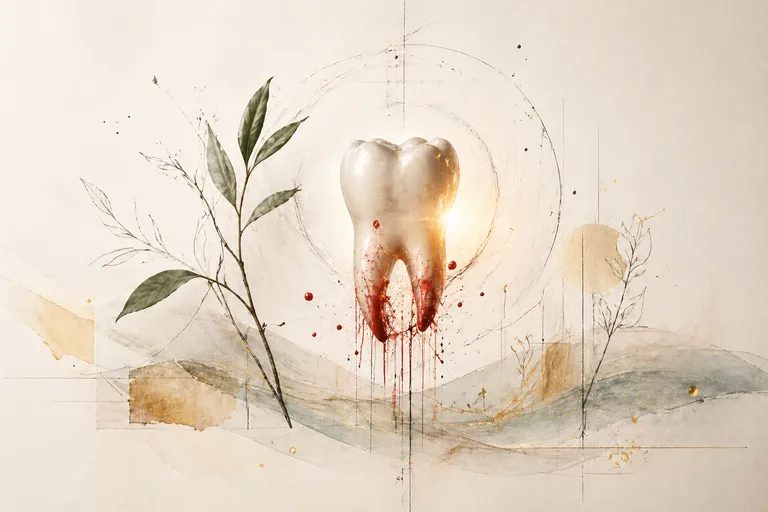
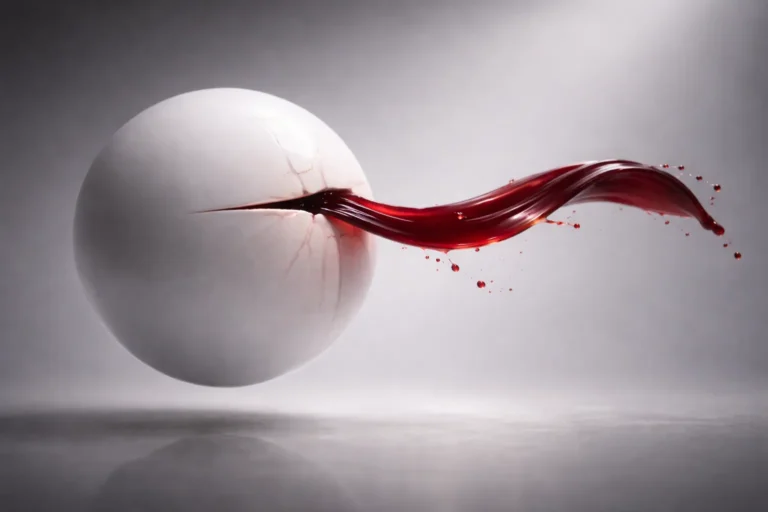
Blood changes what this dream is about.
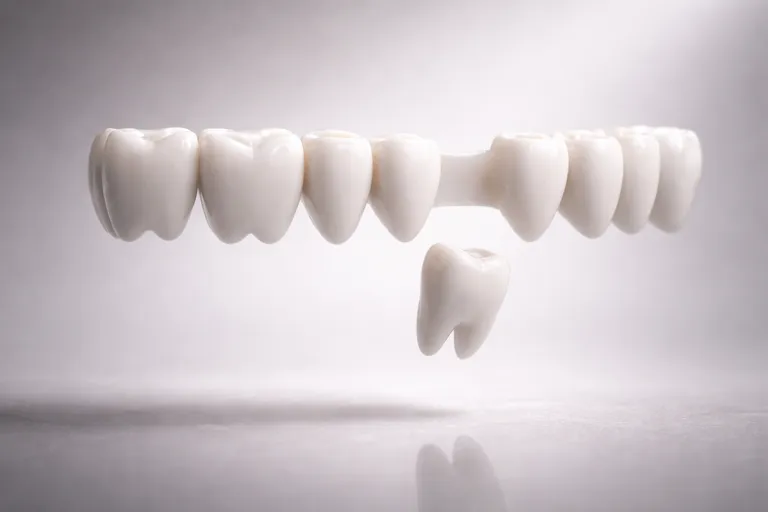
Without it, teeth falling out sits in a quieter register — the kind of loss that had already let go before it departed. Something completed. The roots withdrawn. A departure that arrived after the leaving was done.
With blood, that changes entirely.
The connection was still alive when it broke.
Quick Answer
- Blood present → the loss happened while something vital was still attached; this wasn’t completion, it was rupture
- You taste it before you understand it → the body registered the damage before the mind was ready to name it
- The blood feels wrong, not just the loss → exposure, shame, and injury arrived with the departure — not just the gap
- You wake checking your mouth → the nervous system ran a real threat; it hasn’t fully stood down
- The dream keeps returning → the wound it’s reporting is still open
Common Scenarios
- Teeth fall and blood fills the mouth immediately → the rupture is acute; something active in your life just crossed a threshold
- One tooth comes out bleeding while others stay → one specific wound — one relationship, one decision — not a general collapse
- You’re in public and can’t stop the bleeding → the injury is tied to visibility; the fear isn’t the loss, it’s being seen mid-damage
- The blood is heavy but you feel no pain → the body is carrying an injury the mind has been refusing to feel
- You try to hold the teeth in and they keep falling → control has already failed; the effort to contain the loss is exactly what the dream is running
- Someone else sees the blood before you do → the exposure arrived before the acceptance; someone already knows the cost
What Your Body Already Knows
- Jaw tight after waking → you’ve been clenching around a conflict that hasn’t been spoken; the hold has a physical address
- Metal taste that lingers → the dream left sensory residue because the stress isn’t metaphorical; something is pressing on a real nerve
- Hands go to your mouth immediately → the body checking for the wound the dream made real; the nervous system needs confirmation the structure held
- Nausea, not fear → injury-register, not threat-register; the body isn’t bracing for something coming, it’s processing something that already happened
What the Blood Is Actually Telling You
Blood in a dream doesn’t appear for atmosphere.
It appears because the brain needed a signal that no cleaner image could carry: the connection was still alive when it broke.
The bloodless version of this dream reports a different kind of loss — the roots had already withdrawn, the emotional separation completed itself before the visible departure arrived. There’s a cold, specific clarity to that version. It arrives after the fact. It is the paperwork of something already done.
This dream is different.
This one arrives during the fact.
The teeth that fall here were still anchored. The tissue that held them was still vital. Whatever departed didn’t leave after everything had already ended — it left while something was still attached. The blood is the evidence of that timing.
You’re at a sink that’s too bright. The kind of white that doesn’t forgive. Before you understand what’s happening, your mouth fills — warm, metallic, the weight of it hitting the back of your throat. When you finally look down, the basin is red. And the thing that stays with you isn’t the loss. It’s that you can feel exactly where something used to be attached. The place is still raw. The rawness means it was recent.
When You’re Seen Mid-Wound
This version runs a specific compound pain.
When the blood appears in front of others — a crowd, a familiar room, a face you recognize — the dream isn’t just processing loss. It’s processing the particular damage of being seen mid-rupture.
Not the wound alone.
The wound with an audience.
This surfaces when the damage in waking life has a social dimension: a humiliation that happened in front of people, a breakdown witnessed by the wrong person, a moment where the composed version of you failed publicly enough that the failure became part of the record. The fear isn’t the blood. It’s that no one can look away. And you can’t make it stop before they’ve already seen how much this cost.
The room is still moving around you. Nobody has stopped. You have both hands over your mouth and the blood is running through your fingers and you understand that the worst part isn’t the blood. It’s that you don’t know whether you want someone to notice.
When the Cost Has Been Accumulating
Not every version of this dream is about catastrophe.
Some report a quieter damage — the kind that comes from staying somewhere too long. From holding something past its natural end. From the accumulated cost of remaining in a situation that has been slowly taking from you.
The teeth in this version don’t fall all at once. One goes. Then another. Each departure is specific. Each one bleeds.
The horror isn’t the scale — it’s the accumulation.
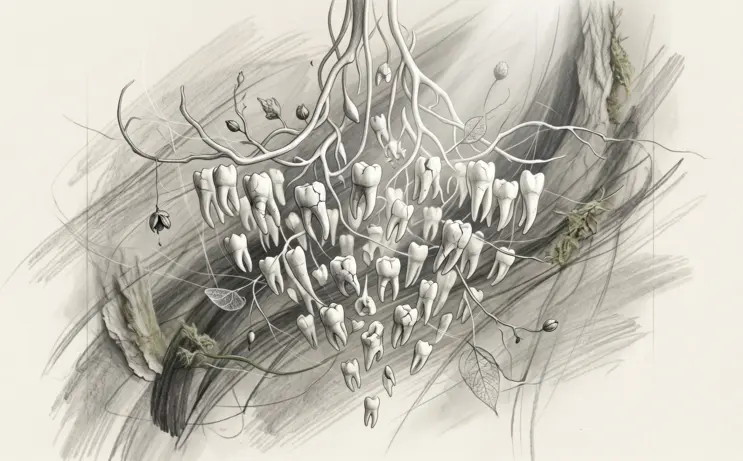
This connects to what the teeth crumbling dream reports — the same slow loss, the same absence of a single cause. Except crumbling reports erosion without acute pain, dissolution that stayed below the threshold of felt injury. This version reports the same process with the body’s full account attached. Each piece that leaves, leaves bleeding.
The second one goes while you’re still looking at the first. You spit it into your palm — warm, heavier than it should be — and the root is still red. You run your tongue over the gap. Still raw there. The kind of raw that means something was recently alive in this place and whatever took its weight is still figuring out what it lost.
When Speaking Was the Site of the Damage
Teeth are bound to voice.
They shape words before words leave. They are the apparatus of how you present yourself — how you hold yourself in front of others, how you move between what you feel and what you say.
When they fall in dreams, something about speech, expression, or the mechanism of presenting yourself has been damaged or threatened.
When blood is present, the dream is reporting that the cost of what you’ve said — or what you haven’t said — has become physical. A conversation that crossed a line. Words that landed as injury. A silence held so long it started to tear something on the inside.
You’re trying to speak and the blood is already changing the shape of the words before they form. You swallow it down and try again. Whatever you needed to say came out tasting like a wound. The other person’s expression doesn’t change. They heard something. You’re not sure it was what you meant.
Why This Dream Keeps Coming Back
When the dream returns — same blood, same specific horror — the underlying rupture hasn’t been addressed.
Not necessarily the event.
The injury the event produced.
The brain returns to images that contain unprocessed material. When the loss in the dream still bleeds every time, the body is reporting that the wound in waking life is still open. Not metaphorically — neurologically. The emotional-memory system processes unresolved material during REM sleep, and when resolution hasn’t happened, the same scene comes back. Not for repetition. Because the system is still trying to complete a process the waking mind keeps interrupting.
That mechanism is what recurring stress dreams run on: the return isn’t the punishment — the return is the signal that something hasn’t finished. The blood doesn’t stop in the dream until something in waking life has been honestly named.
Why This Dream Happens — The Psychology Behind It
Teeth-falling-out dreams activate the brain’s body-image monitoring systems — the neural networks that track the integrity of physical structures tied to social function, expression, and survival capacity. Blood specifically signals acute tissue damage to those same systems, triggering a stress response that carries into waking. Under conditions of unresolved relational rupture, shame, or emotional injury, the brain uses this image because it maps with precision to the felt experience: something structurally part of the self was damaged at a point where it was still vital. The prefrontal cortex, which normally filters and manages the emotional signal, is offline during REM — the limbic system runs the scene at full intensity. The result is a dream that feels less like a symbol and more like a wound report. Neurologically, that’s closer to what it is.
Dream Timestamp
- Immediately after a rupture in a close relationship → the nervous system running a damage report on a connection that was still live when it broke
- During suppressed anger or grief → the body turning unexpressed pressure into a visible, felt injury the waking mind can no longer route around
- After saying something that cost more than expected → the mouth as the site of damage; the words left a physical trace
- When something is slowly taking from you without a single identifiable cause → each tooth is a unit of cost the body has been counting
The Sentence This Dream Was Trying to Say
Something that was still mine was taken while it was still alive — and I haven’t let myself feel the full cost of what that tore.
The Morning After
The taste is gone. The jaw is still carrying it.
Before the day starts — locate the rupture. Not the theme of it, not a general category like stress or anxiety. The specific thing in your waking life that is still bleeding because it broke while it was still attached.
Sixty seconds. Write one sentence: what broke, and what it was still connected to when it went.
That’s the whole work. Everything else follows from whether you’re willing to write that sentence honestly.
FAQ
What does it mean to dream about teeth falling out with blood? It means a loss happened while the vital connection was still active. The departure wasn’t clean. Whatever broke was still alive in your system when it went, and the dream is carrying the full sensory record of that rupture. The blood is the specific information — this wasn’t something that had already detached before it left. It was a tearing, not a completion.
Why is the blood the most important detail in this dream? Because it changes the nature of the loss entirely. Blood marks a wound made in living tissue. Teeth falling without blood report the completion of something that had already ended — the roots had withdrawn, the connection had already finished. Teeth falling with blood report an injury to something that hadn’t. The blood is the dream telling you: this wasn’t a departure. It was a rupture.
Does this dream mean something bad is going to happen? No. The dream is not a premonition. It’s a report on something that is already happening or has already happened — an unresolved rupture, a live wound, a cost the body has been tracking that the waking mind hasn’t fully acknowledged. The brain doesn’t use this image to predict. It uses it to force honesty about what’s already in the system.
Why do I keep having this dream? Because the wound it’s reporting is still open. The brain returns to unresolved injury during REM sleep, and as long as the underlying rupture — the specific loss, conflict, or cost — hasn’t been acknowledged and processed, the image keeps coming back. Not as punishment. As insistence.
Next Stages
If the blood was there but the loss felt quiet — if something in you stayed strangely calm even with the wound present — Dream About Teeth Falling Out No Blood — that’s the version where the roots had already withdrawn before the departure arrived, and the calm is its own specific signal.
If the loss felt cumulative rather than acute — one tooth, then another, the sense that this has been going on longer than you realized — Dream About Teeth Crumbling — when the same biological record runs as sustained erosion rather than rupture, and the exhaustion is the kind that accumulates, not the kind that arrives all at once.
If what the blood left behind was grief about a specific person — if the wound had a face — Dream About Losing Someone You Love — when the attachment system runs the rupture scenario on the connection it most needs to protect, and the loss feels less like damage than like the specific cost of loving something you can’t guarantee.
If the dream keeps returning — same basin, same blood, same specific horror — Recurring Stress Dreams: Why They Keep Coming Back — when the return itself is the message: the system hasn’t been given what it needs to stop.