Recurring Stress Dreams — The Same Report Filed Every Night Until Something Changes
It came back.
You knew it before you were fully awake — before the room had assembled itself around you, before the day had made its ordinary claims. The specific quality of that dream was already in the body. Not the content — you might not have remembered the content at all. The quality. The texture of a particular kind of pressure, a particular kind of not-quite-arriving, a particular kind of something that should have resolved and didn’t. You knew this quality the way you know the quality of your own kitchen without looking at it. You knew it because you have been here before.
The scene was probably different. The people may have shifted, the location changed, the specific mechanism of the dream’s tension taken a new form. None of that matters to the body. The body doesn’t catalogue stress dreams by their visual content. It catalogues them by their emotional signature — the felt quality of the experience, the specific texture of the pressure and the specific nature of the not-finishing. And the emotional signature was identical. The body recognized it on arrival, before the dream had produced a single image for the conscious mind to analyze.
This is the thing about recurring stress dreams that most people misunderstand, and that changes everything about what they are: the dream is not the same. The source is the same.
Most people, when a stress dream returns, focus on the content — searching for the repeated element, the recurring symbol, the consistent character or setting that would explain the return. They look for meaning in the repetition itself, as if the specific scene were the message. But the scene is not the message. The scene is the medium. The message is the emotional signature that the dreaming brain generated from a source that, on the night of the recurring dream, was exactly as active as it was on the night of the first.
Rosalind Cartwright, one of the most careful researchers of recurring dreams in the last half-century, spent years studying divorced individuals whose dreams tracked their emotional processing of the divorce. What she found changed how I think about every recurring dream: the people whose dreams actively engaged the emotional content of the stress — who dreamed about the divorce, felt things about it in the dream, processed the emotional texture of it during sleep — actually resolved the experience better. Their dreams were doing work. The emotional processing that happened in the dream contributed to the emotional integration that happened in the waking life. The recurring dream, in these cases, was not a symptom of being stuck. It was the mechanism of becoming unstuck.
But there was a second group. The ones whose dreams avoided the emotional content — whose dreaming brains generated scenes of escape or distraction or anything except the direct emotional engagement with the source — stayed stuck longer. The dream was not doing its work. And in these cases, the dream kept recurring not because the brain was processing but because the processing was incomplete. Because the source was still active and the processing had not finished what it needed to finish.
Both groups had recurring dreams. One group was stuck in the source. The other group was working through it. The dream’s recurrence was identical from the outside. What it was doing was completely different.
This is what I come back to every time someone brings me a recurring stress dream: the question is not what the dream means. The question is which kind of recurring it is. Is the dream working — actively processing the emotional load of the source, doing the integration that sleep is designed to do — or is it reporting that the source is still there, unchanged, generating the same emotional state that it was generating the first time?
Quick Answer
- The recurring stress dream is not the same scene repeated — it is the same emotional signature generated from the same active source; the scenes change; the source doesn’t; and it is the source, not the scene, that determines whether the dream comes back
- Rosalind Cartwright’s research on recurring dreams and emotional processing showed that the people whose dreams actively engaged their stressors processed them more completely — the recurring dream, when it is working, is not a symptom of being stuck but the mechanism of becoming unstuck
- When the dream is merely reporting — when the emotional signature returns without active processing — it means the source is still active and the dream hasn’t been able to complete its processing work; the recurrence is an accurate filing of the same unchanged report
- The body recognizes the recurring dream before the mind identifies it — the emotional signature is catalogued below the level of conscious perception, which is why the quality of “this again” arrives before any visual recognition of the scene
- The most common recurring stress dream structures are: being late and never arriving, failing something that cannot be prepared for, being unable to reach someone or something, being in a situation you cannot leave, and running without gaining distance — each encodes a specific emotional structure, not a specific scenario
- When the content of the recurring dream begins to change — when the emotional signature is the same but the scene is developing rather than looping — the dream is working; active processing looks different from passive reporting
- When the recurring dream escalates — when the version this week is more intense than the version last month — the source has escalated, or the gap between the source’s urgency and the waking mind’s engagement with it has widened
- The recurring dream that appears during “fine” periods is the most important version to pay attention to: the waking management was working during those periods, but the source was still active, and the dream is reporting on the source, not on the management
- The gap between the first occurrence and the return is diagnostic: short gaps mean high source-activation; longer gaps mean the source is present but not at maximum urgency; gaps that close over time mean the source is intensifying
- The dream stops recurring when one of two things happens: the source genuinely changes in the waking life, or the dream successfully completes its emotional processing and the charge attached to the source finally discharges
Common Scenarios
You are late — always slightly behind, always almost arriving, never quite there. The most universal recurring stress dream. Not dramatically late — specifically, almost-on-time. The distance to where you need to be is small enough to feel reachable and consistently fails to close. The hallway loops. The clock moves faster than the feet. You know the route and the route keeps extending. This is the brain encoding the specific experience of an ongoing situation in which the closing of a gap — between where you are and where you need to be — keeps feeling imminent and keeps not arriving. Not failure, not catastrophe. The specific exhaustion of sustained almost.
You fail something that cannot be prepared for. The exam you didn’t study for — or studied for and find unrecognizable. The performance with no preparation. The evaluation in a field you haven’t practiced. The standard version: you are in the room, the test is in front of you, the knowledge that should be there isn’t. This version tends to arrive during periods when the waking life contains a genuine competence-threat — something for which no amount of preparation feels adequate, something where the gap between what is required and what you have feels unbridgeable, something where the evaluation cannot be studied away.
You cannot reach someone or something that requires reaching. The phone that won’t connect. The door that opens onto the wrong space. The person who should be there and isn’t. The message that fails to send. The urgent need and the consistent impossibility of its fulfillment. This version encodes the specific experience of something that matters being consistently outside the range of the available response — not because it doesn’t exist, because each attempt at connection produces the wrong result or no result.
You are in a situation you cannot exit. The meeting that doesn’t end. The conversation that keeps starting over. The room that has no functional door. The social obligation that no departure can close. This version encodes the specific experience of being inside something from which the available exits are too costly or simply unavailable — something that requires sustained presence regardless of what the internal state is demanding.
You run and gain no distance. The clearest version and the most exhausting to wake from. The legs are going. The ground is passing. And the thing behind you is exactly as close as it was when the running started. This is the recurring stress dream at its most precise: whatever has been generating the pressure has not been reduced by any of the running that has been happening in the waking life. The effort is real. The distance is not.
The dream develops — slightly different each time, but recognizably the same structure. The working version. The scene isn’t identical across nights. The emotional signature is the same, but something is shifting in the content — a slightly different outcome, a slightly different engagement with the source, a scene that seems to be moving toward something rather than looping in place. This is the most important version to recognize, because it looks like a recurring dream and is actually a processing dream. The recurrence is the brain doing its work across multiple sessions, not filing the same unchanged report.
What Your Body Already Knows
Woke up and recognized the quality before recognizing the content → because the body’s emotional-memory system catalogues the felt texture of experiences below the level of conscious visual memory; the emotional signature of this dream has been stored separately from its imagery, and the body accesses the signature first; the quality of “this again” arriving before any visual memory is the subcortical emotional system confirming the match
Woke up with the specific tiredness of having almost-arrived repeatedly without arriving → because the almost-arriving structure of the most common recurring stress dreams runs the approach-and-fail cycle at full intensity for the duration of the dream; the effort of approaching is metabolically real even when the approach fails; the accumulated cost of multiple failed approaches across a single dream is what the body carries into the morning
Woke up and knew, without analysis, what the dream was about → because the source of the recurring dream is almost always something the waking mind already knows is there; the dream is not revealing hidden knowledge; it is making active knowledge louder; the immediate, pre-analysis recognition of what the dream was about is the body confirming that the source was never actually hidden
Woke up with the specific quality of a situation that didn’t conclude → because the recurring stress dream almost never reaches a conclusion; it ends at the point of maximum unresolved tension, which is the same point at which the source in the waking life lives; the feeling of a suspended sentence, a thought that stopped in the middle, is the dream accurately ending where the source’s unresolvedness is most concentrated
Woke up and noticed the dream had been slightly different from last time — same quality, different content → because the processing is happening; the dream is active rather than passive; when the content shifts while the emotional signature is maintained, the brain is moving through the material rather than looping at its surface; this is the most important morning to pay attention to, because it means the work is being done
Why the Same Dream Returns — The Emotional Signature vs. the Scene
There is a distinction that changed everything about how I work with recurring stress dreams, and it came from sitting with enough of them to see the pattern underneath the content variation.
People describe recurring dreams by their content: the exam dream, the late-for-something dream, the running-and-not-getting-anywhere dream. They are looking for the meaning in the specific scenario — why an exam, why this person, why this location. They assume the content is what matters.
What actually determines whether a dream recurs is not the content. It is the emotional signature — the specific felt quality of the experience, the particular texture of the pressure, the characteristic way that the tension builds and fails to resolve.
Matthew Walker’s research on REM sleep demonstrates that the brain reactivates emotionally significant memories during sleep, attempting to process the emotional charge while preserving the content. The emotional charge is what the system is working on. The content is what the system uses to process it. When the emotional charge of a source is high enough — when something in the waking life is generating significant emotional activation that the daytime management is successfully containing — the brain will find the content it needs to engage with that charge during REM, and it will use whatever scenario is most available for the purpose.
This is why the content changes while the dream seems to repeat: the brain is reaching for any available content that can serve as the medium for processing the same emotional charge. The exam, the late arrival, the failed phone call — these are interchangeable from the brain’s perspective. What isn’t interchangeable is the emotional structure they produce: the specific tension of almost-arriving, the specific exposure of being evaluated without adequate preparation, the specific frustration of a blocked reach. These emotional structures are the recurring elements. The specific scenarios that produce them are replaceable.
When you recognize a recurring dream, you are recognizing the emotional signature, not the scene. The body catalogues the felt quality and returns the recognition before the visual memory has had time to confirm: yes, this is the exam dream. No — this is the dream that produces the specific quality of exposure-without-adequate-preparation. The exam is just the most recent available content that generates that quality.
I have sat with people who have had the same recurring stress dream for years — reliably, with minor variations, appearing and disappearing and reappearing in correspondence with specific waking-life conditions. And the first thing I look for is not what the dream contains. It is what the emotional signature is, and whether the waking-life source generating that emotional signature has changed at all. Almost always: the answer to the second question explains the first. The dream returns because the source returns. The dream disappears because the source changes. The content is mostly beside the point.
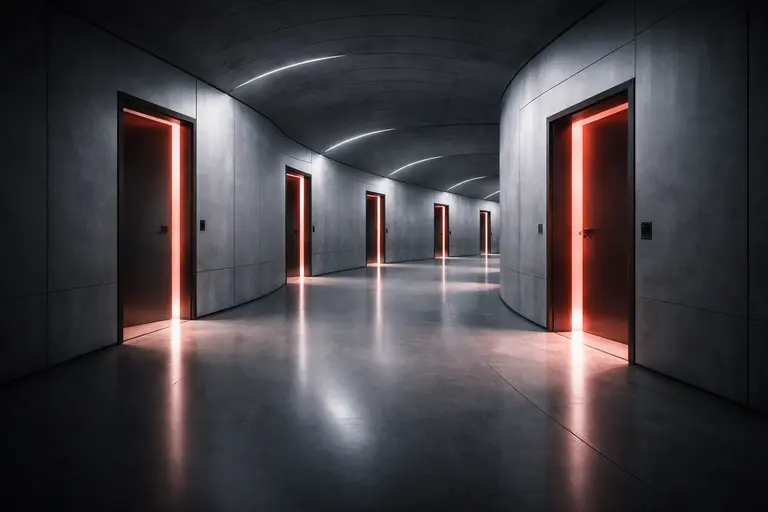
You are in the hallway again. You know this before you’ve seen enough of it to confirm — the particular angle of the light, the specific quality of the distance between where you are and where you need to be, the way that distance refuses to close no matter how correctly you move toward it. Your body knew before your eyes confirmed. And somewhere below the knowing is the specific tiredness of having been here before — not in this hallway, in this particular configuration of almost-arriving-and-not. It is a tiredness that has nothing to do with sleep. It has to do with the waking life that keeps generating the material that the dream keeps being made from.
Fear and Anxiety Dreams — What Your Mind Is Trying to Warn You About maps the complete architecture of why the dreaming brain reaches for emotional sources rather than rational ones — and why the recurring dream is one of the most reliable diagnostic tools available for identifying what the waking management has been successfully containing.
The Cartwright Finding — When the Dream Is Working and When It’s Just Reporting
Rosalind Cartwright’s research gave me a framework I have never found better replaced, and it is worth explaining precisely because it changes what the recurring dream means.
Cartwright tracked the dreams of people going through divorce across an extended period. She found two distinct patterns.
The first group had dreams that engaged the emotional content of the divorce directly. They dreamed about the separation, about the former partner, about the feelings involved — not as avoidance or fantasy, but as active emotional engagement. They felt things in the dream. The dream did something with the material. These people resolved the divorce better, integrating the experience into their lives more successfully over time. Their recurring dreams were doing work: processing the emotional charge of the experience across multiple sleep sessions, gradually discharging what needed to be discharged.
The second group had dreams that avoided the emotional content. Their dreaming brains generated scenes that had nothing to do with the divorce — or that engaged it only tangentially, without direct emotional contact with the source material. These people struggled more in the waking life. Their dreams weren’t doing the processing work that the first group’s dreams were doing. And their recurring dreams were different in quality from the first group’s: they were reports, not processing. Filing the same unchanged information about the same unchanged source.
The distinction between processing and reporting is the most important thing I know about recurring stress dreams, and it is almost never discussed. Both look like recurring dreams. Both return across nights. What they are doing is entirely different.
The processing recurring dream changes. Slowly, subtly, sometimes imperceptibly — but it develops. The emotional engagement shifts. Something in the scene reflects the movement that the processing is making in the emotional material. The content isn’t identical each time because the work isn’t identical each time. It is moving through something.
The reporting recurring dream doesn’t change. The emotional signature is identical because the source is identical — unchanged in the waking life, generating the same emotional activation, producing the same dream content because nothing has shifted in the material that the dream would be processing if the processing were happening.
When I ask people who bring me recurring stress dreams whether the dream has been changing or staying the same, the answer tells me more than any content analysis could. Changing means the brain is working. Staying the same means the source is unchanged and the processing isn’t engaging it.
Why You Keep Having Anxiety Dreams — And Why They Don’t Stop examines the specific mechanism of the reporting version — why the amygdala keeps filing the same report each night until the source it’s reporting on actually changes in the waking life.
The Specific Geography of the Stuck Dream
Every recurring stress dream has a geography — a specific spatial and temporal structure that encodes the emotional structure it is built on. The geography is not random, and understanding it is more useful than analyzing the content.
The almost-arriving geography: the destination is visible, the distance is small, and the distance does not close. This encodes the specific experience of something that feels imminent and keeps not arriving — a goal, a resolution, a conclusion that the waking situation keeps generating the sense of being close to without providing. The dream is not encoding failure. It is encoding sustained almost.
The evaluation-without-preparation geography: you are in a position of being assessed and the resources that should be available for the assessment are not there. This encodes the specific experience of being required to demonstrate a competence in a domain where the preparation feels — or is — genuinely insufficient. Not always about actual examinations. About any waking situation that generates the felt experience of being evaluated without adequate resource.
The blocked-reach geography: something requires your contact and every attempt at contact produces the wrong result or no result. The phone doesn’t connect, the message doesn’t send, the door opens onto the wrong space. This encodes the specific experience of something important being consistently outside the range of available action — not because it doesn’t exist, because the mechanisms of reaching it have stopped working.
The inescapable geography: you are inside something from which the exits are unavailable or too costly. This encodes a waking situation from which the available exits require something you are not currently prepared to pay — the leaving that is too expensive, the exit that requires more than the current resource allows.
The running-without-distance geography: maximum effort, zero closing of the relevant gap. This is the most honest encoding in the cluster, and the one that has given this site its most consistent insight: the effort is real. The direction is the variable. The gap doesn’t close because the movement, however vigorous, is not in the direction that would close it.
Each of these geographies is the brain’s most precise available spatial metaphor for a specific emotional structure. The geography tells you what the emotional structure is. The specific content within the geography tells you which territory of the waking life is generating that emotional structure. Both together — what the dream is shaped like and what is in it — give you more information than either alone.
What Actually Changes the Dream
This is the section the dream has been building toward every night it has returned. And I want to be as direct about it as I have learned to be, because the indirect version — the one that says “work through your feelings” or “process the stress” — is not actually helpful.
The recurring stress dream stops when one of two things happens.
The first: the source changes. Not your understanding of it, not your attitude toward it, not your management of it — the source itself. The waking situation that has been generating the emotional activation that the dream has been built from changes in a way that reduces the activation. A decision is made. A situation resolves. A dynamic shifts. A condition that was present is no longer present in the same way. The amygdala, running its nightly assessment of the emotional state attached to the source, finds a different state. The dream changes because the material has changed.
The second: the dream successfully completes its processing. The emotional charge attached to the source discharges through the dream processing sufficiently that the activation level drops below the threshold that was generating the dream. This is the Cartwright finding: when the dream is working — when it is actively engaging the emotional content rather than merely reporting the source’s status — it can complete the processing that changes the dream from within. This takes multiple sessions, doesn’t happen quickly, and produces the gradual content-changes that characterize the processing recurring dream.
What doesn’t work: understanding the dream intellectually. Analyzing the content. Deciding the dream was about X and that you now understand X. The amygdala’s activation is not responsive to intellectual conclusions. It is responsive to the actual emotional state of the source material and to the completion of the emotional processing that changes that state. Understanding the dream may help you identify the source. It doesn’t itself change the source or complete the processing.
The most useful thing that waking insight can do is identify what in the waking situation needs to change — and then change it. The dream can point. The pointing is where the dream’s work with the waking mind ends. The changing is where the waking mind’s work with the situation begins.
What I have found, over years of sitting with this, is that the recurring stress dream is almost always pointing at something the person already knows needs to change. The recognition of the source, when it arrives, is almost never a surprise. It is almost always the acknowledgment of something that was known and being managed — being managed successfully enough during the day to remain contained, unsuccessfully enough during the night to keep becoming the dream.
The dream is not bringing new information. It is making old information loud enough to hear above the management.
Dream Timestamp
The recurring dream appears when the source is active at sleep-level intensity → not the first stressed day — the recurring dream requires a source active enough, and sustained enough, to generate sleep-level emotional activation; episodic sources produce single dreams; chronic sources produce recurring ones
The gap between recurrences tracks the source’s activation level → the dream returns more frequently as the source’s activation increases; wider gaps mean the source is present but not at maximum urgency; narrowing gaps across weeks mean the source is intensifying without the waking life’s response changing
The recurring dream appears during “fine” periods as reliably as during crisis periods → because the management working well during the day does not reduce the source; it contains the expression of the source; the dream reports on the source, not on the management; fine periods with recurring stress dreams mean the management is working and the source is unchanged
The content begins developing when the processing is working → when the dream is doing Cartwright’s work — actively engaging the emotional content rather than merely reporting the source — the content shifts from session to session; the emotional signature remains; the scene moves; this is the most important change to notice
The dream stops during periods of genuine source-change → not during periods of better management, better attitude, or improved understanding; during periods when the waking situation that was generating the source’s activation has actually shifted; the amygdala finds a different state and stops filing the same report
The Sentence This Dream Was Trying to Say
“I have been trying to reach you every night for as long as this has been running. The scene was different because I used whatever was available. The feeling was the same because the thing I was built from didn’t change. I will stop when it does.”
The Morning After
You recognized it before you were fully awake. The quality was there before the content, the body ahead of the mind, the emotional signature arriving in the chest before the room had assembled itself around you.
This is information. Not the content of the dream — the fact of the recognition. The fact that the body knew this dream before you looked at it means the source that generated it has been present long enough to be stored below the threshold of conscious visual memory, in the body’s faster and older cataloguing system.
Before the day begins and the management comes back online: sit with the emotional signature. Not with what the dream was about — with what the dream felt like. The specific texture of the pressure. The specific quality of the not-resolving. The specific emotional structure — the almost-arriving, the blocked-reach, the running-without-distance — that the body recognized before the eyes confirmed.
That emotional structure is the most accurate available map to the source. It tells you more than the content does. What in the waking life generates that specific texture? What situation is currently producing the emotional experience of that specific quality? Not generally — specifically, in the current configuration of the daily life?
And then the harder question — the one that changes whether this dream returns tomorrow: has anything about that situation actually changed? Or has only my understanding of it, my management of it, my attitude toward it changed — while the thing itself remains exactly as it was the night the dream first appeared?
If the answer is that only the management has changed: the dream will come back. Not as punishment and not as failure. As the same accurate report from the same unchanged source. Until something in the source finally shifts.
FAQ
Because the source hasn’t changed. Recurring stress dreams return not because the dream is stuck but because the waking situation generating the emotional activation is still active. The dream’s content may vary — the exam, the late arrival, the running — but the emotional signature is identical each time because what generates it is identical each time. The amygdala runs its nightly assessment of the emotional state of unresolved situations and files the same report when it finds the same state. The dream stops when the source changes, not when the dream is understood.
It means the dream is working. Rosalind Cartwright’s research on recurring dreams found that dreams which actively engage the emotional content of a stressor — rather than merely reporting its presence — show gradual development in their content across sessions. When the emotional signature is maintained but the scene is shifting, the brain is processing the emotional material rather than passively reporting on it. This is the most important distinction in recurring dreams: changing content with the same emotional structure means the processing is happening. Identical content across sessions means the source is unchanged and the processing isn’t engaging it.
Because the dream reports on the source, not on the management of it. When waking life feels fine, the management is working — the daytime regulatory mechanisms are successfully containing the emotional activation of whatever the source is. But containing the expression of a source is not the same as reducing the source. The amygdala, running its nightly assessment with the management offline, encounters the source at its actual activation level rather than at the managed level. The dream reports on what it finds. “Fine” periods with recurring stress dreams mean the management is competent and the source is unchanged.
Either the source has escalated, or the gap between the source’s urgency and the waking life’s response to it has widened. The amygdala tracks both the absolute activation level of a source and the relationship between that activation and any change in the source’s status. When nothing is changing in the waking situation while the source’s activation continues, the nervous system increases the signal strength of its reporting — the same way it escalates any signal that is not producing the required response. Escalating intensity means the source requires more direct engagement than it has been receiving.
Not on its own. Understanding identifies the source — which is genuinely useful, because knowing precisely what the dream is built on is the first requirement for addressing it. But the amygdala’s activation is not responsive to intellectual conclusions. It updates on the actual emotional state of the source, which changes when the source changes, not when the understanding of it improves. Understanding the dream is the map. Changing the source is the territory. The map is useful for navigating to the territory. It is not the territory itself.
Through one of two paths. The first: the waking source changes genuinely — a decision made, a situation resolved, a dynamic shifted enough that the amygdala encounters a different emotional state in its nightly assessment. The second: the dream successfully completes its emotional processing across multiple sessions — the Cartwright path — gradually discharging the charge attached to the source until the activation drops below the threshold that was generating the dream. Both paths are real. The first is faster and more reliable. The second happens when the first isn’t available. Neither happens through understanding alone, through better management, or through deciding to stop having the dream.
Next Stages
Someone Is Chasing You — This Fear Is Following You — the most common recurring form — when the source has taken the shape of pursuit and the emotional signature that returns each night is the specific texture of something following at exactly the speed of the avoidance
Being Trapped — The Pressure That Has Nowhere Left to Go — the recurring geography of sealed exits — when the source has been generating the same pressure for long enough that the available directions have closed into an architecture the dream keeps mapping
Darkness and Fear — What Was Already in the Room Before the Lights Went Out — when the recurring source is not a specific situation but a sustained absence of clarity — the informational darkness that keeps returning because the predictive system cannot update on information that hasn’t arrived
Chaos — When the Framework That Made Everything Navigable Collapses — when the recurring dream has escalated past its original form — when the source has been active long enough that the hippocampal context-generation itself has become compromised and the recurring structure has dissolved into frameworklessness