Science of Dreams

Most people who search “why do I dream” want a quick answer. Two sentences, a list, done.
What they actually find is that the quick answer is wrong. Or incomplete. Or borrowed from a framework that hasn’t been updated since Freud was alive.
I spent five years reading the actual research — not the summaries of the research. Walker, Solms, Cartwright, LeDoux, Damasio. What I found is that the neuroscience of dreaming is one of the most practically useful bodies of knowledge available to anyone who wakes up with something still running in their chest and wants to understand what the brain was actually doing.
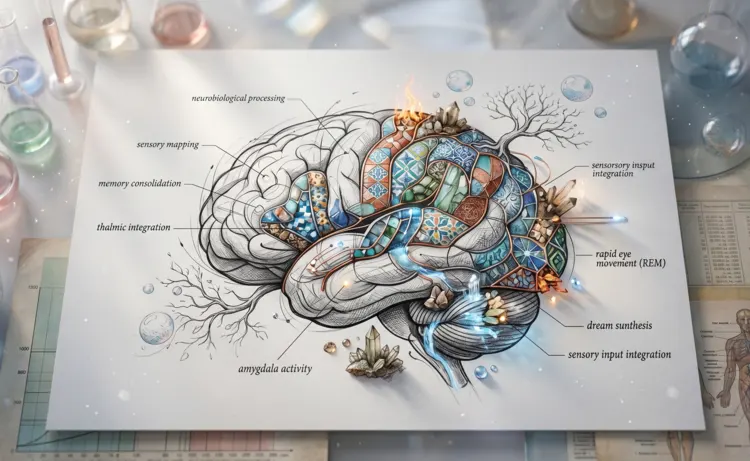
This category exists for that. Not dream theory. The specific mechanisms — what REM does, why the brain chooses the images it chooses, why the same dream keeps returning, what happens in the body in the 90 seconds after waking that determines whether you remember any of it.
The brain that dreamed last night was not random. It was not symbolic. It was processing something specific, with more precision than the waking mind usually allows, using the only window in the day when the management layer is fully offline.
That is worth understanding.