Your Childhood House Crumbling into the Sea
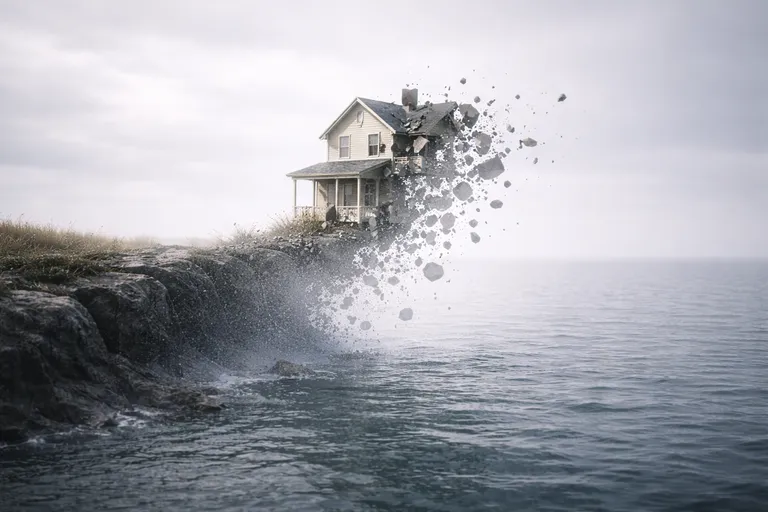
The house has been standing your entire life.
Inside your memory, it always will have been. The particular quality of light through specific windows. The sounds the building made at night. The smell of certain rooms at certain times of year. The way the staircase felt under your feet. The kitchen the way it was then, not the way it might be now. These things exist in you as a kind of permanent structure — the first architecture of the world, the one that everything you’ve learned about space and safety and home was built on top of.
In this dream, the sea takes it.
Not quickly. Not violently. The way the sea takes things: persistently, with patience, with the specific indifference of something that has no awareness of what it’s dissolving. Piece by piece the foundation goes. The structure tilts. The rooms that held everything lean toward the water and the water accepts them. The house — your first house, the original one, the one that exists only inside you — enters the sea.
I’ve never heard this dream described without the person pausing mid-sentence. There’s a specific quality to it that other architecture dreams don’t have. The childhood house isn’t a building. It’s the first map you had of what the world was.
Quick Answer
- A dream about your childhood house crumbling into the sea means the original structure of your understanding — what safety meant, what home felt like, what the world was before you had to navigate it yourself — is undergoing a fundamental dissolution.
- The sea doesn’t destroy. It dissolves. This is the specific quality of what’s happening: not a rupture but a gradual unmake.
- Whether you’re inside the house or watching from shore tells you whether you’re in the dissolution or past it.
- What you try to save before it goes is the most specific information the dream offers.
- The house going into the sea is not only loss. Dissolution is also a return. Something is being given back to what is larger than it.
Common Scenarios
- Watching from the shore as it goes → you’ve already detached; the dream is the ceremony of the completion
- Trapped inside as it falls → you’re in the middle of the dissolution and have not yet found the way out
- Trying to save a specific object → the attempt to carry a piece of the original world into what comes next
- Standing in a room as water rises slowly → the process is gradual and you’re aware of each stage
- The house is already mostly gone when the dream begins → the dissolution is further along than you’ve consciously acknowledged
What the Body Remembered
- The smell of the specific house — not the water, the house underneath the water → the memory activated at the level of the senses
- A grief that doesn’t attach to anything current → the loss is old, or older than any single event
- The specific quality of watching something permanent become impermanent → the body registered the paradox of that
- Something about your parents or your origin story was already present on waking → the house already had its address
What the Childhood House Actually Is
When the mind generates a house in a dream, it generates a map of psychological space.
The transformation this cluster works with involves the ending of previous structures and the emergence of new ones. The childhood house is the specific structure that preceded all other structures — the one you didn’t build and couldn’t choose, that was simply the world as you found it when you arrived in it.
Every understanding of safety you have was formed inside that house or in reaction to it. Every way you relate to home — to the concept of it, the feeling of it, the expectation of it — was shaped in that original space. The map of the world that you arrived with as an adult was drawn there, in the rooms you moved through before you knew you were making a map.
When the sea takes it, what’s being dissolved isn’t the building. It’s the map. The understanding of what the world was supposed to be, formed in the earliest years, is being returned to the formlessness that precedes knowing.
You’re standing somewhere and the house is there and you understand, before anything has happened yet, that something is wrong with its relationship to the water. The water is closer than it should be. It has always been closer than you knew. And then the first piece goes, and you watch the house begin the process of releasing its own history back into something that doesn’t keep records.
Why the Sea Specifically
The dream could have generated fire. Earthquakes. Demolition. Any of the faster, more categorical forms of destruction.
The sea takes things slowly and completely. It doesn’t burn — burning leaves ash, which is still something. It doesn’t collapse — collapse leaves rubble, which is still form. The sea takes things and makes them formless. The wood becomes waterlogged, softens, gives up its own shape. The walls become saturated. The foundation dissolves at the level of its own structure. The sea is patient because it doesn’t need to be hurried.
This is the specific quality of certain kinds of psychological dissolution — the ones that don’t happen in a dramatic moment but through sustained contact with something larger than the structure. The understanding that your parents were people with limitations, accumulated over years of evidence. The recognition that the values you were built inside are not adequate to the life you’re living, arrived at gradually, not all at once. The sense that the original map has been failing quietly for a long time before the failure becomes undeniable.
The sea in this dream is the process of being in contact with reality long enough for the original architecture to become saturated.
Watching from the Shore
This is the version that carries the most peace and the most grief simultaneously.
You’re not inside the house. You’re watching from the shore. The house is going — you can see the process clearly from where you’re standing — and you are not trying to stop it, not trying to get inside it, not trying to save anything from it. You’re watching from the distance that the shore provides.
This version tends to appear when the dissolution is substantially complete — when the childhood architecture has already been released in waking life, and what the dream is providing is the ceremony of the completion. The hardest part is over. What remains is witnessing. The house going into the water has already happened in some psychological sense. The dream is showing you the image of the event whose processing has already been done.
In waking life, this is the version that appears after a period of genuine reckoning with origin — after therapy, after a significant relationship with a parent changed, after you’ve done the real work of understanding where you came from and releasing the parts that weren’t serving you. The shore provides distance because you’ve earned it.
You watch from the shore and you let it go. Not without grief — the grief is there, in the watching, in the specific image of what was yours disappearing into what’s larger. But without resistance. The house is going. You are watching. Both of those things are right.
The Object You Try to Save
This is the dream’s most specific piece of personal information.
Almost every version of this dream includes a moment when you try to carry something out. A photograph. A lamp. A piece of furniture. Clothing. A book. Something small enough to carry, old enough to matter, specific enough to have a name.
The object you try to save is what you’re not yet willing to let the sea have. The specific quality of the past — the specific understanding or comfort or value — that you’re still carrying into what comes after. Not necessarily wrong to carry. Just: this is what the dream is showing you that you’re still holding.
Sometimes the object is heavy, waterlogged, and you carry it anyway, slowing yourself down. Sometimes it dissolves before you reach the shore. Sometimes you make it to dry land with it, and it’s whole. The fate of the object in the dream is the current state of that particular holding.
What we try to carry from the place that formed us into the life we’re building is one of the questions this cluster keeps circling. The inheritance is real. The question is which pieces of it are worth carrying and which ones, if kept, will slow you down in the water.
You pick something up. It’s wet already. It has the weight of something that has absorbed more than it was built to hold. You carry it toward the door, which is still there, which is still above water, which will remain accessible for a little while longer. You understand that you cannot carry everything. You carry this.
The Parents in the Walls
This needs to be said plainly, even though the dream rarely makes it explicit.
The childhood house is your parents’ world as much as yours. It was built by them, organized around their understanding of what the world was, filled with their fears and their values and their specific ways of making sense of things. You learned what was safe and dangerous in that house. You learned what was worthy and shameful. You learned what was possible and what was forbidden. All of that learning happened inside the architecture they built.
When the sea takes the house, some of what’s going with it is the architecture they built. Not the people — not them as people, not what they mean to you as people, not your love for them or their love for you. The specific world they created that you lived inside, and the specific understanding of everything it taught you.
This part of the dream is sometimes the hardest to look at. The recognition that the map you were given has limitations isn’t the same as not loving who gave it to you. Both things can be true: the map was built with real care, and it doesn’t match the territory you’re actually in.
When This Dream Arrives
At the moments when the original architecture has become insufficient for the life being lived.
Not at the first recognition that something from the origin story needs revision. After enough accumulation of that recognition to produce the image of the house itself going. The dream arrives when the revision has reached the level of the structure, not just the contents.
It also arrives during periods of genuine grief for the childhood world — the recognition that the version of safety and home and the world as it was supposed to be will not be recoverable. The house crumbles because something in you has finally accepted that it cannot stand against what the sea represents.
The Psychology Behind It
The childhood home is one of the most consistently referenced symbols in psychological research on memory and identity. The spatial architecture of early childhood environments is encoded in the brain at a level that persists across a lifetime — the dimensions of rooms, the quality of light, the sensory texture of specific spaces.
When the dream generates the childhood house, it’s reaching into this deep encoding. When it generates the house crumbling, it’s using the loss of that deeply encoded structure to represent something proportionally fundamental: the dissolution of the original map of the world.
The sea is the collective unconscious — the formless, boundless medium that the structured self exists within and emerges from. When the house returns to the sea, the structure built from the earliest experience is being dissolved back into the formlessness that preceded structure. What was made specific becomes general again. What was personal becomes universal. The map returns to the territory it was drawn from.
This is not only loss. It is also return.
The Sentence This Dream Was Trying to Say
“The first world I lived in no longer holds — and part of me is still inside it, watching it go.”
The Morning After
The sea is still in the feeling somewhere. The specific quality of watching something permanent become water.
Before the day rebuilds the walls: the house is going. That’s true. Some part of what it built in you is dissolving, and that’s also true. And what the sea takes, it takes into something larger than either the house or the loss.
What were you trying to carry out before the water reached the door?
FAQ
What does it mean to dream about your childhood house crumbling into the sea? It means the original architecture of your world — the understanding of safety, home, and what the world is like that was formed in your earliest years — is undergoing a fundamental dissolution. The sea is the specific agent: not destruction but dissolution, the patient unmake that returns solid forms to formlessness. The childhood house is the first map you had. When it goes into the sea, the map is being returned to the territory it was drawn from. This is loss. It is also a form of release.
Why is it the childhood house and not any other house? Because the childhood house is where the map was made. Every subsequent understanding of home and safety and the world as it’s supposed to be was built on what was learned in that first space. When the dream generates that specific house, it’s reaching into the deepest architectural encoding it has — the one that was formed before you could choose what was being formed. That’s the structure the sea is taking. Not a current shelter, but the original one.
What does it mean if I was trying to save something from the house? It means there’s something specific from the original architecture that you’re still carrying — or trying to carry — into what comes after. The object you chose is the detail worth sitting with. Not every attempt to save something is wrong: some things from the original world are worth keeping. The condition it’s in when you carry it — whether it’s intact or waterlogged, whether you make it to shore or lose it in the water — is the dream’s verdict on how well that particular piece of the past is surviving the transition.
Next Stages
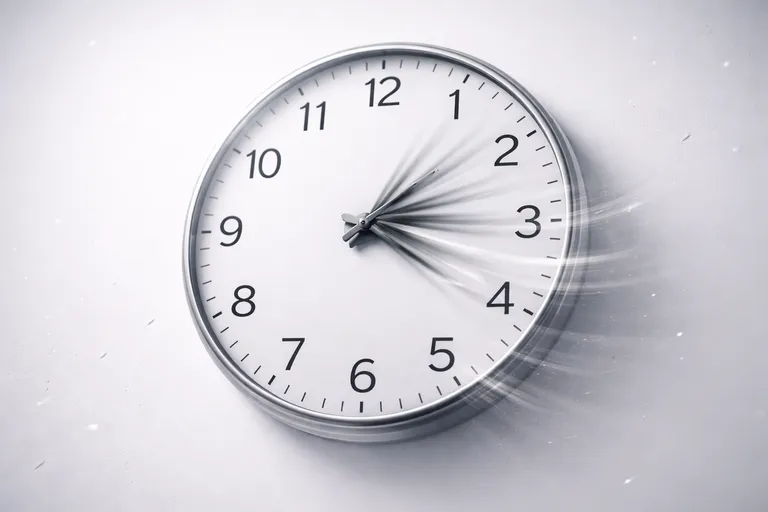
If the crumbling of the house felt like it was pulling the very fabric of time with it — if the collapse wasn’t just in space, but in your history → a clock moving backward rapidly: temporal degeneration — when the mind attempts to undo the damage by reversing time, signaling a frantic subconscious search for a moment before the foundation gave way.
If the dream included someone from the original house — a parent or relative — coming to speak or make contact → dream about dead relatives talking to you meaning — when the dissolution of the childhood world brings the voices that built it back into contact with you
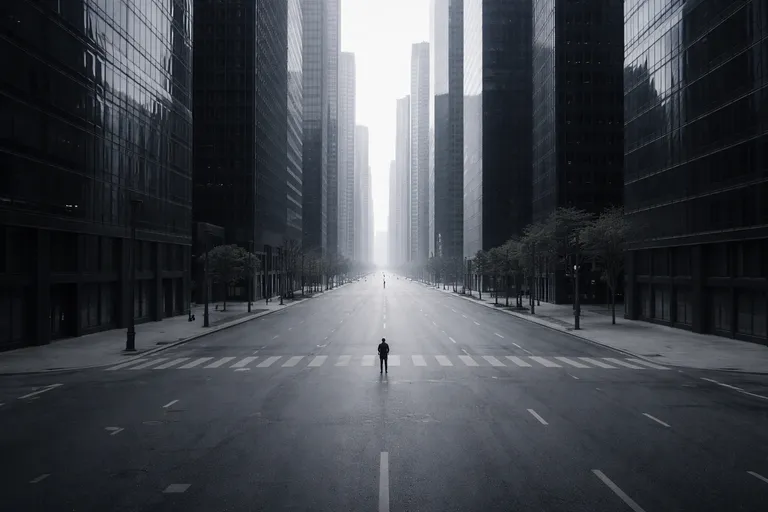
If what followed the crumbling was a period of complete rootlessness — no house, no ground, nothing familiar → dream about being the last person in a dead city meaning — when after the original structure goes there is no replacement yet, only the territory of the completely unfamiliar
If the dream produced not grief but something like relief — if the sea taking the house was, underneath everything, the right thing → dream about death and rebirth meaning — when the dissolution of the original world is the necessary condition for something genuinely new to emerge