Dream About Being Chased by a Killer
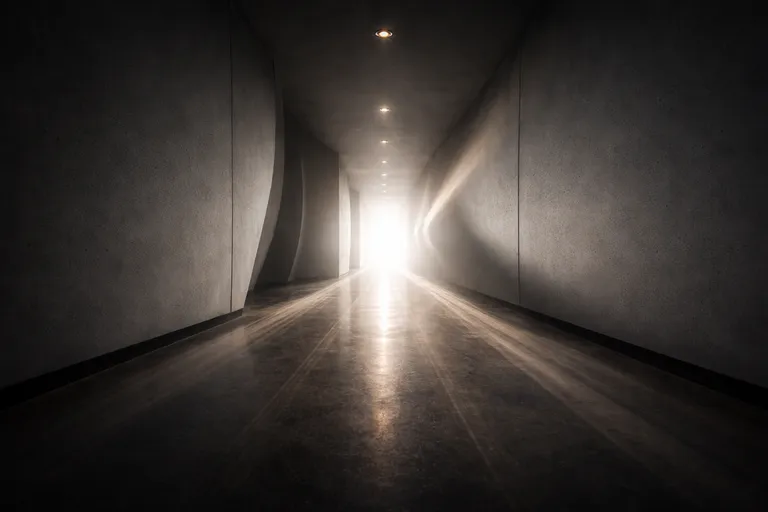
The killer isn’t the worst part.
You’ve probably already figured this out. The terror in this dream lives in the running — in the specific quality of being hunted through spaces that don’t cooperate, of doors that don’t open correctly, of legs that move at the wrong speed. The killer is behind you but the dream is in front of you, in every corner that turns wrong, in every route that closes.
What makes this dream different from every other chase dream is the lethality of what’s behind you. Being chased by an unknown presence is frightening. Being chased by someone with the specific intention to kill you is something else — it’s the dream’s way of communicating that what you’re running from isn’t just pressure or discomfort. It’s something that, if it catches you, will end a version of you completely.
Here’s the thing most people aren’t told: that might be exactly what needs to happen.
The killer in this dream almost never represents an external threat. Almost always, it represents the very thing you’ve been unable to stop running from in your waking life — the confrontation you’ve been postponing, the truth you’ve been moving around, the change that has been waiting at a distance for long enough that your mind finally personified it and gave it a face, or a lack of one, and set it in motion behind you.
Quick Answer
- A dream about being chased by a killer means something in your waking life is pursuing you with the specific quality of: if this catches you, the current version of things ends.
- The killer is almost never a literal threat. It’s the personification of something you’ve been running from.
- What you’re running from is more important than the killer itself.
- The environment matters — the locked doors, the corridors, the terrain — it’s showing you how the avoidance has been working, or stopped working.
- Being caught in this dream is not failure. It’s the confrontation finally happening.
Common Scenarios
- Faceless killer pursuing you → the threat is existential and unnamed; you know something is coming for a version of you without being able to identify it specifically
- Someone you recognize is the killer → the threat comes from something inside you that you’ve projected onto this person — a quality you resist in them that you carry
- You’re running but can’t move quickly → avoidance has stopped working at the mechanical level; the dream is removing the option
- You turn and face the killer → somewhere in you, the readiness for the confrontation has arrived
- You wake before contact → the processing completed up to the threshold; the actual encounter is still ahead
What the Body Carried Out
- The specific exhaustion of running that accomplished nothing → the effort was real but the distance didn’t increase
- Heart rate already returning to normal but something else still elevated → the nervous system ran the full threat response
- A specific thing is already present in your mind → the killer already had an address before you finished waking
- The relief of waking up was mixed with something else → because the thing being run from didn’t disappear with the dream
Who the Killer Actually Is
This is the question the dream is built around, and the answer is almost always the same.
Not a person. Not an external threat. The transformation work this whole cluster is about requires endings — the completion of previous versions, the closing of things that need to close. The killer is that completion. Personified. Given a body and a direction.
In waking life, the killer corresponds to whatever you’ve been avoiding that has accumulated enough consequence to finally deserve this image. The conversation that keeps being postponed while the situation it needs to address keeps deteriorating. The decision that has been deferred long enough that something in your life is now being actively harmed by the deferral. The change that was once optional and is no longer. The truth that has been known and kept contained for so long that it now has its own momentum.
The killer isn’t trying to destroy you. It’s trying to end the specific thing you’ve been protecting from it — and the thing you’ve been protecting might be exactly what needs to stop being protected.
You look over your shoulder and there it is. Not fast, necessarily — the most frightening versions aren’t fast. They don’t need to be. They just come. The direction never changes. The pace is steady. And you understand, in the specific way you understand things you’d rather not understand, that the distance between you isn’t growing.
The Terrain That Keeps Working Against You
The killer is one problem. The environment is the other, and it’s the one that deserves more attention.
The doors that won’t open. The corridors that circle back. The staircase that goes in the wrong direction. The spaces that don’t behave the way they should in a situation where you need them to cooperate.
This is the dream’s most specific image for the experience of avoidance at its limit. You’ve been moving away from the thing being run from for a long time, and the strategies that created distance before have stopped creating distance. The environment in the dream represents the current state of your available routes: they’ve been tried, they’ve stopped working, the options have narrowed.
The claustrophobia isn’t about small spaces. It’s about running out of routes.
In waking life, this maps to the specific experience of postponement at its end — when the situation can no longer be managed by not addressing it, when the alternatives have been exhausted, when the simple act of deferring is no longer sufficient to maintain the current arrangement.
The door is there. You reach for it. Something about the handle is wrong — not locked, not blocked, just not cooperating the way handles are supposed to cooperate when you need them. You try the next one. Same thing. The corridor behind you hasn’t gotten quieter.
When the Killer Has No Face
The faceless version of this dream is worth its own attention because it’s the most honest.
When the killer has no face, the threat cannot be located or named. It’s not a specific fear, not a specific person, not a specific situation that can be confronted by dealing with that situation. It’s something more diffuse — the accumulation of all the things being avoided, the weight of everything that hasn’t been addressed, the sum total of postponement reaching a level where it moves.
The absence of a face removes the possibility of the specific confrontation. You can’t deal with a faceless threat by addressing the face. What the faceless version is asking is: do you know what you’re running from? And the honest answer, often, is: not entirely.
That uncertainty — running from something real without being able to name it fully — is one of the more exhausting forms this experience takes, both in the dream and in waking life.
What Happens If It Catches You
Most people expect this to be the worst outcome. It isn’t.
Being caught in this dream is the confrontation completing. What the killer does when it reaches you varies — sometimes the dream ends at contact, sometimes it shifts into something else, sometimes a transformation happens. But the moment of being caught is the moment of the confrontation the entire dream has been building toward.
In waking life terms: the thing you’ve been running from finally makes contact. The conversation happens. The decision gets made. The truth becomes something you have to relate to directly rather than route around. The ending that has been pursuing you arrives.
And endings, even the difficult ones, have a quality that running from them doesn’t have: they’re over. The uncertainty that drives the running — not knowing when, not knowing what it will be like — resolves. Whatever it is, it happened. And you’re still here, processing what happened, which is different from still running.
Your own death in a dream is one version of this completion — the moment of being caught becoming a transformation. The continuation after the contact is the part most people don’t expect to have.
The distance has finally closed. And what happens in that contact isn’t what the running suggested it would be. The horror was in the pursuit. The moment of meeting carries a different quality — something more like arriving at a point that has always been the destination.
When This Dream Keeps Coming Back
A recurring chase-by-killer dream is carrying very specific information.
It’s not that you failed to respond to the first one. It’s that whatever the killer represents — the confrontation, the change, the truth, the decision — is still in the same position it was in relative to you. You’re still running, not because the running keeps working, but because you haven’t stopped yet.
The dream returns as often as the avoidance continues. When the waking situation changes — when the confrontation finally happens, when the decision gets made, when the deferral ends — the dream typically stops.
The recurrence isn’t the mind repeating itself. It’s the mind being accurate. You’re still in the same position. The thing is still moving.
When This Dream Arrives
When something that has been avoided has reached the level of urgency that can no longer be managed by avoidance.
Not at the beginning of the avoidance — the beginning has its own quality, the minor discomfort of something kept at a manageable distance. Not after the resolution. During the sustained period when the avoiding has been working just well enough to prevent confrontation while not working well enough to produce any other outcome.
The dream arrives when the distance is no longer growing.
The Psychology Behind It
The brain’s threat-response system runs continuous simulations during sleep — testing scenarios, running outcomes, preparing the body for demands that haven’t yet been presented consciously. When the most pressing unresolved threat in your waking life is something you’ve been avoiding, the system generates it in the most concentrated form available: a killer with intent, in pursuit.
The intensity of the dream is calibrated to the intensity of the avoidance. The more significant the thing being run from — the more important the confrontation, the more consequential the decision, the more transformative the change — the more threatening the killer. The dream doesn’t generate a mild discomfort for something that requires radical action.
The corridor that doesn’t cooperate is the avoidance strategy that has been used enough times to stop working. The terrain that keeps circling back is the mind’s honest representation of what happens when the same approach keeps being applied to a situation that requires a different one.
The Sentence This Dream Was Trying to Say
“What I’ve been running from has been gaining on me — and I’m starting to understand that running was never going to be enough.”
The Morning After
The legs are no longer moving. The corridor is gone. You’re in your ordinary morning and the killer isn’t here.
But the thing the killer was, is.
Before the day rebuilds the distance: what have you been running from that this dream personified? Not the dream-killer. The waking equivalent — the confrontation, the decision, the change that has been building momentum while you’ve been maintaining the distance.
The dream showed you how that situation is currently moving. The direction hasn’t changed.
FAQ
What does it mean to be chased by a killer in a dream? It means something in your waking life is pursuing a version of you with an intent to end it — not you, but the current configuration of how you’ve been operating. The killer is almost never a literal threat. It’s the personification of the confrontation, decision, or change that has been avoided long enough to acquire its own momentum. The chase structure is specific: this isn’t a passive pressure. It’s something moving. With direction. Toward you.
Why can’t I run properly in the dream — why do my legs feel slow or stuck? Because avoidance has reached the point where it’s no longer a viable strategy, and the dream is removing the option. The mechanical failure of the running isn’t random — it’s the mind’s accurate representation of a situation in waking life where the usual methods of creating distance have stopped working. You’re still trying to run because that’s what you’ve been doing. The dream is showing you that the terrain has changed.
What does it mean if the killer catches me? It means the confrontation completed — inside the dream. This is the resolution, not the failure. Being caught is the moment the avoidance ends and the actual encounter begins. What happens in that encounter varies, but the running stops. In waking life terms, this corresponds to the thing you’ve been running from finally making contact: the conversation that happened, the decision that was made, the change that arrived. The continuation after contact is what most people don’t expect to have.
Next Stages
If after being caught the dream became a fight — if the contact didn’t end things but became a confrontation with a version of yourself → dream about fighting a dead version of yourself meaning — when the killer and the chased turn out to be the same person, and the confrontation is internal
If the chase ended in a space you couldn’t escape — if the terrain closed completely and containment replaced pursuit → dream about buried alive in a glass coffin meaning — when the running ends in enclosure, when the avoidance has produced a confinement rather than a confrontation
If the dream shifted from pursuit to transformation — if being caught became something that changed you rather than ended you → dream about your own death meaning — when the killer delivers not destruction but the ending that was always the actual destination