Dream About Trying to Control Something That Keeps Slipping

It was in your hands. Then it wasn’t.
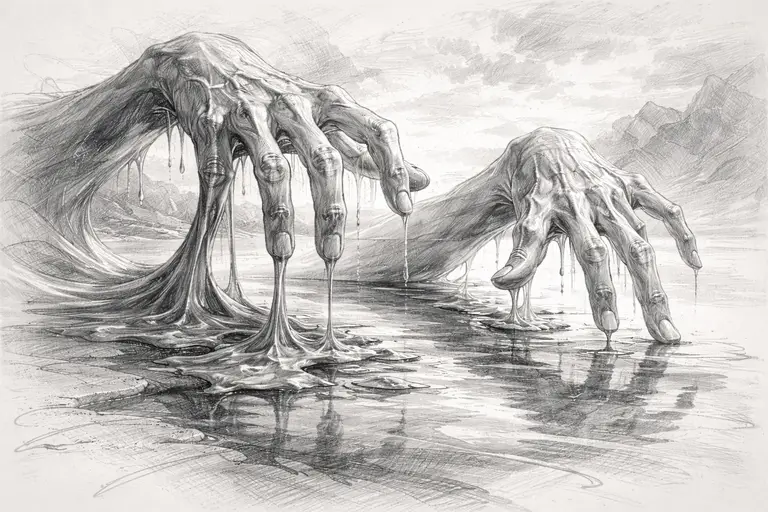
Not taken. Not broken. It simply stopped being holdable. The grip was correct, the force was appropriate, everything you know about holding something was applied — and the object moved through your hands as if your hands had stopped being the kind of thing that can hold objects. The slipping isn’t a failure of grip strength. It’s a failure of the basic physical relationship between your hands and the world they’re supposed to be able to grasp.
That’s the specific quality that makes this dream different from dropping something. Dropping is an event — a moment, a cause, a thing that fell. Slipping is a condition. The slipping happens continuously. You tighten your grip and the object keeps going. You adjust your hold and the adjustment doesn’t help. The relationship between the effort to hold and the holding has broken down in a way that doesn’t respond to more effort.
What I’ve noticed about when this dream appears is that it’s almost always about something that matters. Not random objects. The steering wheel that was supposed to control where you’re going. The railing that was supposed to prevent the fall. The important thing, the critical thing, the thing whose being held is directly connected to something significant happening or not happening.
Quick Answer
- A dream about trying to control something that keeps slipping means the mechanism that allows your grip to produce holding has failed — not your strength, but the relationship between your effort and its effect.
- The object that slips is specific: it’s always something that matters, never something inconsequential.
- The slipping is a condition, not an event — it continues regardless of how you adjust your grip.
- What the object is made of tells you what quality the situation has: wet means it was once holdable and has changed, oily means something has been introduced between you and it, too small means the holding requires a precision you can’t currently achieve.
- The correct response to slipping isn’t more grip. The dream keeps staging this so clearly you finally have to look at it.
Common Scenarios
- Steering wheel spinning freely, not connected to direction → the mechanism between your decisions and the situation’s direction has failed
- Sand or water running between your fingers → what you’re trying to hold can’t be held in this form; it requires a different kind of container
- Rope slipping through your hands → something you were supposed to be anchored by is no longer providing anchor
- A person’s hand that keeps slipping from yours → connection that was supposed to be sustained is not sustaining
- Object that was holdable and then wasn’t → the change happened; something that worked is no longer working
What the Body Registered
- The phantom sensation in the palms — the specific feeling of something slipping even though nothing is there → the body ran the full grip-and-lose sequence and it transferred
- The frustration that’s more specific than anger — the quality of trying correctly and having the correct trying not help → the body knows the difference between failure of effort and failure of the mechanism
- What was slipping is already identifiable → the object already had its address before the analysis started
- The adjustment attempts are still present as a felt memory → the body kept trying different grips and they all produced the same result
What Grip Actually Represents
Grip is the most basic form of control available.
Before strategy, before planning, before any of the sophisticated instruments of influence — there’s grip. The ability to hold something, to keep it in place, to maintain the position you’ve chosen between your hands and the world. Grip is what makes tools possible. It’s what makes relationships possible at the most fundamental level. It’s what makes the wheel turn in the direction you choose.
The losing control cluster maps different forms of agency failing. Not being able to run is about traction. Not being able to speak is about transmission. Trying to control something that keeps slipping is about the most intimate form of control: the direct contact between your hands and the thing you’re trying to influence.
When that direct contact fails — when the mechanism of grip stops working — nothing else can compensate. You can’t route around it. You can’t use a different mechanism to achieve the same result. The steering wheel that spins freely means the car is going where it goes now, not where you’re directing. The railing that slides through your hands means the fall that was being prevented is happening.
In waking life, this maps to the specific experience of having direct influence over something fail in a way that can’t be managed through alternative routes. The project that was being shaped by your decisions and has started moving in a direction your decisions don’t determine anymore. The relationship that was being maintained through sustained effort and has started behaving as if the effort isn’t being applied. The situation that was responsive to your direction and has stopped being responsive.
You grip it. The grip is right — the pressure, the angle, everything you know about holding this kind of thing. And it keeps going anyway. You tighten. It doesn’t respond to the tightening. You adjust. The adjustment makes no difference. The thing is still in your hands, technically. It’s not being held.
What the Slipping Object Is Made Of
The material of what slips carries specific information.
Something wet that was dry — something that was holdable and has become slippery — is about a change in the situation. The object hasn’t changed form entirely; it’s the same thing, but it’s acquired a quality that makes holding it harder. In waking life, this is the situation that worked and has developed a new quality that makes it less manageable than it was. The relationship that added a new element. The project that acquired a new variable. The thing that was being held correctly until something changed.
Something that dissolves or changes form while you hold it — sand, water, smoke — is about a fundamental mismatch between the form of what you’re trying to hold and the mechanism you’re using to hold it. Sand cannot be held in a fist. Water cannot be gripped. The effort is real but the method is wrong for the material. In waking life, this is the situation that requires a different kind of holding than the kind being applied. Not more effort in the same direction — a fundamentally different approach.
Something oily or coated — something with a substance between you and the object — is about interference. Something has been introduced between your influence and the situation that is preventing the normal contact. The oil on the steering wheel. The film on the surface of the relationship. The thing that exists between your grip and what you’re trying to hold.
The Tighter You Hold, the Less You Have
This is the dream’s most counterintuitive teaching and the most important.
In most situations involving grip, more force produces more holding. You tighten your grip and the object stays. The relationship between effort and result is direct.
In the slipping dream, this relationship has inverted. The tighter the grip, the faster things go. The more force applied to the hold, the more whatever is being held seems to accelerate its departure. This inversion is precise: the dream is showing you a situation where the instinctive response — try harder, hold tighter — is actively making the situation worse.
In waking life, this is the specific experience of a controlling response to a situation that doesn’t respond to control. The relationship where the tightening of grip produces more distance rather than more stability. The project where more management produces more chaos rather than less. The situation where the instinct to clamp down is accelerating the very thing it’s trying to prevent.
The open hand, in many wisdom traditions, holds more than the clenched fist. The dream is staging this truth at full force: what you’re trying to hold cannot be held the way you’re holding it.
What Was Never Going to Be Held This Way
Some versions of this dream include a moment of clarity — not resolution, but recognition.
The slipping has been happening for the whole dream. You’ve tried every adjustment. And at some point, something in you understands: this particular thing, in this particular form, cannot be held with these particular hands in this particular way. Not through lack of skill. Not through lack of effort. The thing and the grip are simply not compatible.
In waking life, this is the recognition that certain kinds of influence are not available to the person trying to apply them. The relationship that cannot be steered by continued steering. The situation that cannot be managed by continued management. The thing that would need to be released — truly released, not just held more loosely — for a different kind of relationship to become possible.
This version of the dream is the one that arrives when the processing of the slipping has reached its most honest point. The thing kept slipping. You kept trying. And finally the dream produces the recognition: this was always going to slip.
When This Dream Arrives
When something that was being held through sustained effort has developed a quality of uncontrollability that the effort can no longer compensate for.
Not the first time something slipped. After sustained experience of the slipping — after the adjustment attempts have established a pattern of not working. When the relationship between effort and holding has been disrupted for long enough that it’s a condition rather than an isolated event.
It also arrives during periods when the very nature of what’s being controlled has changed — when the object has become a different material than the one being gripped.
The Psychology Behind It
Grip is one of the earliest motor skills and one of the most deeply embedded. The hand’s ability to grasp is part of the brain’s most fundamental motor mapping. When the dream generates grip failure — when the object keeps slipping regardless of adjustment — it’s disrupting one of the most basic action-outcome relationships available.
This is specific: the brain generates slippage dreams when the direct influence mechanism has failed, not when things are generally difficult. Difficulty is navigable. Slippage is different — it means the mechanism between your intention and the outcome has lost its friction, and friction is what converts intention into result.
The continuous slipping, rather than a single drop, is the brain’s honest representation of a sustained condition rather than an isolated failure. You’re not in the moment of losing your grip. You’re in the ongoing condition of having lost the effective relationship between your grip and the result your grip was supposed to produce.
The Sentence This Dream Was Trying to Say
“The harder I hold, the less I have — and something in me is starting to understand that this grip was never going to be enough.”
The Morning After
The phantom sensation in the hands — the ghost of the slipping — may still be there briefly.
Before the hands reach for the first thing: what was slipping? Not the symbol — the specific thing. The relationship, the project, the influence, the situation that has been in your hands and has been developing a quality that your grip can’t account for.
And: is the answer more grip, or a different kind of holding?
FAQ
What does it mean to dream about trying to hold something that keeps slipping? It means the mechanism between your direct influence and the situation’s response has broken down — not your capability, but the friction that converts effort into holding. The dream is staging a condition: the grip keeps being applied, the object keeps moving through the hands regardless. In waking life, this corresponds to situations where sustained control is being applied and the situation keeps departing from what the control is trying to produce. The slipping isn’t a failure of effort. It’s a failure of the relationship between effort and result.
Why does gripping harder make it worse? Because the relationship between force and holding has inverted in this particular situation. In ordinary circumstances, more grip produces more holding. The dream generates the version where more force accelerates the departure — which is the accurate image for situations where control-seeking behavior makes things less stable rather than more. More management, more restriction, more force applied to a situation that doesn’t respond to force — these can accelerate the very instability they’re attempting to prevent. The dream is showing you what that looks like from the inside.
What does it mean if the object dissolves while I’m holding it? It means the form of what you’re trying to hold is incompatible with the mechanism being used to hold it. You can’t grip sand. You can’t hold smoke. The dream is telling you something specific about the mismatch between approach and material: what you’re trying to control needs a different kind of container or relationship than the one you’re applying. Not more effort in the same direction — a fundamentally different way of being in relation to it.
Next Stages
If the slipping eventually produced a fall — if losing the grip led to losing the position → dream about losing balance and falling repeatedly — when the slipping grip transitions into the loss of stability itself
If the object was someone else’s hand — if what slipped was a connection to another person → dream about being ignored meaning — when the slipping is relational, when the grip that’s failing is the one that maintains the connection
If the slipping was one piece of a broader system failure — if losing the grip was part of everything simultaneously losing its reliability → dreaming that everything stops responding around you — when the slipping is one symptom of a comprehensive loss of the relationship between effort and result