Door That Won’t Open No Matter What: The Psychology of Blocked Progress
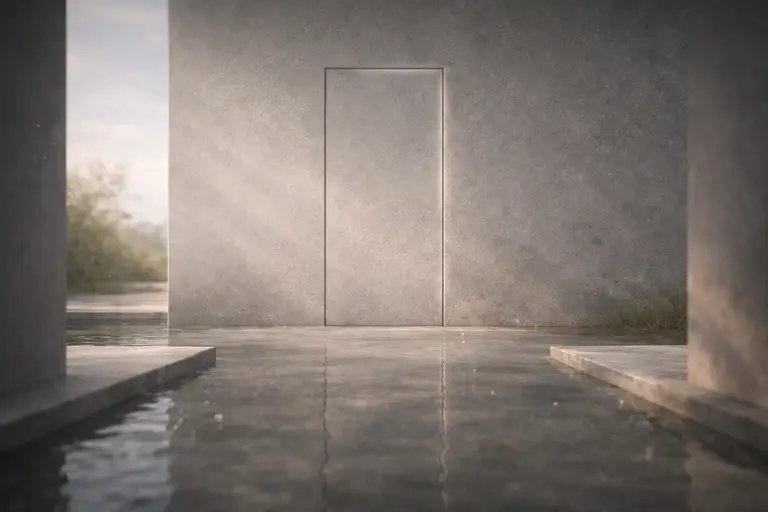
The handle turns. The door stays shut.
That’s the specific thing about this dream that everyone describes with the same exactness. The handle works. The mechanism isn’t broken — it rotates, it responds to your grip, it does what a handle is supposed to do. And nothing happens. The door doesn’t move. The latch doesn’t catch. The barrier between where you are and where you need to be is completely intact despite every sign that it should be openable.
What makes this dream different from simply being blocked is the functional mechanism. If the handle didn’t turn, if the door were sealed solid, the message would be: this is locked, you can’t go here. Instead, the dream gives you a handle that rotates, a mechanism that works, a process that functions — and a door that still doesn’t open. The effort is received. The result is absent. Something is technically cooperating and actually blocking simultaneously.
That gap — between a mechanism functioning and a door not opening — is the dream’s most precise piece of information. It’s not about the door. It’s about the space between your correctly applied effort and the next place.
Quick Answer
- A dream about a door that won’t open means access to something specific is blocked despite correct and sustained effort — the mechanism is working, the result isn’t.
- The specific door matters: what’s on the other side is what’s being denied, and the architecture of where the door is located tells you which domain.
- This is not about inability — you’re trying correctly. It’s about something that should respond not responding.
- The material the door is made of and how it doesn’t open are specific information: no click is different from giving way is different from silent absorption of force.
- The correct response is almost never more force. The dream keeps staging this so you can see it clearly.
Common Scenarios
- Handle turns but door doesn’t budge → mechanism working, access denied; the process is correct, the entry isn’t available
- You throw your whole weight against it and it absorbs the force → the door is not resistant, it simply doesn’t engage with your force at all
- Key fits but doesn’t turn → you have the right credentials but something in the system isn’t accepting them
- Door opens to a wall → the entry was available, what’s behind it isn’t what was expected
- Different people pass through the same door without difficulty → access exists for others; the block is specific to you
What the Body Registered
- The frustration of the handle in the hand — the turning that produces nothing → that specific useless rotation is still present as a muscle memory
- The specific quality of the door not engaging — not resistance but non-response → the body registered the difference between being blocked and being ignored by the barrier
- What was on the other side of the door was already identifiable before waking → the dream knew what was being denied before the analysis started
- A particular situation in waking life was already present → the door already had its address
What the Door Is Made Of
The architecture of the door is the dream’s first and most specific piece of information.
A heavy wooden door is the image of institutional or structural blocking — something that was built to regulate access, that has the weight of intention in its construction. The door was designed to be something between you and what’s on the other side. When this door won’t open, the blocking has the quality of a system or structure that is doing exactly what it was built to do, just not in your direction.
A glass door is visibility without access — you can see the other side, you can see exactly what you’re being denied, and the transparency of the barrier is part of what makes it hard to accept. The thing is right there. You can see it in detail. The door keeps it unreachable.
A door that should be simple — an ordinary interior door, something that has opened thousands of times before — is the most specific version. This is familiar territory. This is a passage you’ve used. And now it won’t open. The ordinary has become impassable.
What the door is made of tells you something about the nature of the blocking in waking life: institutional and structural, visible but inaccessible, or familiar and suddenly impenetrable.
You grip the handle. It turns exactly as it should. The mechanism works perfectly. Your hand communicates the right information to the door and the door communicates nothing back. You pull. The frame holds. You try the handle again, as if this time the result will be different. The result is the same.
The Difference Between Resistance and Non-Response
This distinction is the one the dream is most specific about.
A door that resists you pushes back. You can feel the resistance. You can gauge it, work against it, adjust your force to match it. Resistance is a relationship — it tells you something about the nature of the barrier.
A door that doesn’t respond doesn’t do any of those things. You apply force. Nothing happens. Not opposition — absence. The door doesn’t resist your pushing; it simply absorbs it without engaging. Your full weight doesn’t meet an equal force that stops it. It meets nothing. The force goes in and no information comes back.
The losing control cluster maps different kinds of agency failure. The door that resists would be a different kind of block — one with friction, one that acknowledges the attempt. The door that doesn’t respond is the version where the attempt isn’t even acknowledged. The effort is being made. The door is not receiving it.
In waking life, this maps to the situations that have the same quality: not active opposition but non-response. The application that sits unreviewed. The conversation that keeps being redirected before it reaches its actual content. The request that is received and produces no acknowledgment. The effort that disappears into a system without any indication that it arrived.
What’s on the Other Side
The dream is always precise about the other side, even when the door is never opened.
Sometimes you can see through it — glass, a crack in the frame, a gap under the door that lets light through. The information about what’s there is available. You know what you’re being kept from. The clarity of what’s unavailable is part of the dream’s specific weight.
Sometimes the other side is implied by context — you’re in the right building, at the right floor, and you know what this door is supposed to lead to. The knowledge of what’s there doesn’t require vision.
And sometimes the door is in an unknown space, leading to something undefined, and the blocking is about access to the unspecified next thing rather than anything you can name. This version appears when what’s being blocked is less a specific goal than a general sense of forward movement — when the next chapter doesn’t have a name yet but the door to it won’t open.
The other side already has its address in your waking life. Whatever is on it is the goal, the opportunity, the conversation, the resolution that has been blocked. The door was always that specific barrier, not a generic one.
Why More Force Isn’t the Answer
Every version of this dream includes the moment of applying more force.
You try the handle. Nothing. You try harder. Nothing. You throw your shoulder. Nothing. You kick. Nothing. The escalation of force is the natural human response to a barrier, and the dream runs it all the way to maximum and produces the same result every time: a door that doesn’t open.
This is the dream’s most specific teaching, and the most uncomfortable one: the thing that hasn’t worked won’t work harder. The strategy being applied is the strategy the dream has been repeating. The result of the strategy is the same each time because the strategy hasn’t changed. The door isn’t measuring the force. The door isn’t responding to force at all. More of what hasn’t worked produces more of not-working.
In waking life, this is the thing that’s hardest to accept when you’re in the middle of it: the approach that feels correct, that has the quality of the right approach, that is technically being applied correctly — is not what this particular barrier responds to.
When This Dream Arrives
When something specific and important has a sustained block in front of it.
Not the first time something was tried and failed. After sustained application of effort to a specific barrier that has continued not to open. The dream generates this image when the pattern has been established: the handle turns, the door stays shut, the next approach is tried, the door stays shut.
It also appears when the blocking has the quality of non-response rather than active opposition — when what’s keeping you from the next thing isn’t resistance you can work against but an absence of engagement that the effort disappears into.
The Psychology Behind It
The brain tracks the relationship between effort and result continuously. When a specific approach to a specific barrier keeps producing the same non-result, the mismatch between expected outcome and actual outcome generates a stress signal. The door-that-won’t-open dream is the brain’s spatial image for that mismatch: here is the barrier, here is the effort being applied, here is the result that keeps not happening.
During REM sleep, the motor cortex is active but the body is inhibited — the physical action of opening a door cannot be completed. The brain recruits this physiological reality to construct the dream: the attempt is real, the opening isn’t happening, the dream generates a door that won’t open as the narrative explanation for why the effort hasn’t produced a result.
What the brain organizes around that physiological substrate is specific to the waking situation. The door isn’t random. The building is the right building. The other side holds what it holds. The dream is accurate about where the block is, even when it doesn’t provide information about how to open it.
The Sentence This Dream Was Trying to Say
“I’ve been applying the right effort to the right door — and the door has been teaching me that right effort isn’t what opens this particular one.”
The Morning After
The handle is available. You know because you’re awake and the door in your actual life is still there, still with the same mechanism, still with the same thing on the other side.
Before the day restarts the approach: what is the door? Not the symbol — the specific one. What is on the other side that has been blocked despite sustained correct effort? And what has been the approach that keeps producing the non-response?
The dream was precise about the mechanism that works and the door that doesn’t open. The question it leaves is whether the approach itself needs to be something different from more-of-what-hasn’t-worked.
FAQ
What does a dream about a door that won’t open mean? It means access to something specific has been blocked despite correct and sustained effort — the mechanism you’re using is functioning correctly, and the door isn’t opening. The dream is precise about this distinction: it gives you a handle that turns, a process that works, a correctly applied attempt. And then it keeps the door shut. In waking life, this corresponds to a specific goal, opportunity, or transition that has a barrier in front of it that hasn’t responded to the approaches being used.
Why does the handle turn but nothing happens? Because the dream is being specific about where the failure is: not in your effort, not in the mechanism, but in the connection between your correctly applied effort and the result. The handle turning means you’re doing the right thing. The door not opening means the right thing isn’t what this particular barrier responds to. The gap between a working mechanism and a non-opening door is the dream’s most precise image for the difference between correct effort and effective approach.
What does it mean if other people can go through the door but I can’t? It means the blocking is specific to you — or more precisely, to your relationship to whatever is on the other side of that door. The door works. The barrier isn’t universal. Something about your specific position, credentials, timing, or approach is what’s creating the block. In waking life, this corresponds to situations where access exists — the goal is achievable, others have achieved it — and something about the current configuration of your approach or circumstances is what’s producing the non-response.
Next Stages
If what was behind the door was something that had already been reached and lost — if the blocking was a return rather than an arrival → dream about trying to control something that keeps slipping — when access isn’t the block but holding what you reach is
If the door was part of a broader failure of the environment to respond — if it was one of many things that stopped working → dreaming that everything stops responding around you — when the door is one failure in a systemic failure of environmental response
If behind the door was something urgent and the time to reach it was closing → dream about being late meaning — when the blocked door and the closing window are both present, when access is denied and the deadline continues regardless