Taking a Phone Call from the Deceased
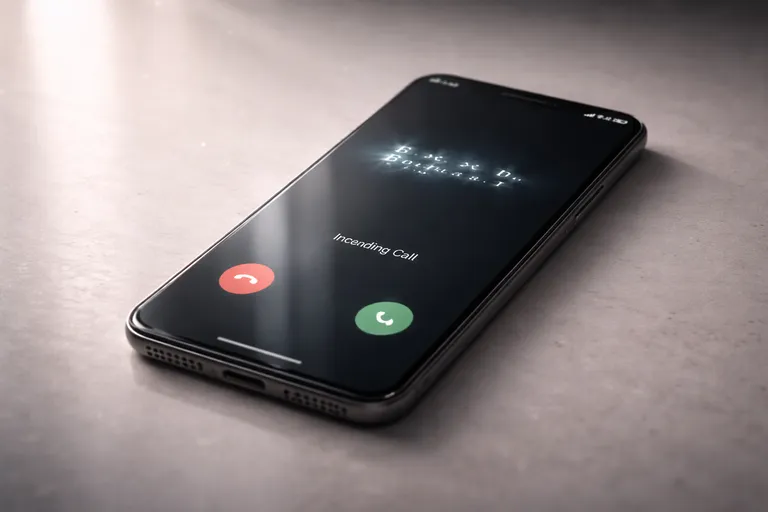
You knew who it was before you answered.
That’s the thing about this dream that stays longest after waking — not the call itself, not what was said, but the moment before you picked up. The phone rang and you looked at it and somewhere in you the recognition arrived: I know whose voice is going to be on the other end of this. And then you answered anyway.
Or you didn’t answer, and the ringing continued until it became part of the room, and eventually the room had to respond.
The phone call from someone who has died is one of the most specific experiences the dreaming mind can offer, and it’s specific in ways that face-to-face contact with the deceased isn’t. When they appear in front of you in a dream, the full presence of them — the way they held themselves, the specific quality of being in a room with them — is what arrives. A phone call is different. It’s the voice only. The person stripped down to the acoustic. The particular frequencies of how they spoke, what they called you, the specific rhythms of how their sentences moved.
If anything, this narrowness makes it more precise. A phone call delivers exactly the part of the person that language carried — and language was where they kept the things they needed to tell you.
Quick Answer
- Taking a phone call from the deceased means your mind is delivering something through the most intimate channel it has for this person: their voice, stripped of everything but what they were trying to communicate.
- The call is mediated — you hear them, you don’t see them. That distance is part of the message.
- What the line sounds like matters: clear means the communication is accessible; static means something is interfering with the transfer.
- You can hang up. The dream usually makes it impossible. What keeps you on the line is worth understanding.
- What they said — or didn’t say — is the content. The fact that they called is the context.
Common Scenarios
- You hear their voice clearly and they give you something specific → the communication transferred; what they said is already in you
- The line is full of static and you can barely hear them → something is interfering with what’s trying to be communicated
- You can hear them but they can’t hear you → the message is one-directional; this isn’t a conversation, it’s a transmission
- They ask you something you can’t answer → the question they’re holding is one you haven’t resolved
- The call ends before they finish → the communication was interrupted; something is still mid-transmission
What the Body Recognized
- The specific quality of their voice is still present on waking — not imagined, remembered → the acoustic memory activated and it transferred
- The feeling of the phone in your hand — weight, temperature — still there briefly → the physical object of the dream registered as real
- Whether you wanted to hang up or couldn’t bear to → the dream showed you which direction the grief is pulling
- Their voice saying your name, if that happened → this specific detail tends to stay when almost everything else goes
Why the Mind Chose a Phone Call
When someone you’ve lost appears in a dream, the mind has to decide how to stage the encounter.
Face-to-face is one form. Dead relatives talking to you is the full presence — the visual, the spatial, the complete experience of being with them. That version carries the weight of their embodied presence. It’s the total thing.
A phone call is a different choice, and the choice is deliberate. The phone creates a specific kind of intimacy that differs from presence: you can’t see their face, you can’t read their body, you have only their voice and what the voice carries. That narrowing is not a limitation. It’s the mind selecting the part of this person it needs you to attend to.
The transformation this cluster processes involves what the dead carry for the living — the wisdom, the unfinished things, the parts of the lineage that still run through you. The phone call delivers this in its most concentrated form: just the voice, just the words, just the acoustic fact of them. No body to distract you, no visual to interpret, no presence to process. Only what they said.
The phone rang and you picked it up and their voice came through and for a moment nothing in you moved. Not because of shock exactly — you recognized the voice immediately, before you could have explained how. Just: that voice. Saying your name, probably. Or saying something so characteristic that the recognition happened before the words resolved.
What the Quality of the Line Is Telling You
The signal on the line carries information that the content of the call doesn’t.
A clear line — their voice coming through without interference, the quality of the call clean and present — means the communication is accessible. What needs to be transmitted is available. Your mind has built a channel to this person’s voice that is functioning, and what they have to offer can move through it. The grief has progressed enough, or the readiness is present enough, that the connection can be made without distortion.
Static is different. Static is interference — the sound of something blocking the transmission. The voice is there but broken, the words are there but incomplete, you can hear them trying to get through but the line won’t cooperate. In waking-life terms, this maps to an unprocessed grief or an unresolved question that hasn’t found its form yet. The information exists. Something is preventing clean transmission.
Whether that something is time — the grief still too raw for the message to come through clearly — or something in you that isn’t ready yet, or a specific thing that hasn’t been looked at directly: the static is the dream being honest about the state of the channel.
The Inability to Hang Up
Most dreams give you the option of leaving. This one tends not to.
You can try. The impulse to end the call — whether from grief, from overwhelm, from not being ready for the conversation — is there and real. But the finger doesn’t press the button. The arm doesn’t lower the phone. Something keeps you on the line past the point where ordinary decision-making would have let you go.
That inability is worth understanding specifically. It isn’t the dream punishing you or forcing something on you against your will. It’s the dream recognizing that part of you — the part that answered in the first place — knows that what’s being said needs to be heard. The body that refuses to hang up is the body that understands that the call is necessary, even if the mind is still working up to that understanding.
In waking life, this maps to the specific experience of staying in a difficult process longer than is comfortable because some part of you recognizes that the discomfort is the point. The therapy session that you can’t end early. The conversation that you stay in despite every impulse to leave. The grief that you don’t cut short because you know it needs to complete itself.
You couldn’t hang up because hanging up would have been easier than what the call was trying to give you.
When You Can Hear Them But They Can’t Hear You
This version carries its own specific quality, distinct from everything else in this dream.
Their voice comes through clearly. You can hear every word. You respond and there’s nothing — no acknowledgment, no shift in the conversation, no sign that your voice is reaching them. You’re present. You’re receiving. The transmission is entirely one-directional.
This isn’t a communication failure. It’s the accurate structure of what’s available.
The dead cannot hear the living in the way the living can construct conversations with the dead. What the phone call gives you is the voice — the accumulated wisdom, the specific way this person thought, the particular quality of how they cared about you — coming through the channel that your memory has maintained. It doesn’t require a response from you. It doesn’t need to be a dialogue. It’s the transmission of something they left and you’re still receiving.
The inability to reach them back is the honest fact of the situation. They can’t hear your responses because what’s on the other end of the line isn’t them — it’s the part of you that kept their voice. You can’t change the conversation because the conversation was already complete before you picked up. What you’re receiving is everything they already gave you. You just hadn’t listened to all of it yet.
You speak and the line doesn’t change. Their voice continues with its own logic. And somewhere in the middle of the call you stop trying to interrupt and just listen. That’s when the call becomes useful. Not because they answered you. Because you finally stopped trying to make it a different kind of conversation.
The Call That Already Ended
Some versions of this dream include the moment after the call.
The line goes silent. The call ended — maybe they hung up, maybe the connection dropped, maybe it simply completed. And you’re left with the phone in your hand and the specific quality of silence that follows the end of a conversation that mattered.
This silence is different from the silence of not having spoken to them. It’s the silence after contact — the particular quality of space that conversation leaves when it’s over. Not empty. Changed. The call happened. Something moved through the line. The room is different now in the specific way rooms are different after someone who matters has been in them.
What stays in this version is almost never the content of the call. It’s the feeling of having heard that voice again. The specific fact of it. That they called and you answered and for the duration of the call, the line between here and gone was thinner than it usually is.
When This Dream Arrives
At the intersection of grief and readiness.
The phone call from the deceased tends to appear when something in you has finally opened enough to receive what couldn’t come through before — when the acute phase of grief has moved into something that can allow contact without being overwhelmed by it. The call comes when the line is ready.
It also appears during periods when a question that involves this person’s wisdom has become active — when the specific knowledge they held, or the specific way they understood you, is relevant to something you’re currently navigating. The mind knows which voice to recruit.
And sometimes it appears simply because the grief has a tide, and the tide has come in, and what the dream gives you is the voice one more time.
The Psychology Behind It
The acoustic memory of someone’s voice is one of the most durable forms of memory the brain maintains. Voice carries identity in a way that visual information doesn’t quite replicate — the specific frequencies, the characteristic cadences, the particular way someone pronounced certain words. This information is encoded deeply and accessed through channels that can bypass the ordinary mechanisms of memory retrieval.
When the dream generates a phone call, it’s using this specific memory system to create the most faithful possible reconstruction of the person’s voice. The phone call format isolates the acoustic — removes everything else to make the voice as present as possible. The mind chose this form because this is where the transmission needed to happen.
The content of the call is generated from everything the dreamer carries about this person — their wisdom, their way of seeing things, the specific knowledge they held about the dreamer that nobody else holds in the same way. What comes through the line is the mind’s synthesis of everything this person knew that is relevant now.
The static is when that synthesis is incomplete. The clear line is when it isn’t.
The Sentence This Dream Was Trying to Say
“They called — and the voice on the other end already knew what I’ve been trying to figure out.”
The Morning After
The voice is fading. That’s how it always goes — the acoustic memory recedes faster than the knowing.
Before it goes completely: don’t try to reconstruct the words. Go instead for the feeling the call left. The direction it pointed. The specific thing — not a sentence, just a quality — that came through the line before the call ended.
That quality is what the dream transmitted. The words were the vehicle. The feeling is the cargo.
FAQ
What does it mean to take a phone call from someone who has died? It means your mind used the channel it has most carefully maintained — this person’s voice — to deliver something that needed to come through that specific route. The phone call format is deliberate: it strips away everything except the voice, creating the most concentrated possible transmission of what this person knew and what you need from that knowing. The content of the call is generated from your own deepest memory of them. It arrives as theirs because it was always both of yours.
Why can’t I hang up the phone in the dream? Because the part of you that answered already understands that the call is necessary. The inability to hang up is the dream’s honest representation of the part of you that knows this conversation needs to complete itself — not the anxious part that wants to avoid it, but the part that came to the phone in the first place. You couldn’t hang up because hanging up would have been a choice your own wisdom wouldn’t let you make.
What does it mean when the line is full of static? It means something is interfering with the transmission — grief that’s still too raw, a specific thing that hasn’t been looked at directly, or a readiness that hasn’t quite arrived yet. The voice is there. The information exists. The static is the current state of the channel, not the absence of the message. Recurring static-calls tend to clarify over time as the grief does its work and the readiness develops.
Next Stages
If the call shifted from a phone to a presence — if the voice became a person in the room and contact moved from acoustic to direct → dream about dead relatives talking to you meaning — when the mediation of the phone falls away and the contact becomes full presence
If after the call the line went dead and what was left was a person still present but no longer communicating → dream about dead person alive but silent meaning — when the voice stops and the silence becomes its own form of contact
If what the call delivered was something about who you are and what you carry from them — if the transmission was about lineage rather than message → dream about death and rebirth meaning — when the call connects to something larger about what passes between generations and what you’re in the middle of carrying forward