The House on Fire Dream — What Burns Is Not What You Think
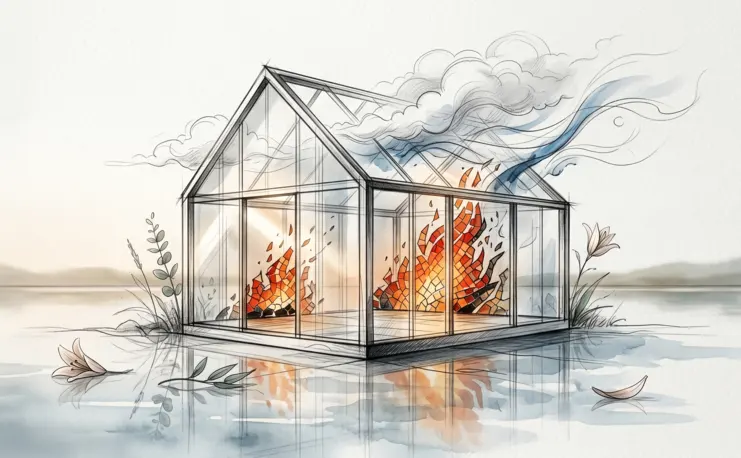
The fire was already going when you understood what was happening.
Not a spark, not a beginning — already going, with the specific quality of something that has been in process long enough that the moment of origin is no longer the relevant fact. What mattered in the dream was not how it started. What mattered was that it was burning, and that it was yours, and that the burning had a quality to it that was not simple destruction.
You know this because of how you felt.
If the house on fire dream produced only terror — the unmediated panic of something precious being destroyed — you would not be here trying to understand it. Pure destruction is legible. It produces grief and it dissolves with the waking. What this dream produces is something more complicated: a specific mixture of loss and something else, something without a clean name, something that watched the fire with a quality that wasn’t entirely afraid.
That quality — the unnamed thing underneath the fear — is the most important information the dream delivered.
In twenty years of working with dreams, I have never seen a house fire dream that was only about destruction. The brain doesn’t reach for fire when it wants to show you something being lost. It reaches for fire when it wants to show you something being transformed. These are not the same thing. Loss is about what disappears. Transformation is about what the disappearance makes possible. The fire in your dream was the brain’s most precise available image for the second kind — for a change so fundamental that the structure cannot be maintained, only cleared.
What burns is not what you think. What burns is what could no longer stay.
Quick Answer
- The house on fire dream is almost never about destruction — it is the brain’s most precise image for transformation at the structural level: something that cannot be maintained in its current form is in the process of being cleared for what comes next
- The brain selects fire specifically because fire is the only force that transforms by consuming — it does not repair, does not modify, it clears; the dream reaches for fire when what is needed cannot be achieved through repair alone
- The specific part of the house that is burning contains the most specific information — which room, which floor, which wall tells you precisely which territory of the self is in transformation
- The grief in the dream is accurate — not everything that burns needed to go; the fire doesn’t discriminate; it consumes what was ready to be cleared alongside what was loved; both losses are real
- If watching the fire produced something that wasn’t entirely fear — a quality of recognition, almost rightness — the body is reporting that some part of you already accepted the transformation before the mind caught up
- The dream where you tried to save the house and couldn’t is not failure — it is the brain processing the grief of change that cannot be reversed; the inability to save is the report that the transformation is past the point of return
- The dream where you watched without trying to stop it is the brain at acceptance — the transformation has been processed to the stage where the rescue impulse is no longer what the system is running
- Fire that spreads through the entire house is total transformation — not a specific change but a structural clearing; something about the entire architecture of the current self is being rebuilt
- The house on fire dream arrives most often not at the beginning of a transformation but in the middle — when the process is already underway and the brain is finally processing what is being consumed
- What was burning specifically — which rooms, what objects, what structure — is not detail to look past; it is the address the dream was delivering
Common Scenarios
- The fire was consuming specific rooms while others remained intact. The transformation is targeted, not total. The rooms that burned are the territories of the self currently in the process of being cleared. The rooms that were intact are what is being preserved through the change — what the transformation is keeping. The specificity of which rooms were burning is the most precise information the dream delivers. I always ask: which room? The answer is almost always exactly what the person has been circling around in the waking life.
- You were trying to save things from the fire — carrying objects out, reaching toward rooms, working against what couldn’t be stopped. The brain is processing the grief dimension of the transformation — the specific cost of the clearing. Not everything that burns was ready to go. Some of what is being consumed was valuable, was loved, deserved more than the fire gave it. The saving impulse is the self trying to distinguish what can be preserved from what the transformation requires. What you were trying to save is what the transformation is costing you specifically. That cost is real and worth acknowledging.
- You watched the house burn without trying to stop it. The brain has processed the transformation to the stage of acceptance. Not passivity — the stage of the process where fighting what is happening has become less available than witnessing it. This version often arrives later in a transformation, after the initial resistance has been processed. The watching is the self having moved forward enough to observe rather than resist.
- The fire was beautiful alongside the destruction — something in the watching couldn’t entirely look away. The ambivalence is accurate. Fire consumes what needed to go and what was loved simultaneously. The brain generates this specific aesthetic response — the beauty of fire — when the transformation is genuinely necessary even as it is genuinely costly. Both things are true at the same time. The beauty is not in the destruction. It is in the clearance.
- The house burned completely to the ground. Total transformation. The brain is processing a change that is comprehensive — not a specific territory being cleared but the entire structure. This is not catastrophic. It is what the deepest transformations look like from the inside: everything cleared, the ground visible for the first time, the space where something entirely different will be built. The most frightening version of this dream is often the most complete report on a real and necessary reinvention.
- You were inside the burning house and couldn’t get out. The transformation is not being observed from outside — it is happening through you. The self is not watching the change from a safe distance; it is being changed. This is the most embodied version of the fire dream, and it arrives during the transformations that are most fully lived: the ones that change not a part of the structure but the person inhabiting it.
What Your Body Already Knows
- The quality in the watching — the part that wasn’t only afraid → because that part had already moved further into the acceptance of the transformation than the conscious mind; the body processed the necessity before the mind finished the resistance; the not-only-fear is the body reporting where it actually stands
- Woke up with grief that was also somehow not complete — as if something had already been released → because the dream ran the transformation through the emotional processing system at full resolution; some of what was being held — the weight of maintaining what was ready to go — was released during the dream; the incompleteness of the grief is the completeness of the clearing
- A specific part of the house stayed in the mind more than the rest → because that part carries the most specific information about which territory of the self is in the process of being transformed; the staying is the address; don’t look past it
- Something in the current life came to mind immediately → because the dream had a precise address; the fire was being used to process something specific; what surfaced before you’d decided to think about it is what the transformation is actually about
- The fire felt more inevitable than surprising → because some part of you already knew; the nervous system had been tracking the approaching transformation before the conscious mind named it; the inevitability in the dream is the body’s accurate report on something it had already registered
Why the Brain Reaches for Fire Specifically
This is the question I find most worth sitting with — not what the fire means in general, but why the brain, which has access to every available image in the human archive, selects this one specifically.
The answer is in what fire does that nothing else does.
Water erodes. Wind scatters. Time fades. Decay dissolves slowly, over years, preserving the shape while removing the substance. None of these are fire. Fire is the only force in the physical world that transforms by consuming completely — that takes a structure from one state to another without leaving the intermediate stages, without preserving what was there in a degraded form. One side of the fire: the old form. The other side: the cleared ground.
The brain reaches for this image when what is needed in the internal life has the same quality. Not gradual change, not modification, not erosion over time — the specific, complete clearing that only fire accomplishes. When something in the architecture of the self has reached the point where it cannot be repaired or adjusted or gradually replaced, the brain generates the fire dream. Because fire is the only available image for that specific kind of transformation.
This is why the house on fire dream arrives not at moments of ordinary change but at moments of structural change. Not when a relationship shifts but when something foundational to the self is being rebuilt. Not when a habit is being broken but when the structure that housed the habit is being cleared. The fire is always proportional to the scale of the transformation. A room on fire is a specific territory. A house fully consumed is a comprehensive reinvention.
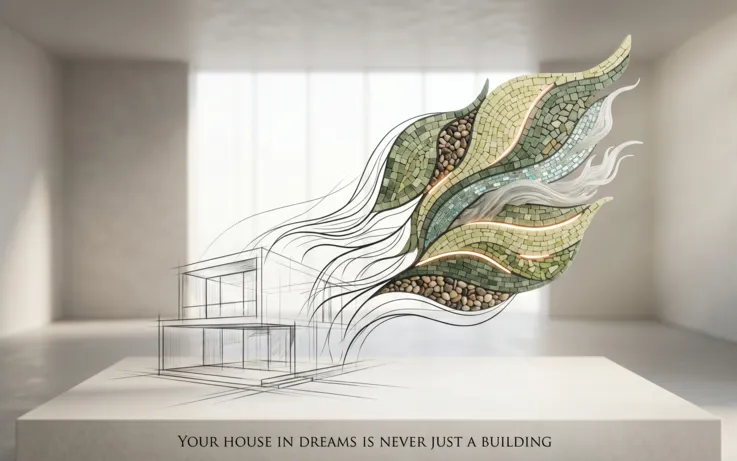
Your House in Dreams Is Never Just a Building maps the complete architecture of what the house represents in dreams — why the brain uses this specific image and what every version of the house dream is reporting about the current state of the self.
The fire has its own quality of light. Different from ordinary light — warmer, less fixed, moving with something that isn’t simply illumination. And you are watching the house burn with the specific presence of someone who has not yet decided whether to run. Not frozen — present. The grief is real. The house is yours, which means the fire is consuming something that was yours, which means the loss is real. And underneath the loss, something the dream won’t let you look away from: the ground beneath the house, visible for the first time in the spaces where the walls are going, solid and dark and available, cleared of everything that was built on top of it. The fire shows you what was always underneath. What could only be seen once the structure came down.
What the Specific Room Tells You
I have never found the room detail to be accidental. Not once.
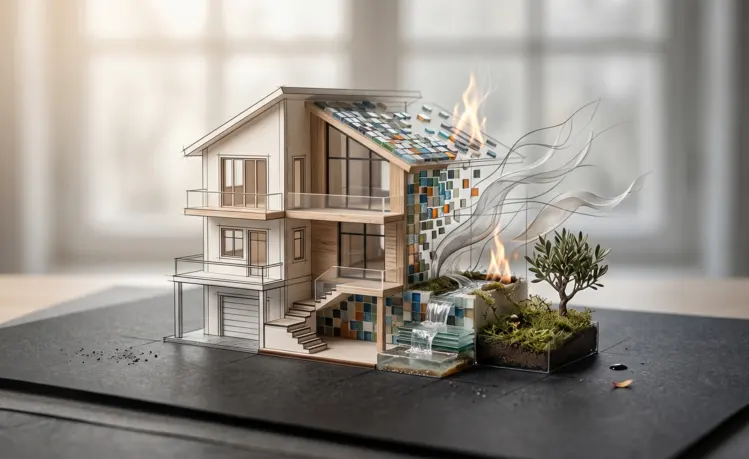
The brain generates a house on fire dream. It could burn the whole house equally. Instead it burns specific rooms — a bedroom, a kitchen, a childhood room, a basement, a room the dreamer hadn’t noticed before. This specificity is the dream’s most precise delivery. It is pointing at a particular territory of the self with the most direct available gesture: fire.
The bedroom burning: what is most intimate about the current self is in transformation. The way the self is held in its most private territory — what it knows about itself that it shares with almost no one — is being cleared and rebuilt.
The kitchen burning: the nourishment systems are in transformation. What sustains the self daily, what feeds the ordinary life, how the self provides for itself — these are what the fire is working on.
The basement burning: what was stored below conscious awareness is being consumed. The things that were pressed down, the material that was contained rather than addressed — the transformation is reaching them. This is often the most significant version: it means the clearing is reaching into what was most protected.
A childhood room burning: the original formation is in transformation. Something from the foundational period — some way of being that was encoded early and has been carried since — can no longer be maintained in its current form. The fire in the childhood room is the brain’s report on a fundamental renegotiation with how the self was originally built.
The room that burned is the address. The transformation has a location. That location tells you everything about what the change is actually about.
The Grief That the Fire Dream Produces
This section needs to be honest, because most interpretations of the house on fire dream are not.
The transformations that the fire dream represents are real transformations. And real transformations have real costs. Not everything that is being cleared was ready to go. Some of what the fire consumes was loved, was valuable, deserved more than the process allowed it. The grief in the dream is not symbolic. It is the accurate emotional response to a real loss within a necessary change.
The brain does not make the fire dream easy. It makes it complete. And complete means the grief is included alongside the recognition of the transformation’s necessity. Both belong. The grief is not a sign that the transformation is wrong. It is a sign that what is being transformed was real — that it mattered, that it was worth mourning, that the clearing has a cost that deserves to be acknowledged rather than rushed past in the direction of what comes next.
The most complete version of the house on fire dream holds both: the grief of what is being consumed and the knowledge of what the clearing makes possible. Not resolved into each other — held simultaneously. This is what I find in the people who have this dream and are moving through the transformation well: they are not choosing between mourning and acceptance. They are doing both.
The structural failure that produces this grief takes a different form in a related dream — not through fire but through weight.
Dream About House Collapsing works with the related structural failure — when what gives way is not through fire but through the accumulated weight of what the structure was asked to hold beyond its capacity.
Dream Timestamp
- Fire in one specific room → targeted transformation; a specific territory of the self is being cleared; the room is the address; what that room represents in the self’s architecture is what is being transformed
- Fire spreading through multiple rooms → the transformation is expanding beyond its original territory; what began in one area is reaching others; the self is in a more comprehensive change than the initial assessment suggested
- Fire consuming the entire structure → total transformation; a comprehensive clearing of the current architecture; this is the deepest version and the most significant; what comes after is built on cleared ground
- Fire in the childhood home → the original formation is being transformed; something from the foundational period can no longer be carried in its current form; the clearing reaches the blueprint
- Dream arrives during sustained life transition → the transformation is already underway in waking life; the dream is processing what the living of it has been producing; the fire is the brain’s report on a change already in progress
The Sentence This Dream Was Trying to Say
“What cannot be repaired must be cleared. The fire is not the loss — it is the clearing. What is being consumed could not stay in its current form. The ground underneath it has been there the whole time. The fire is showing you it exists.”
The Morning After
The fire is still present — the specific quality of it, the warmth of that particular light, the weight of watching something that was yours become something else.
Before the day reinstalls itself, sit with two things simultaneously. The grief of what was burning — what specifically was being consumed, what was real and valuable in what the fire was clearing. Let it be grief without rushing past it. And alongside the grief, the question of what the ground looks like — what becomes available in the space where the structure was.
One question before anything else: what in your current life right now is in the process of being transformed at the level of structure — not repaired, not adjusted, but cleared — and what is the grief that the clearing carries that you haven’t yet allowed to be as large as it actually is?
The fire was not the enemy. The fire was the answer to something that couldn’t be answered any other way. The morning after is when you begin to understand what question it was answering.
FAQ
The house on fire dream is almost never about destruction — it is the brain’s most precise image for transformation at the structural level. Something in the architecture of the self cannot be maintained in its current form and is in the process of being cleared for what comes next. The brain reaches for fire specifically because fire is the only force that transforms by consuming completely — not eroding, not fading, clearing. The fire is not what you’re losing. It’s the process by which what needed to change is changing.
No — and not in the way people worry about. The house on fire dream is not a prediction of literal danger and is not a warning that something terrible is approaching. It is a report on a transformation already in progress. The brain generates this dream not at the beginning of change but in the middle of it — when the process is underway and what is being consumed is being processed. The fire is not the threat. It is the answer to something that couldn’t be answered any other way.
The transformation is targeted rather than total — and the specific room or area is the most precise information the dream delivers. The brain could have burned the whole structure equally; it chose to burn a specific part. That specificity is the address. Which room was burning tells you which territory of the self is in the process of being cleared: a bedroom is the most intimate self, a kitchen is nourishment and daily sustenance, a basement is what was stored below awareness, a childhood room is the original formation. The room is the message.
Because some part of you has already accepted the transformation. The body processes what is necessary before the mind finishes its resistance. The part that watched the fire with something other than pure terror is the part that has moved to the stage of the process where the clearing is acknowledged as required. The not-only-fear is accurate information — it is the nervous system reporting that the transformation, however costly, is genuinely necessary. Trust that part of the response more than the fear alone.
The brain is processing the grief dimension of the transformation — specifically, what the clearing is costing. Not everything that burns needed to go. The saving impulse is the self trying to distinguish what can be preserved from what the transformation requires, trying to hold onto what was valuable in what is being consumed. What you were trying to save is what the fire is costing you specifically — and that loss is real and worth acknowledging directly rather than folding it into the general narrative of necessary change.
Total transformation — not a specific change but a comprehensive structural clearing. The brain is processing a reinvention that is complete rather than partial. This is the most significant version of the fire dream, not the most catastrophic. Something about the entire architecture of the current self is being cleared to build something different. The frightening quality of this version is proportional to the scale of the change — which is real and significant. What comes after is built on cleared ground, which is the only kind of ground that a genuinely new structure can stand on.
Next Stages
Dream About Your Childhood Home — the original archive — why the brain returns to the first house when the current structure is in question
Someone Breaking Into Your House Dream — when the boundary between self and world has been crossed — what got inside and how the self is responding
Dream About House Collapsing — the structural integrity version — when the foundation fails rather than burns, and what the difference tells you
New Room in Your House Dream — what emerges after the clearing — the discovery that follows transformation