Skin Peeling Off to Reveal Metal
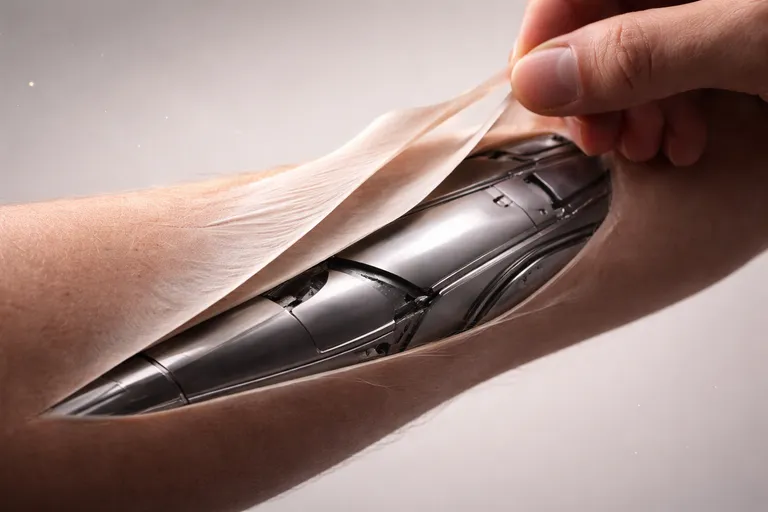
You weren’t expecting what was underneath.
That’s the first thing. Not the peeling itself — the revelation. The moment the surface comes away and what’s beneath it isn’t what skin is supposed to be beneath. Something harder. Something that doesn’t have the same relationship to warmth or pain or the ordinary vulnerability of the body. Something that was apparently already there, underneath everything, waiting for the surface to go.
The dream doesn’t produce this image randomly. It generates it when something specific is happening: when the soft outer layer of how you’ve been engaging with the world has been worn down far enough, or hardened far enough, that the thing underneath has become structural. The metal isn’t being added to you. It was already there. The dream is showing you what you’ve become — or what you’ve been building toward — beneath the part of yourself that was still presenting as human in the ordinary vulnerable sense.
This is one of the most double-edged images the dreaming mind can produce. Metal is strength. Metal protects. Metal withstands what flesh cannot. And metal cannot feel what flesh feels. Cannot bend what flesh bends. Cannot return warmth that was given to it.
The dream is showing you both.
Quick Answer
- A dream about skin peeling off to reveal metal means the outer layer of ordinary human vulnerability has been compromised — underneath is something harder, more durable, less permeable to being hurt.
- The metal isn’t damage. It’s an adaptation. But adaptations have costs, and the dream is showing you the specific cost of this one.
- Whether the metal is clean or corroded tells you the quality of the hardening — whether the armor is working or whether it has already started to fail from within.
- Who does the peeling — whether it happens to you or whether you do it yourself — is the most important distinction.
- The dream is not saying you’ve become a machine. It’s asking what you’ve been doing to protect yourself and what that protection has cost.
Common Scenarios
- Skin peels on its own, you watch → the hardening happened to you; the protection developed in response to something that required it
- You peel your own skin with calm curiosity → you participated in the hardening; there was some part of you that chose this
- Metal beneath is clean and smooth → the armor is intact; the protection is working at the cost of what it costs
- Metal beneath is corroded or rusting → the defensive mechanism has already started to fail; what was supposed to protect is itself becoming the problem
- Someone else reveals metal → you’re perceiving someone close to you as having undergone the same transformation; the trust is gone
What the Body Registered
- The sensation of the surface coming away — even after waking, a residual sense of the boundary of the skin being different → the body processed the removal of the outer layer as a real event
- The specific quality of the metal — its temperature, its texture, whether it felt like capability or like imprisonment → the body already knows which kind of hardening this was
- The absence of the expected pain → the numbness is part of the message; what was supposed to produce a signal is no longer signaling
- Something in your current life or relationships was already present on waking → the metal already knew what environment required it
What the Skin Was Before It Went
Skin is the organ of contact.
Not metaphorically — literally. The skin is the surface through which everything external reaches you: temperature, pressure, texture, pain, touch. It is the permeable boundary between you and the world. Everything that happens to you physically happens at the skin first. And everything that reaches you emotionally — the warmth of another person’s proximity, the specific quality of being held, the difference between a gentle touch and a careless one — all of that travels to the nervous system through this surface.
The transformation this cluster works with involves the ending of forms and the emergence of new ones. The skin peeling off is the ending of the permeable form — the version of you that was responsive to what touched it. The metal is the new form. Durable, consistent, reliable in its strength. Capable of withstanding what skin couldn’t withstand.
What it cannot do is what skin could do. It cannot register warmth the same way. It cannot be penetrated by what is trying to reach you, which means it cannot be reached by what is trying to offer something. The armor works in both directions.
You look at the place where the skin was and the metal is there, unmistakably real. You touch it and your own touch doesn’t feel the same — the tactile information that was supposed to travel from fingertip to awareness has been replaced by something cooler, more structural, less intimate. You can feel pressure. You cannot feel warmth. Both of those are true.
The Difference Between Clean Metal and Corroded Metal
This detail is the dream’s most specific quality check, and it matters more than almost anything else.
Clean metal — smooth, cold, structurally sound — means the hardening is working as intended. The armor was built correctly. It is doing what it was built to do: providing the durability the environment required, protecting the vulnerable interior from what the skin could no longer manage to protect it from. The cost is real, but the armor is sound.
Corroded metal — rusting, flaking, the orange of oxidation appearing beneath what should be solid — is a different message entirely. The defensive mechanism has already started to fail from within. Whatever the hardening was supposed to protect against has found a way through the metal itself. The armor is degrading. What was built for protection is becoming the source of weakness.
In waking life, corroded metal under the skin maps to the specific experience of discovering that the defensive posture you adopted — the emotional hardening, the withdrawal of the permeable self, the armor — has started to generate its own damage. The isolation that was supposed to protect is producing its own pain. The numbness that was supposed to prevent hurt has become a source of a different kind of hurt. The armor is rusting from the inside.
Whether You Did It or Whether It Happened
This is the distinction the dream is most specific about.
When the skin peels on its own — when you notice it happening, when the process occurs without your active participation — the hardening was a response to an environment. Something in your circumstances required the development of this armor. The world, or a specific situation in it, created conditions that made the permeable self unsustainable. The metal appeared because it had to.
When you peel it yourself — when you participate in the removal, when you lift the skin away with something that might be curiosity or might be deliberate action — the hardening was partly chosen. There was a moment, or a series of moments, when the decision to become less vulnerable was made. When the protection was constructed rather than just arrived at.
Neither is necessarily wrong. The environment genuinely sometimes requires armor. And choosing to protect yourself from a situation that was causing damage is a form of intelligence.
What the dream is asking is whether you remember making the choice. Whether the metal was something that developed around you or something you built. Because those two situations require different responses to the current state of it.
What the Metal Can and Cannot Do
Before this dream can be understood, both sides of the metal have to be held simultaneously.
What the metal can do: endure. Withstand what would damage or break the soft surface. Maintain consistency under pressure. Provide the specific capacity to continue functioning in environments that would overwhelm a fully permeable self. This is genuine. This is why the armor developed. The need for it was real.
What the metal cannot do: receive. The warmth that another person is offering is real and the metal cannot receive it at the same register the skin could. The specific vulnerability that allows genuine intimacy — the exposure of being actually reached by another person — is what the armor prevents. The protection is real. The cost of the protection is also real.
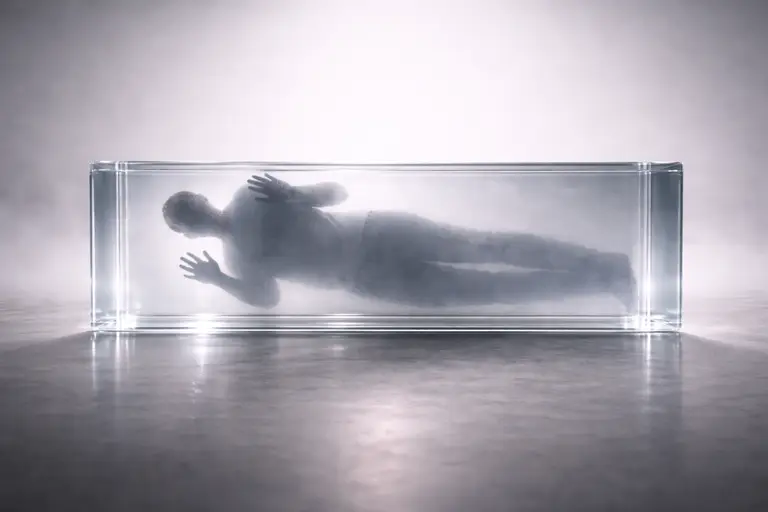
The glass coffin is visible confinement — being seen but unreachable. The metal under the skin is the internal version of that: the hardening that makes you durable and, in the same gesture, makes the genuine contact that was supposed to be possible more difficult to achieve.
Both are real. The dream is showing you both.
You understand, standing in whatever space the dream has put you, that you can now withstand things you couldn’t withstand before. That has genuine value. You also understand — and this is the part that takes longer — that the thing you built to protect yourself is also the thing that’s standing between you and everything that was worth protecting yourself for.
When You See It in Someone Else
Some versions of this dream place the metal not under your skin but under the skin of someone close to you.
You watch them — a partner, a parent, a colleague, someone you’re in a significant relationship with — and the surface of them comes away and what’s there is not what you expected. Not the person you thought you were in relationship with. Something harder, less responsive to being reached, operating from a different substrate than the one you thought you were in contact with.
This version is about the specific experience of discovering that someone you trusted has undergone their own hardening. The relationship was supposed to have the quality of skin-to-skin contact — two permeable people capable of genuinely reaching each other. The dream is showing you what you’ve registered about the current state of it: something in them has become metal, and the contact you thought you had has been replaced by contact with an armored surface.
In waking life, this appears during the specific experience of watching a relationship change in the direction of emotional unavailability — when someone who was once accessible has built something protective that you can no longer get through.
When This Dream Arrives
When the hardening has reached the level of the image.
Not at the beginning of the protective process — when the environment is first producing stress that the skin can’t manage, when the first instincts toward armor appear. The dream generates this image when the hardening has progressed far enough to be structural. Not a coping mechanism that could be removed. Something that has become part of the arrangement.
It also appears when the specific cost of the armor has become visible in some domain of waking life — when the protection that was necessary is now also the barrier to something that matters.
The Psychology Behind It
The nervous system has genuine hardening mechanisms. Chronic exposure to high-stress environments produces measurable changes in emotional processing: reduced reactivity, increased detachment, the development of what researchers call affect regulation capacity that in its extreme forms becomes affect absence. The body can, through sustained exposure to what overwhelms it, develop something that functions like emotional armor.
The brain generates the skin-peeling-to-reveal-metal image specifically because it needs a spatial, physical representation of a process that happens at the neurological level. The skin is the body’s own metaphor for the permeable outer layer that was there before. The metal is the body’s own metaphor for what the neurological hardening produces.
The dream is not decorative. It is the mind’s honest representation of what sustained exposure to overwhelming pressure can build inside a person — the durability and the cost of it — rendered in the most visceral image it has available.
The Sentence This Dream Was Trying to Say
“I built something to survive what I was going through — and now I’m living inside what I built.”
The Morning After
The boundary of the skin has a slightly different quality this morning. Not pain — something more like awareness of the surface.
Before the armor reasserts itself as invisible and automatic: what was the environment that required it? What was so overwhelming that the skin wasn’t adequate?
And: the metal is real. The durability it provides is real. The question this morning isn’t whether you should have built it. The question is whether what it’s currently preventing access to is something you’re willing to keep being prevented from.
FAQ
What does a dream about skin peeling off to reveal metal mean? It means the outer layer of your ordinary vulnerability has been replaced by something harder — an emotional or psychological armor that developed in response to an environment that was too overwhelming for the permeable self to sustain. The metal is not damage. It’s an adaptation. But the dream is showing you both what the adaptation provides (durability, protection, the ability to withstand what the skin couldn’t) and what it costs (the capacity for genuine contact, warmth, being actually reached). The peeling away of the skin is the dream’s image for the completion of a hardening process that has been happening across time.
Is the dream saying something is wrong with me? No. The dream is being honest about a specific trade you’ve made — or that was made by circumstances — between vulnerability and protection. The metal is a real response to a real environment. What the dream is asking isn’t whether the armor was wrong to develop but whether you’re aware of what it’s doing. Whether you’ve noticed that the protection and the barrier are the same thing. Whether the cost of the hardening has become visible enough to be addressed.
What does it mean if the metal is rusted or corroded? It means the defensive mechanism has already started to fail from within. What was built to protect has begun to generate its own damage. The hardening that was supposed to prevent hurt is itself becoming a source of hurt — the isolation producing loneliness, the numbness producing a different kind of pain, the armor that was built for survival creating its own form of deterioration. The corroded metal is the dream’s most specific warning: the protection is not holding. What it was built to prevent is finding its way through the armor itself.
Next Stages
If the metal under the skin felt less like armor and more like what was always there — if the revelation was of something fundamental rather than something built → dream about death and rebirth meaning — when the skin peeling is the outer layer of a transformation whose deeper nature is about what emerges, not just what is revealed
If the metallic emergence felt like a delivery rather than a shedding — if the final stage was not the reveal of a surface, but the arrival of a distinct, unyielding entity → giving birth to a dead object — when the creative process results in something static and cold, signaling a profound detachment from the living outcome of your efforts.
If the metal was in someone else — if the dream was about discovering what someone close to you had become underneath → dream about fighting a dead version of yourself meaning — when the hardened version and the version you’re in relationship with come into direct conflict
If the metal felt like a cage rather than a skin — if the revelation was of being enclosed by what was supposed to be a surface → dream about buried alive in a glass coffin meaning — when the hardening stops being exterior protection and starts being interior confinement