Dead Person Alive but Silent: The Static Presence

They’re there. And they don’t speak.
That’s the complete structure of this dream, and it’s precisely the structure that makes it one of the hardest to shake after waking. Not the presence itself — you can process a presence. Not the absence — you’ve been processing that already. The specific impossible combination of the two: they are here, visibly, undeniably, with you in the room or the space, and they will not say a word.
The eyes are open. In many versions they’re watching you. In some versions they follow your movement with something that looks like attention. And the whole time you are waiting for the word, the acknowledgment, the explanation, the simple sound of their voice saying anything — and it doesn’t come.
I want to say something honest about this dream before anything else: it’s one of the cruelest the mind can produce, not because of horror but because of proximity. You are so close. They are right there. The thing you’ve been missing is visible in the same room and it cannot be touched.
Quick Answer
- A dream about a dead person alive but silent means someone — or what they represented — is present in your psychological life without being communicative. The presence is real. The contact is blocked.
- The silence is the message. Not the absence of a message — the silence itself is what the dream is delivering.
- Who is silent, and what you were waiting for them to say, is the most specific information in the dream.
- This dream is different from dead relatives talking to you: that dream delivers. This one withholds. Both are real experiences. They point to different things.
- What you’re waiting for from them that they cannot or won’t give — that’s what the dream is asking you to look at directly.
Common Scenarios
- Someone you loved who died, now present and silent → grief that hasn’t found its completion; you’re still waiting for something from them that the loss never allowed
- Someone still living who has become unreachable → a person who is physically present in your life and has gone somewhere that contact can’t reach
- They watch you move through the room → the awareness of being observed without being acknowledged
- You try to speak to them and they don’t respond → the attempt at contact is yours; the silence comes from their side
- You wait for them to say the one thing → the specific thing that has never been said, that you’re still waiting for, that the dream is staging the impossibility of receiving
What the Body Recognized
- The specific quality of being watched by someone who won’t speak → the gaze without the word transferred and is still present after waking
- The heaviness of the waiting — that specific suspended quality → the body held the vigil and it cost something
- Their face — the specific configuration of it in the silence → the face was specific and the specific face already had its meaning
- The cold of the space → the temperature of presence without warmth, of someone there but not reachable
The Difference Between This and Every Other Dead Person Dream
The dreaming mind has several ways of bringing the deceased back.
Dead relatives talking to you is the version where the contact completes — the voice comes through, the message arrives, the wisdom transfers. Something is communicated. The dream produces the contact it set up.
Taking a phone call from the deceased is mediated contact — the voice through distance, the transmission filtered but present.
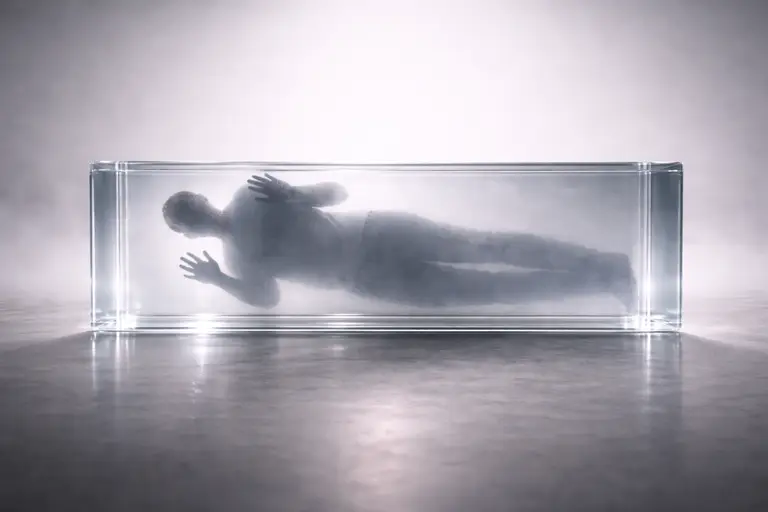
The dead person alive but silent is neither. The person is present with full physical reality. No distance, no mediation, no barrier between you and them in terms of space. And the contact doesn’t complete. The voice doesn’t arrive. The presence is total and the communication is zero.
The transformation this cluster processes involves things that have ended and things that haven’t ended yet. This dream is specifically about the second category: the thing that should be over, the person who should be in the past, who is being held in an in-between space by the dreaming mind’s refusal to complete the archive.
They’re alive in the dream because you haven’t fully let them be dead.
Not in the pathological sense — this isn’t about mental health failure. In the psychological sense. Whatever they represented — the relationship, the person, the specific kind of love or authority or connection — hasn’t been fully released. The dream keeps them alive. The silence is what that partial release produces: presence without communication, because the connection was never quite complete to begin with, or because it was severed before it could be.
They’re in the room and you register them the way you register things that are important before you’ve thought about why. The room has the quality of rooms they used to be in. And they are here, which is both the thing you needed and the thing that doesn’t help, because they are here and they won’t speak and the distance between here-and-not-speaking and where you actually need to reach them is the same distance it’s always been.
The Silence Is Not Empty
This is the part that takes the longest to understand about this dream.
The silence isn’t the absence of communication. It’s a form of communication. The dream generated a specific person in a specific silence and placed you together in a space where you wait for words that don’t arrive. That’s not nothing. That’s a very specific arrangement, carefully constructed, that is pointing at something real.
The silence communicates: what you’re looking for from this source isn’t available here.
That might mean: the person in the dream is someone you’re still waiting to give you something they couldn’t give you while alive — an acknowledgment, an apology, a conversation that never happened, words that were withheld. The silence is the honest representation of the fact that those words aren’t coming from that source. Not because the person was unwilling. Because the words are simply not available here.
Or it might mean something adjacent: what you need from this relationship, or this period of your life, or this version of yourself — the answer doesn’t live in the past. The thing you’re waiting for isn’t there. The silence is the dream’s way of showing you the direction you’re waiting in, and the fact that nothing is going to come from that direction.
The silence isn’t the problem. The waiting is.
Who Is Actually Sitting There
This dream is usually about one of three things, and they require honest examination to tell apart.
The first: someone who actually died. The grief is real, the loss is genuine, and something about the relationship or the loss is unfinished enough that the mind keeps them alive in the dream — waiting for something that the death prevented. This is the most emotionally acute version. The silence is the silence of the unfinished.
The second: someone still living who has become psychologically unreachable. A person whose presence in your life continues in form — the relationship exists, contact happens — but something in the actual connection has gone quiet. They’re there, you’re together, and the specific warmth or communication or recognition that the relationship was supposed to carry has stopped arriving. The dream is being precise about the current state: alive, present, silent.
The third: a version of yourself. Not the fighting-dead-version that this cluster also contains — that dream involves conflict, the dead version pushing back. This is the version that’s simply there, watching, saying nothing. The part of you that used to speak with authority on certain questions and no longer does. The inner voice on a specific topic that has gone quiet. The version of yourself that knew something you’ve since lost access to.
All three produce the same dream image. The question of which one it is answers itself by who is sitting in the chair.
The Waiting That Becomes Its Own Problem
Most people describe spending the entire dream waiting.
Not doing other things in the dream and occasionally noticing the silent presence. Waiting. Oriented entirely toward the possibility that they will speak. Monitoring for any sign — a shift in posture, a changed expression, any indication that the silence is about to end. And the dream never gives them what they’re waiting for, so the waiting continues until waking.
That waiting is worth examining as a waking-life condition.
Grief can become a form of waiting. The specific state of having lost someone — or having lost a version of a relationship, or a version of yourself — and then waiting for something that will serve as the signal that the loss can be fully accepted. Waiting for the right words, the right feeling, the right moment. Waiting for the thing that will tell you it’s okay to move forward.
The silent presence in the dream is the mind’s image for the thing being waited for that isn’t going to arrive in the form that’s being waited for. You can wait in front of this person for the whole dream and they will remain silent. The signal isn’t coming from this direction.
You watch them and you wait. You’ve been waiting for so long that the waiting has become its own form of relationship — a posture, a sustained attention, an entire orientation of yourself toward the possibility that they will finally say the thing. They don’t. The dream keeps you in the waiting rather than releasing you from it, because the waiting is what’s real, and the dream is honest.
When the Person Is Still Alive
This version of the dream is worth naming specifically because it gets confused with grief dreams when it isn’t one.
Sometimes the person sitting silent in the dream is still alive. They’re here, in your life, in your regular contact — and in the dream they are also here, and also silent. The dream isn’t processing a loss. It’s processing the current state of a living relationship.
What is alive about the relationship is what makes them present in the dream. What is silent about the relationship is what makes them not speak. The combination — alive and not speaking — is the dream’s honest image for a relationship that continues in form and has stopped producing genuine contact.
This might be the relationship where the conversations happen but something in the real communication doesn’t. The marriage where words are exchanged and understanding isn’t. The friendship that still maintains its structure and has lost the quality that made it nourishing. The parent relationship where contact is regular and the specific thing you needed from them never arrived.
The dream is showing you the current state of the connection. Alive. Silent.
When This Dream Arrives
When the waiting has been going on long enough to need an image.
This dream doesn’t appear at the beginning of grief or alienation. It appears when the waiting has become substantial — when the orientation toward what’s not arriving has been sustained for long enough that the mind generates the concrete image of what the waiting is pointed at.
It also appears when a relationship — with a person living or dead — has reached a specific threshold: where the presence continues and the communication doesn’t, where contact occurs without connection, where the structural elements of the relationship persist and the living quality has become silent.
The Psychology Behind It
Grief has a natural arc: acute loss, the sustained absence, the gradual reorganization of the interior world around the new reality. This arc requires the full processing of what was — the acknowledgment of the loss, the full weight of the absence, the eventual adjustment.
When the arc gets stuck — when the loss is processed only partially, when the absence is acknowledged in some dimensions and not others, when the full weight of the unfinished is not allowed to be felt — the mind keeps the figure alive. Not as delusion. As the image of what has not been fully released.
The silence is what happens when the figure is kept alive but the actual content of the connection has been honestly represented. The person is there because you haven’t let them be fully in the past. The silence is there because the past doesn’t speak.
The dream is trying to complete what the grief hasn’t yet completed. Every night it brings them back. Every night it stages the silence. The silence is the information: what you’re looking for from this source isn’t here. The thing that would allow the waiting to end isn’t going to come from that direction. The next step is yours.
The Sentence This Dream Was Trying to Say
“They’re still in the room and they’re not going to say what I’ve been waiting to hear — and I’m the one who has to decide what to do with that.”
The Morning After
The silence is still present. That specific quality of being in the same space as someone who won’t speak.
Before the day fills it with other noise: who was sitting there? And what were you waiting for them to say?
Not the words exactly — the kind of thing. Acknowledgment? Explanation? Permission? The specific words that would have told you it was okay to stop waiting?
That question doesn’t have to be answered this morning. But it’s worth knowing what it is.
FAQ
What does it mean when a dead person is alive but silent in your dream? It means someone — or what they represented — is still present in your psychological life without completing the communication or connection that was supposed to be part of the relationship. The presence is real; your dreaming mind is keeping them active. The silence is honest: the contact you’re looking for from this source isn’t arriving, and the dream is showing you both of those truths simultaneously. The person is there because something about the relationship is unfinished. They’re silent because the unfinished thing cannot be resolved from that direction.
Why won’t the dead person speak in my dream? Because the answer you’re looking for — the specific thing the silence is withholding — isn’t available from that source. Not because the person is unwilling. Because the words you’ve been waiting for don’t exist in the past in the form you need them. The silence is the dream’s honest representation of a specific limitation: what you need to hear cannot be provided by whoever is sitting silent in front of you. This doesn’t mean the waiting was wrong. It means the direction you’ve been facing isn’t where the answer lives.
What does it mean if the silent person is still alive in real life? It means the dream is processing the current state of a living relationship rather than grief. The person is alive in the dream because the relationship continues. They’re silent because something in the genuine communication between you has stopped. The dream is being precise about the gap between the form of the relationship — contact still happening, the structure still intact — and the content of it: something essential has gone quiet. The dream isn’t predicting that the relationship will end. It’s showing you honestly what its current state is.
Next Stages
If the silence finally broke — if the dream shifted from the static presence into actual communication → dream about dead relatives talking to you meaning — when the silence finally gives way and what’s been held back comes through
If the silence wasn’t a pause, but a permanent mark — if the stillness was captured in stone rather than waiting to speak → seeing your name on a blank gravestone — when the subconscious confronts the ultimate form of silence: the unwritten finality of your own existence.
If the presence shifted from silent and still to following you — if the static became mobile but remained non-communicative → dream about being the last person in a dead city meaning — when the silent presence accompanies you through an empty world without ever making contact
If the silence finally ended in confrontation — if the static presence finally became something that fought back → dream about fighting a dead version of yourself meaning — when the presence that was silent becomes the version that contests you directly