Dream About Losing Teeth Meaning
You’re supposed to be saying something important.
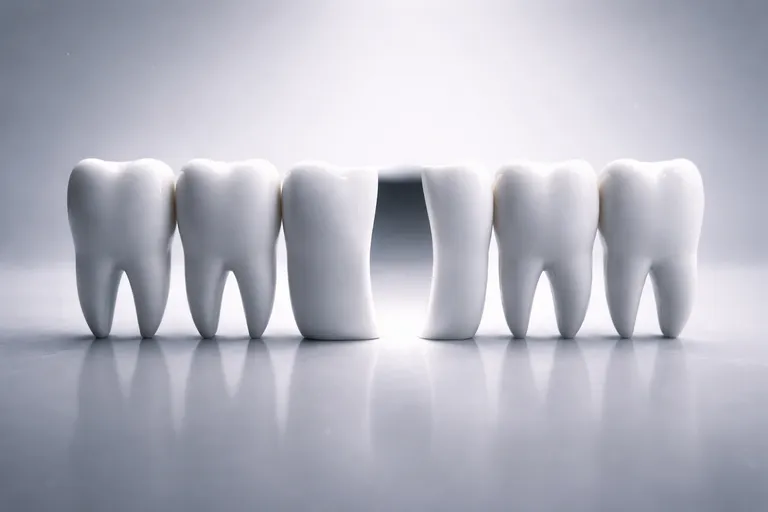
Maybe you’re in a conversation that matters. Maybe you’re explaining yourself to someone who needs the full version. And then — not dramatically, not with blood or pain, just with that specific looseness that shouldn’t exist in your jaw — you realize. You’re going to lose a tooth. Right now. In the middle of whatever this is.
And the sentence you were trying to finish will have to wait, because the entire situation has reorganized itself around the fact that your mouth is failing.
I’ve had the losing teeth dream exactly twice in my life. Both times I remembered the social context more than the sensation — who was watching, what I’d been trying to say, the specific way the moment turned from communication into embarrassment. The teeth weren’t the point. Being seen in the process of losing something you’d assumed was permanent was the point.
That’s what I’ve come to think this dream is really about: not loss, but witnessed loss. The specific experience of falling apart in a situation where falling apart was the worst possible timing.
Quick Answer
- A dream about losing teeth means something in your confidence, voice, or social presentation has come apart — and the loss happened in a context where being whole mattered.
- Losing teeth is the most commonly reported dream in sleep research worldwide. That consistency across cultures points to something real, not random.
- The people present in the dream matter as much as the loss itself.
- If you tried to hide the teeth or put them back, the social management of the loss is the message — not the loss itself.
- The sensation that stays after waking is calibrated to the actual level of the situation. If it feels minor, it was. If the hollow feeling persists, the source in waking life is still active.
Common Scenarios
- Losing teeth mid-conversation → what you were trying to say was interrupted by the failure of your ability to say it
- Losing teeth in front of someone specific → the social witness is the key detail — who was there tells you whose perception the dream is about
- Can’t stop once it starts → the loss has its own momentum; once something begins to come apart it keeps going
- Hide the teeth in your hand → managing the evidence of failure rather than the failure itself
- Loss is gradual, one at a time → the confidence is eroding incrementally, not collapsing all at once
What Your Body Already Knows
- Ran your tongue over your teeth after waking → the body verified the physical reality before the mind finished waking
- Specific person already in your mind → the social context of the dream arrived before the analysis did
- The hollow quality — the gap where something was → absence registers physically, not just conceptually
- Low-level exposure after waking → the feeling of being seen losing something transferred out of the sleep
The Most Common Dream in the World — And Why
Sleep researchers across different countries and decades keep finding the same thing: losing teeth is reported more frequently than any other dream image, across every demographic studied.
That kind of cross-cultural consistency isn’t coincidence. It means the image is tapping into something the human nervous system carries regardless of where you grew up or what language you dream in. The specific anxiety this dream represents — the public failure of something that’s supposed to hold, the collapse of composure in a moment that required composure — is apparently universal enough to show up in sleeping minds everywhere.
Dreams about body and health work through the body’s own vocabulary. Teeth are what you use to process, to speak with authority, to present yourself as intact. When they go in the dream, the question isn’t what you lost. It’s what you were in the middle of when you lost it.
You’re speaking — or trying to. The words are forming correctly, the thought is there, the sentence was going to land. And then your attention divides because something in your mouth has shifted, and you know before you’ve finished knowing that the rest of the conversation is going to happen around this fact. Whatever you were saying loses its shape. The sentence doesn’t finish. The teeth are in your hand and you don’t know what to do with them.
Who Was Watching
Here’s what I pay attention to in this dream more than anything else: not what fell, but who was there.
The witnesses in the losing teeth dream are almost always specific. Not a crowd, not strangers — people whose particular perception of you matters. A person you’re trying to impress, or someone you’ve been pretending to be fine around, or someone in front of whom the specific thing you were presenting finally failed. The dream puts them exactly where they are in waking life: in the position of having seen something you were trying to keep together.
In waking life, this maps to the anxiety of presentation — not vanity, something more fundamental. The specific fear that the version of yourself you’re sustaining in a particular context is less solid than it appears, and that the right moment will expose it. The losing teeth dream arrives when that anxiety has reached the level where the sleeping mind is already staging the exposure.
The question worth sitting with isn’t: what did I lose? It’s: in front of whom, and what would they do with the evidence?
Why You Try to Put Them Back
Almost everyone who has this dream describes the same response: they try to put the teeth back. They press them against the gum. They close their hand around what fell. They try to manage the situation back into something that looks intact.
The teeth don’t stay. The gum doesn’t accept them.
This is the dream’s most specific observation about the waking-life situation: the restoration you’re attempting isn’t working. The attempt is real — the effort, the pressing, the trying to make the thing look unbroken — but the result is the same. What came apart isn’t going back together through effort. The management of the appearance is consuming the energy that would otherwise go toward addressing the actual source of the vulnerability.
That gap between effort applied to restoration and results achieved is one of the most honest things this dream shows you.
You’re pressing them back. It seems like it should work — they fit the spaces, the shape is right. But the body doesn’t accept them. They fall again. You catch them. You try again with more care, more precision. The same result. You’re holding your own teeth in your hand and the effort of trying to return them is somehow more exposing than the loss was.
The Voice That Goes With Them
There’s a version of this dream where losing the teeth also affects the ability to speak.
The sentence you were trying to say becomes impossible to finish. The words lose their clarity. Speaking requires you to hold the mouth in a way that reveals the damage. Whatever you were saying — the explanation, the defense, the articulation of something true — becomes harder or impossible in the same moment the teeth go.
This version points specifically to a situation in waking life where your ability to express something clearly has been compromised by a loss of confidence in your own credibility. Not that you don’t know what to say. That the damage makes saying it differently difficult. The authority you’d need to say this particular thing in this particular situation has been undermined, and the dream is staging exactly what that undermining costs in terms of actual communication.
The thing you were saying matters. What stops you from saying it matters more.
When This Dream Arrives
Some dreams arrive during the buildup. The losing teeth dream tends to arrive during or just after the exposure it represents.
Not always a public exposure — sometimes entirely interior. The moment you realized something you’d been presenting as solid isn’t. The conversation that revealed a vulnerability you’d been protecting. The situation where you felt the specific gap between how you’d been appearing and what was actually happening underneath.
The dream doesn’t need the exposure to happen externally. It needs the internal registry of having lost something you were counting on to hold.
If the dream is recurring, the source of the vulnerability is still active. Something is still being lost, one piece at a time, in a context that matters.
Why This Dream Happens — The Psychology Behind It
The brain represents social confidence and public presentation through the body’s most visible tools: the face, the voice, the teeth. These are what we use to engage with and present ourselves to others — what we show, what we use to speak with authority, what we maintain in the specific way we maintain things that other people see.
When social confidence is genuinely undermined — when something in the way you’ve been presenting yourself has become unsustainable, or when a situation has exposed a vulnerability in how others see you — the brain generates the image of the thing that represents that presentation failing.
Losing teeth isn’t the dream’s interpretation of the situation. It’s the direct image. The apparatus of social presentation has failed. The tools used for speaking with authority and engaging with the world have come out. The mind is staging, in the most direct way available to it, the actual experience of the confidence structure giving way.
The Sentence This Dream Was Trying to Say
“Something that holds me together in front of others is less solid than I’ve been presenting — and part of me already knows it.”
The Morning After
The tongue-check is probably already done. The teeth are fine.
The feeling underneath it is the part worth sitting with. Not the sensation — the social texture of the dream. Who was there. What you were trying to say. What the loss interrupted.
That context is already pointing somewhere in your waking life. You don’t have to go looking for it.
FAQ
What does a dream about losing teeth mean? It’s one of the most well-documented dreams in sleep research — reported across cultures worldwide, which points to something genuinely universal. The dream represents a failure of social confidence or personal authority in a context where that confidence was needed. It’s not about dental anxiety. It’s about the specific experience of something you rely on to present yourself as intact coming apart in a moment that required it to hold. The people present in the dream and what you were doing at the moment of loss are more important than the teeth themselves.
Why do I always try to put the teeth back in the dream? Because the instinct toward restoration is real, and the dream is staging its limits. You try to return what fell because something in you knows the loss has social consequences and is trying to manage them. But the teeth don’t stay, the gum doesn’t accept them — the dream is showing you that restoration-through-effort isn’t what this situation requires. Whatever came apart has come apart. Pressing it back together doesn’t address the underlying reason it fell.
Is the losing teeth dream really the most common dream? Yes, consistently across sleep research conducted in different countries and across different time periods. Some researchers estimate it’s reported by close to 40% of the adult population at some point. The universality of it makes sense: the anxiety of losing social credibility, of being seen in the process of falling apart, of having your presentation fail at a critical moment — these are human experiences that cross every cultural context.
Next Stages
If the teeth didn’t fall cleanly but broke down slowly — if the loss had the texture of erosion rather than departure → dream about teeth crumbling meaning — when the confidence is deteriorating gradually under sustained pressure rather than being lost in a single moment
If the loss was clean with no pain or blood — if the teeth fell without the acute feeling and the emotional separation had already happened before the dream → dream about teeth falling out no blood meaning — when what departed had already disconnected before it left
If the loss was total and overwhelming — if every single tooth left at once → dream about all teeth falling out — when the subconscious signals a complete collapse of a persona or a foundational shift in how you hold your ground.
If the loss of voice in the dream was the central experience — if losing the ability to speak was more present than the physical loss → dream about not being able to speak: the vocal extinction — when the communication itself is what the dream is taking away, not just the instrument