Dream About a Dog Attacking You
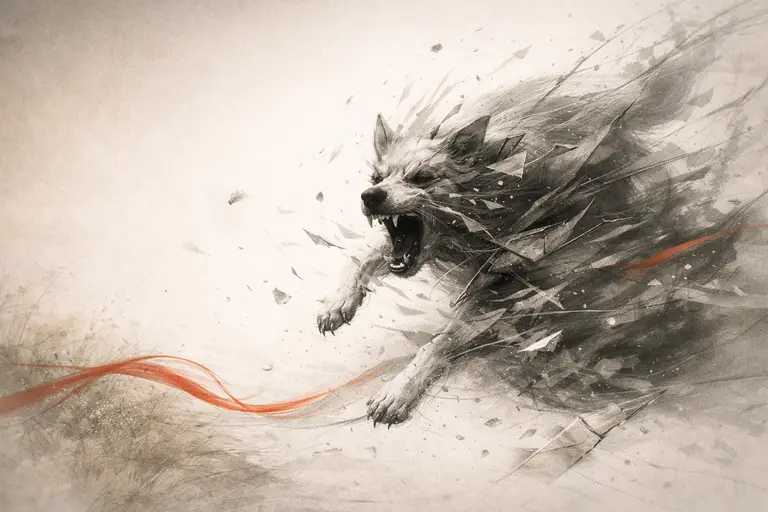
You woke up and checked yourself for bites.
No marks. No blood. The skin is fine. The body is intact. Just the specific feeling of having been hurt by something that wasn’t supposed to hurt you — and the distinct, uncomfortable knowledge that the dog in the dream wasn’t a stranger.
First, the comfort: the dream is not a prediction. It is not telling you that someone in your life is about to betray you, or that the relationship it corresponds to is over, or that the attack is coming. The attack already happened — inside you, below conscious attention — and the dream finally showed it to you. The tension was real before the dream. The dream didn’t create it.
Now the warning: the tension is real. The dog in the dream is always something that had access to you. Something you gave access to. And something about that access has shifted in a way you’ve been managing around without naming. The dream ended your ability to manage around it. That’s not comfortable. It’s also not something you should go back to ignoring.
This dream is two things simultaneously. It’s telling you that you’re going to be okay. And it’s telling you that something needs your attention right now.
Quick Answer
- A dream about a dog attacking you means something close — something you trusted with access to the interior of your life — has crossed into territory that hurt you
- The attack isn’t random danger. It’s the specific shock of harm from inside the perimeter, not outside it.
- The dream didn’t create the shift. It stopped you from ignoring it.
- The dog’s breed doesn’t matter. The dog’s behavior — provoked, frenzied, cornered, deliberate — tells you the specific nature of what happened in the trust
- You are going to be okay. And you need to pay attention to what this dream is pointing at.
Common Scenarios
The dog attacks without provocation → the shift happened without a visible cause; something changed in the trust without an event you can point to; the attack reflects an accumulation, not a single act
The dog attacks and you know it → the most specific version; the identity of the dog is the identity of the relationship; the dream is being direct about the source
A dog you don’t recognize attacks with a familiar feeling → the relationship is recognizable even if the figure isn’t; the brain obscured the face but kept the feeling
The dog attacks but seems desperate, not malicious → the aggression came from something cornered; what attacked you may itself be trapped; the harm was real, the intention was not cruel
You try to calm it and it attacks anyway → the de-escalation didn’t work; the shift in the trust has passed the point where management or kindness can address it
You’re attacked in front of others who don’t react → the harm exists in a context that doesn’t acknowledge it; the social environment around this trust doesn’t see what you’re experiencing
What Your Body Already Knows
Where the bite was → the body carries the location even after waking; this is the most specific piece of information the dream offered and the one worth tracking before it fades
Whether you froze or fought → the body’s response to being attacked by something trusted is different from the response to a stranger; the freeze reflects the specific shock of betrayal; the fight reflects something unresolved reaching a limit
The adrenaline that doesn’t fully clear → the body treated the threat as real because the emotional truth behind it is real; the nervous system doesn’t distinguish between dreamed and waking betrayal
The specific grief alongside the fear → if there was grief mixed into the fear — and there usually is — that mixture is the most important thing the body is reporting; the grief is the love that makes the attack land this way instead of any other way
The Dog That Knew You
There are many threat dreams. This one is different from all of them.
In most threat dreams — the stranger, the shadow, the unnamed pursuer — the danger comes from outside. From the unknown. From something that never had access and is trying to get in. Those dreams are about what might happen if the boundary fails.
This dream is about what happens after the boundary was already given up.
The dog attacked you. But before the attack, the dog was inside. Already there. Already part of the landscape of your interior life. You gave it access — not consciously in this moment, but at some earlier point, when you decided this was something you trusted, and that trust brought it inside the perimeter.
The attack didn’t come from outside your life. It came from inside it.
You see the dog and it’s familiar. Not threatening. It’s been here before. And then — between one breath and the next — the familiar thing is not familiar anymore. The weight of it, the teeth, the cold shock of something that knew you choosing to hurt you anyway. That’s the specific thing. Not that it hurt. That it knew you. That it had enough access to know exactly what you were, and chose to use that access this way.
This is why the dream produces a quality of shock that generic attack dreams don’t. In a stranger-attack dream, you’re afraid. In a dog-attack dream, you’re confused before you’re afraid. The confusion comes from the violation of the logic that had been operating: this was safe. This was inside the safe perimeter. The safety was real — and now it isn’t, and nothing in the perimeter warned you before it happened.
The dream didn’t create this. It showed you what was already true.
What the Attack Is Actually Telling You
The attack is not the message. The attack is the brain’s most direct available image for what the message is.
Something in your waking life has made a move that felt like a betrayal of what you’d given it. Not necessarily dramatic. Not necessarily what anyone else would call a betrayal. But in the specific logic of the trust you’d established — the access you’d given, the space you’d allowed, the openness you’d maintained — something crossed a line.
Here is the distinction that makes the warning precise: the attack in the dream can correspond to something that already happened, or something that is in the process of happening without having been named yet.
Already happened: A specific moment, a specific thing that was said or done, that crossed a line in the trust. The dream is processing what waking life is still trying to absorb. The shock is the shock of the crossing having already occurred.
Still happening: A gradual shift in a relationship — a slow movement from supportive to draining, from safe to pressured, from mutual to extractive — that has been building past a threshold without a clear moment you can point to. The attack in the dream is the brain’s compressed image for what has been a slow-motion crossing of many small lines.
You are holding two true things at once and they don’t fit together: this was loyal, and this just hurt me. The brain can’t file both of these in the same folder. It can’t reconcile “trusted” and “harmful” without somewhere to put the gap between them. So it builds the attack. Not to punish you, not to frighten you — to give the irreconcilable thing a form that can be processed. The dog attacks because the two truths needed a single image to hold them both.
Where the Bite Was Is the Specific Advice
This is the piece of the dream that most people let dissolve with the morning. Before it dissolves: track the location.
The brain is not careless with dream pain. It places sensation where it’s placing it for a reason that corresponds to something specific in your waking life.
A bite on the hands or arms — the part of the body that does, builds, creates, holds on. Something about your agency has been compromised. Your capacity to act in the situation this dream is about has been affected. What you make, or what you hold, or what you reach for, has been where the damage landed.
A bite on the legs — the part of the body that moves forward, changes direction, makes progress. Something about where you’re going has been affected. Your momentum. Your ability to step in the direction you were stepping.
A bite on the chest or stomach — the interior. The part of the body that holds what matters, where the most personal things live. The damage went directly to what you were protecting. This is the version where the trust had access to the real version of you, not the managed one.
A bite on the throat or face — voice and visibility. Something about how you’re able to speak in this situation, or how you’re being seen in it, has been compromised by what happened.
You look at the place where the bite was. The mark isn’t there anymore — you checked when you woke. But you remember the location with a precision that other parts of the dream don’t have. The brain placed it there deliberately. That location is the brain saying: here. This is specifically where the harm is.
Before the day makes the dream abstract: locate the bite. Then ask what in your waking life, in that category of experience — your agency, your direction, your interior, your voice — has been affected by whatever this dream corresponds to.
The Version Where Your Own Dog Attacked
This is heavier than the general version, and it’s worth addressing separately.
When the dog that attacks you is yours — the one you raised, the one you depended on, the one that knew the unmanaged version of you — the dream carries both the fear of attack and the grief of loss simultaneously. These don’t separate cleanly. They arrive together and they don’t make sense together.
It looks at you the same way it always has. The eyes are the same. The face is the same. And then it bites. And the worst part — you understand this in the dream with a clarity that waking logic can’t quite reach — is that the eyes are still the same. The dog that knew you, that saw the real version, that had complete access, just used that access to hurt you. And it still looks like the dog that loved you. Both things are true. You can’t make them not both true.
When your own dog attacks in a dream, the trust being processed is at its most intimate. This is the relationship — internal or external — that had the least performance in it. The one where you weren’t managing what you showed. The attack from this level of intimacy carries a specific additional weight: you weren’t guarded because you had decided this was the relationship in which you didn’t have to be guarded.
The comfort: the dream doesn’t mean this relationship is over or irredeemable. It means something in it has crossed a line that needs to be named and addressed, not managed around.
The warning: the line was crossed. Something at the level of your most intimate trust has moved in a way that produced this image. That’s real. That requires your attention.
What to Do With This Dream: Three Specific Things
This is the advice the dream is asking for.
One: Name what shifted. Something in the trust changed. Not “this relationship is bad” or “this person betrayed me” — those are conclusions that may or may not be accurate. Specifically: what shifted? What is different about this relationship, or this dynamic, or this part of yourself, from what it was when you established the trust? The shift is specific. The dream is asking you to name it.
Two: Locate it in waking life. The dog is not random. Your brain selected this particular symbol — this particular relationship or dynamic — from everything available to it. What in your current life has the specific quality of something that had access to you and has been using that access in a way that has started to hurt? Not dramatically. Often not dramatically. The shift can be quiet. The dream still registered it.
Three: Stop managing around it. This is the most specific advice the dream offers. Whatever has been happening in this trust, you’ve been managing around it — keeping the peace, not saying the thing, absorbing the impact without addressing the source. The dream is the point at which the management has become insufficient. Something needs to be said, or named, or addressed at the source, rather than absorbed.
This is the same territory as what happens in any relationship where something familiar shifts into something that threatens you — not a stranger becoming dangerous, but something trusted becoming the source of the very fear you had trusted it to protect you from. The difference in this case is that the source isn’t trying to harm you from the outside. It had your own access codes. That’s the specific thing to address.
You Are Going to Be Okay
This needs to be said directly, because this dream produces a level of distress that is disproportionate to what is actually happening.
The attack in the dream was real — it registered as real, the body treated it as real, the shock was real. But the dream is not predicting catastrophe. It is not telling you that you are in danger, or that your life is falling apart, or that the relationship it corresponds to is irredeemably broken.
It is telling you that a shift has happened in a trust that you value. Shifts happen in every relationship. They become problems when they go unnamed, unaddressed, absorbed-and-managed until the absorption can’t hold.
The dog you dream about is always something you trusted before you were watching it carefully. The attack is the brain’s image for what happens when the unexamined trust has been running a shift that needed your attention. Now it has your attention. That’s the whole purpose of the dream.
You are going to be okay. And you have something specific to do.
Dream Timestamp
If this is the first time → something shifted recently in the trust; the shift may have been gradual, but the dream is the first time the brain produced this image; the shift has just crossed into the territory where the brain can no longer not show it to you
If this dream has been recurring → the shift is still running and still unaddressed; the brain returns to this image because the situation that generated it has not changed; the recurring nature is the urgency signal
If the dream is intensifying → the shift is deepening; what wasn’t addressed at the first level is now at a higher level of impact; the dream is escalating the signal proportionally
Why This Dream Happens — The Psychology Behind It
The brain runs a continuous audit of who has access to you and what they’re doing with that access. During waking hours, this audit runs in the background — below the line of conscious attention, below the surface of the relationship’s daily operations.
When something in the audit produces a result that can’t be reconciled with the trust-classification the relationship has been operating under — when something inside the perimeter is registering as a threat — the stress of holding both truths simultaneously builds. The cognitive load of maintaining “this is trusted” and “this is hurting me” at the same time produces the need for the images to be processed.
The brain reaches for the dog specifically because the dog combines the two qualities the situation requires: maximum closeness (inside the perimeter, given access, already trusted) with genuine capacity for harm (teeth, weight, the specific shock of something that could bite and chose to). No other symbol holds both qualities simultaneously with the same precision.
The dream isn’t the problem. The unresolved shift is the problem. The dream is the brain demanding that the shift be named.
The Sentence This Dream Was Trying to Say
Something I trusted with access to me used that access in a way that crossed a line — and I’ve been absorbing it instead of naming it.
The Morning After
The bite is gone. The marks aren’t there. You’re intact.
But the thing the dream was pointing at hasn’t resolved overnight. Before the day builds the ordinary management back up:
One thing to sit with: Where was the bite? What category of experience — agency, direction, interior, voice — was specifically where the impact landed?
One thing to name: What is the shift in the trust? Not “this relationship is bad.” What specifically changed?
One thing to stop doing: What have you been absorbing without addressing? What’s the thing you’ve been managing around rather than saying directly?
The dream gave you three pieces of information. The location of the bite. The existence of the shift. The necessity of naming it instead of absorbing it.
You are going to be okay. And you have three specific things to do.
FAQ
What does it mean when a dog attacks you in a dream? It means something you trusted — something inside your life rather than outside it, something that had genuine access to you — has crossed a line in the trust. The attack isn’t random danger. It’s the brain’s image for the moment when something close becomes the source of harm. The shift in the trust was real before the dream. The dream is the point at which you can no longer not see it. You are going to be okay. You also need to pay attention to what this dream is pointing at.
Does a dog attack dream mean someone will betray me? No. It means a shift has already occurred in a trust you’ve been managing around without naming. The dream is not predicting a future betrayal — it’s registering a present one that waking consciousness has been absorbing rather than addressing. The shift may be something the other person is fully conscious of, or something they aren’t aware of themselves. The dream’s message is not “this relationship will destroy you” — it’s “something in this trust has changed and needs your attention now rather than being absorbed further.”
Why does the bite location matter? Because the brain places sensation precisely, not randomly. The location corresponds to a specific category of waking-life impact: hands and arms relate to agency and what you can do; legs and feet relate to direction and progress; chest and stomach relate to the interior — what you were protecting, what you’d allowed access to without armor; throat and face relate to voice and visibility. The dream is pointing at something specific. The location is the address.
What should I actually do after this dream? Three things. First, name what shifted in the trust — not a conclusion about the relationship, but the specific change. Second, locate it: who or what does this trust correspond to in your waking life, and what have they done with the access? Third, stop absorbing and start addressing: whatever you’ve been managing around in this relationship or dynamic needs to be said or named rather than continued to be absorbed. The dream ended your ability to not see it. That’s actually a gift, even when it doesn’t feel like one.
Next Stages
If the dog warned before it attacked — if there were signs you noticed and tolerated → when the alarm was running before the bite: dream about a dog barking at you — when the warning was there and you learned to work around it rather than hear it
If the attack felt more like desperation than malice — if the dog seemed cornered, afraid, pushed past its limit → when what attacked you was itself trapped: dream about a stray dog — when the harm came from something that had no place to go, not from something that chose to harm you
If underneath the shock of the attack there was grief — if losing the safety felt like losing something you loved → when the attack is also a kind of ending: dream about your own dog dying — when the loyalty doesn’t just turn, it disappears, and what’s left is the specific grief of something that knew you fully no longer being there