Drowning in a Dream Meaning
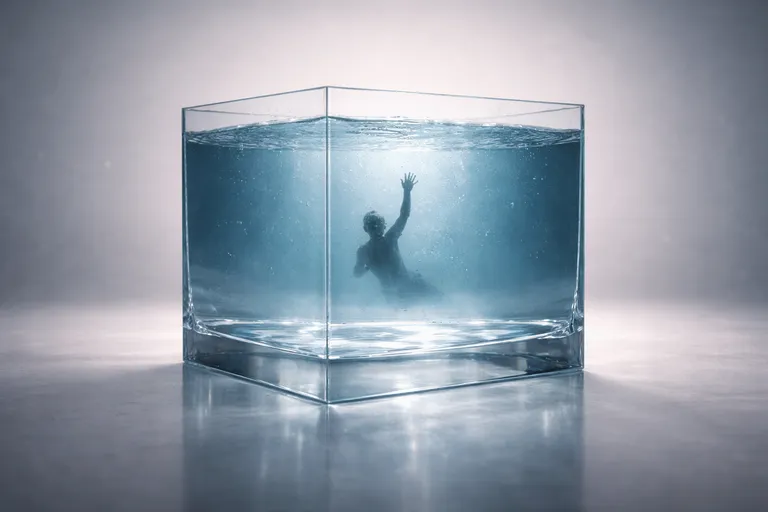
It’s the air you remember. Not the water.
The water is just the medium — the context, the environment, the thing you were in. What the dream actually recorded was something more specific: the moment you reached for breath and it wasn’t there. The gap between your lungs opening and nothing arriving. That fraction of a second where the body runs its most fundamental request and receives no response.
That’s what stays. Not the sensation of sinking. The sensation of needing air and being somewhere air doesn’t reach.
Drowning in a dream meaning begins here — with the breath, not the water. With the thing that was being cut off, not the medium that was cutting it off. Because once you understand that the dream is about what you couldn’t access, rather than what was surrounding you, the rest of it becomes legible.
Your body was fighting for something it needs in order to keep going. The water was incidental. What it was fighting for is the interpretation.
Quick Answer
- Drowning in a dream means something you need to keep functioning — emotionally, professionally, relationally — has been cut off or is running out
- The water isn’t the subject. The breath is. What the dream is about is whatever you can’t get enough of right now.
- Drowning slowly means the depletion has been gradual; drowning suddenly means something changed fast
- Being pulled under by something means the source of overwhelm has an identifiable origin
- Surviving the drowning in the dream is its own information — something in you is still fighting
- This dream appears when emotional volume has exceeded the capacity to stay above it
Common Scenarios
Sinking slowly, still fighting → the depletion is gradual; you’ve been losing ground for a while but haven’t stopped trying
Pulled under suddenly → something changed fast; a specific event or situation is responsible for the overwhelm
Someone pulls you under → the source of suffocation has a face; something relational is removing access to what you need
Trying to reach the surface and almost making it → you’re close to air — close to what would restore you — but not quite getting there
Watching someone else drown → something you care for is being overwhelmed; the fear is about them, not you
Already underwater, moving through it → acclimation; you’ve been here long enough that it has started to feel like the medium rather than the emergency
What Your Body Already Knows
The chest that feels tight before it feels afraid → the body ran the breath-restriction response; the physical sensation transferred out of the dream
The specific gasp of waking → not startling awake — surfacing; the body completing the motion the dream interrupted
The exhaustion that arrives with the relief → your system was working hard in there; the fighting was real
Something feels heavier than it should this morning → the dream was accurate about a pressure that’s been running; it didn’t create the weight, it surfaced it
What the Water Was Carrying
The water in drowning dreams isn’t neutral.
It has a quality — cold, dark, turbulent, silent, deep, familiar, open ocean, small pool — and that quality is carrying information about the specific nature of what’s overwhelming you. The brain doesn’t generate generic water. It generates the specific water that matches the emotional register of the waking situation it’s processing.
Dark, cold water with no visible bottom: something with no apparent limit. An overwhelming situation where you can’t see where it ends or how deep it goes. The depth is the terror, more than the water itself.
Turbulent, churning water: something chaotic. An environment that keeps changing, that has no stable surface, where staying above requires constant adjustment and the adjustments keep being wrong.
Familiar water — a pool you know, a lake from your past: the overwhelming thing exists in a context that was supposed to be safe. The medium that should have supported you is the thing you’re drowning in.
You know this water. That’s the specific wrongness of it. This isn’t open ocean or some foreign body of water you wandered into. You’ve been here before. You know how it moves. And it still pulled you under. The familiarity makes it worse — because it means you couldn’t have prepared differently. You were already in the place you trusted.
In waking life: when the overwhelming thing comes from a familiar source — a relationship that was safe, a job that was manageable, a life that was working — the drowning dream produces this specific quality of wrongness. Not shocked by the source. Shocked that the source became this.
The Breath Is the Key
Every other water dream is about movement, or visibility, or depth. Drowning is specifically about breath.
This distinction is the interpretation. Your lungs opened. Nothing came. That gap — between the need and the supply of what fills it — is what the dream built itself around.
In waking life, what is your equivalent of breath right now? Not metaphorically — specifically. What is the thing you need to keep functioning that is either running out or being cut off?
Rest, in a period where rest has become impossible. Recognition, in an environment that keeps consuming your output without acknowledging it. Space, in a life that has been continuously contracted by demands. Time, in a stretch where there is always something else required before you can stop. Connection, in a season of sustained isolation. The specific form varies. The structure is identical: something necessary for basic functioning is not arriving in sufficient quantity.
The motion is correct. Arms pulling, legs kicking, body oriented toward the surface. Everything your body knows how to do is happening. And the surface is there — visible, close, the light moving through the water above you. You can see exactly where air is. You can see the boundary between the water and the thing that would let you breathe. And the gap between where you are and that boundary isn’t closing.
The gap between being able to see what you need and not being able to reach it — that specific quality of proximity without arrival — is what makes drowning dreams more disturbing than dreams where the thing you need is simply absent. It’s there. You just can’t get to it. That’s a specific kind of suffering, and it maps to a specific kind of waking situation.
Being Pulled Under vs Sinking Alone
The difference is one of the most important distinctions in the dream.
Sinking on your own — gradually losing the fight against a surface that keeps receding — maps the experience of sustained depletion. Nothing is doing this to you specifically. The volume of what you’re carrying has simply exceeded the capacity to stay above it. The pressure is cumulative, impersonal, the result of accumulation rather than aggression. The water isn’t hostile. It’s just heavy and you’ve been in it long enough.
Being pulled under — a hand, a current with intention, a weight attaching itself and pulling — maps the experience of a specific source. Something or someone is removing access to what you need. The dream is being precise: this isn’t just general overwhelm. There is a vector. There is a thing that’s doing this.
Something has hold of your leg. You didn’t feel it attach. You just notice, suddenly, that the surface is getting further away faster than your movement explains. And the pull has direction — down, specifically, with a kind of patience that’s worse than urgency. It knows you’ll tire before it will.
If the drowning dream includes something pulling you under, the first question isn’t what the water represents. It’s what, specifically in your waking life, is actively removing access to what you need. Not passively — actively. A relationship that has been extracting more than it returns. A work situation that has been steadily consuming the reserves you need to function. An obligation that has grown past the point where meeting it leaves you enough.
The pull is the specificity. The dream is telling you: this has a source.
When You Almost Surface
This version of the dream deserves its own attention, because it’s the most psychologically precise.
You almost make it. The surface is there — you can see it, you can see the light through it, you can feel the shift in pressure that means air is close. Your hand breaks through. For a fraction of a second, you’re at the threshold of breathing. And then something brings you back under.
Almost. Your fingers are through the surface. You felt the air on them — just the air, just for a second, just enough to know it exists and is right there. And then you’re back. Not dramatically. Just back. The surface above you. Your hand already retreating from where it was.
This is the version that maps the experience of being close to resolution and having it pulled back before it completes. The job offer that didn’t finalize. The relationship that came close to shifting into something sustainable and then didn’t. The breakthrough in a difficult situation that almost held and then reset. The rest you almost got before something else was required.
Almost is its own category of suffering — worse, in many ways, than not getting close. When you can see the surface, proximity becomes its own form of pressure. The dream builds the almost deliberately, because the almost is what’s actually happening.
What Surviving Means
If you made it in the dream — if you surfaced, if you gasped, if you reached something that held you — that’s not a trivial detail.
The survival is the dream confirming that something in you is still fighting. Still oriented toward the surface. Still tracking where the air is even when it hasn’t arrived yet. The survival doesn’t mean the waking situation is resolved. It means the capacity to keep moving toward what you need hasn’t been exhausted.
This connects to the broader experience of being overwhelmed — when the volume of what’s being processed genuinely exceeds what any single person can stay above without the right support. The survival in the dream is the brain’s registration of genuine resilience — not the absence of drowning, but the presence of something that keeps reaching for the surface.
And what you survive into — what the waking state offers that the dream didn’t — is the first place to look for the equivalent of air.
The Dream’s Question Beneath the Water
Here is what drowning in a dream is always asking, underneath everything else.
What would air look like right now?
Not in the dream — in your actual life. What specific thing, if it arrived in sufficient quantity, would change the quality of what you’re breathing? What are you moving toward that keeps being just out of reach? What has been cut off that you need restored?
Water in dreams always represents the emotional medium — the substance of your inner life and how it’s flowing. Drowning is what happens when that medium becomes too much to stay above. The dream isn’t punishing you. It’s being accurate about a real condition: the volume is too high and the surface is too far.
That accuracy is useful. Not comfortable — but useful. Because once you know what the air is, you can start moving toward it with intention rather than instinct.
Dream Timestamp
The drowning dream arrives when emotional or psychological load has been running above sustainable capacity for long enough to require sleep-level processing → not the first difficult day — when the accumulation has crossed the threshold where the waking management mechanisms can no longer fully contain it; the dream appears after the sustained period, not at its beginning
The pulled-under version arrives closest to the source event → when something specific changed the dynamic — a relationship that crossed from support to extraction, a work situation that intensified past a threshold — this version tends to appear relatively soon after the specific shift; the vector is recent enough that the brain assigns it a direction
The almost-surfacing version arrives when the pattern of proximity-without-arrival has been running for a recognizable duration → the dream needs the pattern to have happened enough times to be a pattern; the almost is only an almost when it has repeated; a single near-miss produces different imagery than a sustained cycle of approaching relief and having it recede
The watching-someone-else-drown version arrives when the overwhelm is displaced → when something you care for is being overwhelmed and the helplessness of watching it is the primary emotional content; the dream externalizes what the waking mind has been carrying about something outside the self
The already-underwater-and-moving version arrives when the overwhelming state has become normalized → when being underwater has shifted from emergency to medium; when the extraordinary has become ordinary enough that the body has stopped treating it as acute crisis; this version is one of the quieter alarms — the dream registering that something is wrong specifically because it no longer feels as wrong as it should
The dream stops when the breath equivalent in the waking life is genuinely restored → not managed, not endured, not supplemented with coping — when the thing that has been cut off or depleted genuinely returns in sufficient quantity that the system is no longer running on the deprivation signal
Why This Dream Happens — The Psychology Behind It
Drowning in a dream is what the brain generates when emotional or psychological load has exceeded the capacity to process it in real time.
The specific choice of drowning — rather than falling, or being trapped, or other overwhelm images — is about breath. Breathing is the body’s baseline signal for basic functioning. When something is wrong at the fundamental level, the dream uses the image that maps fundamental deprivation: the inability to draw breath.
Your brain runs the drowning scenario because something in your waking life is operating like water in the lungs. Not pain, not threat, not specific danger — the absence of something necessary at the most basic level of functioning. The body’s threat systems generate the full physical response: the racing heart, the muscle activation, the desperate orientation toward the surface. You wake up and those systems are still running.
The water was the medium. The breath was the message. The specific water, the specific quality of the drowning, the specific presence or absence of a pull — all of it is the brain being precise about where the depletion is coming from and what it’s costing.
The Sentence This Dream Was Trying to Say
Something I need to keep going has been below the level I need it to be — and the body finally ran the alarm it’s been preparing.
The Morning After
You surfaced. You’re breathing. The room has air in it and you can have all of it.
Before the day asks you to get back in the water: what was the dream’s water made of? What has been accumulating to the point where staying above it has become the primary task? What is the thing you keep reaching for — the air equivalent in your waking life — that keeps being just past where your hand can reach?
You don’t have to solve it this morning. But it’s worth naming it, because the dream has been running it for long enough that it broke through into sleep.
One question: what would a single breath look like today — one real thing, one restoration, however small — that would give your system something to work with?
FAQ
It means something you need to keep functioning — emotionally, professionally, relationally — has been cut off or is running critically low. The water isn’t the subject. The breath is. The dream builds itself around the gap between your lungs opening and nothing arriving — that specific moment of needing what isn’t there. In waking life, this maps to any situation where demand has exceeded the available supply of what you need to stay above it: rest, recognition, space, time, connection. The question the dream is actually asking: what would air look like right now?
Because the nervous system doesn’t have a filter for simulated drowning. The body runs the full survival response — muscle activation, adrenaline, the specific panic of breath restriction — without being able to distinguish a dreamed threat from a real one. Everything in the system orients toward the surface. You wake up and that response is still running, because physiologically it just finished. The physical residue isn’t a side effect of the dream. It’s the body completing the response the dream interrupted.
The source of the overwhelm is specific. There’s a vector — not just general accumulation but something actively removing access to what you need. The pull has direction and patience, which is often worse than urgency in the dream because it carries the quality of something that can outlast you. In waking life, this points toward a relationship, situation, or obligation that has been actively extracting more than it returns. The dream is being precise: this isn’t impersonal pressure. This has a source. The question is whether you can name it.
You’ve been close to resolution and had it pulled back before it completed. The almost-surfacing is among the most precise images in the dream vocabulary: proximity without arrival, the surface visible and unreachable, your hand breaking through and then retreating. In waking life this maps to a pattern of approaching relief and having it recede — the rest that almost happened, the resolution that almost held, the threshold of what would restore you that keeps being reached and not crossed. The dream builds the almost deliberately because the almost is what’s actually happening.
Something you care for is being overwhelmed, and the primary emotional content is the helplessness of watching rather than the experience of being under. The dream externalizes what the waking mind has been carrying — a person, a relationship, a situation, a version of your own life that you can see struggling and cannot adequately reach. The fear in this version isn’t about your own drowning. It’s about the specific distress of witnessing something going under that you can see and can’t get to in time.
By restoring the breath equivalent in the waking life — not managing it, not supplementing it with coping, but genuinely restoring what has been cut off or depleted. The dream tracks the deprivation signal. As long as the thing you need is below the level you need it, the signal keeps running. The practical question isn’t how to manage being underwater more effectively. It’s what would actually change the quality of what you’re breathing — and what one real step toward that looks like today, before the day asks you to get back into the same water.
Next Stages
If the water you were drowning in felt contaminated — if it wasn’t just the volume but the quality of what was surrounding you → the overwhelm has a specific texture beyond depth: dirty water dream meaning — when what you’re in has been changed by something that got into it
If you survived and surfaced — if the dream ended with you reaching air → what survival costs and what it opens: clear water in dreams meaning — when clarity is what arrives on the other side of the overwhelm
If the drowning happened because you couldn’t move your body — if the fight was there but the body wasn’t responding → the immobility layer has its own specific weight: dream about not being able to move meaning — when the effort is real and the body stops executing it