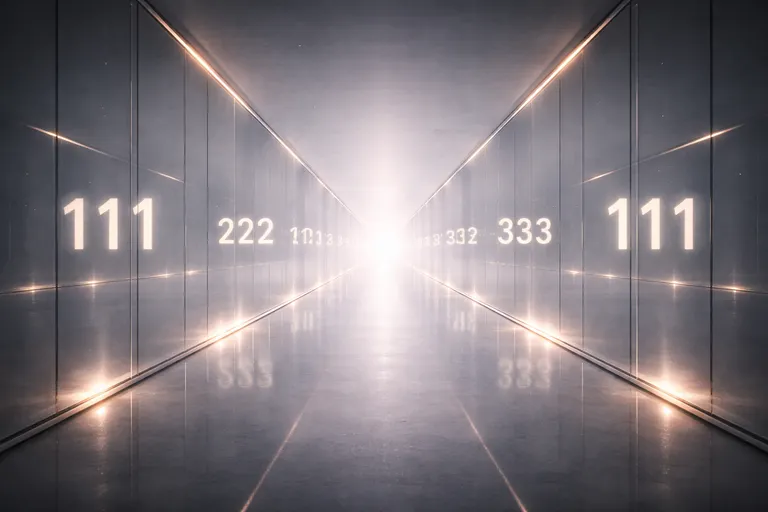
Numbers in Dreams Meaning (111, 222, 333)
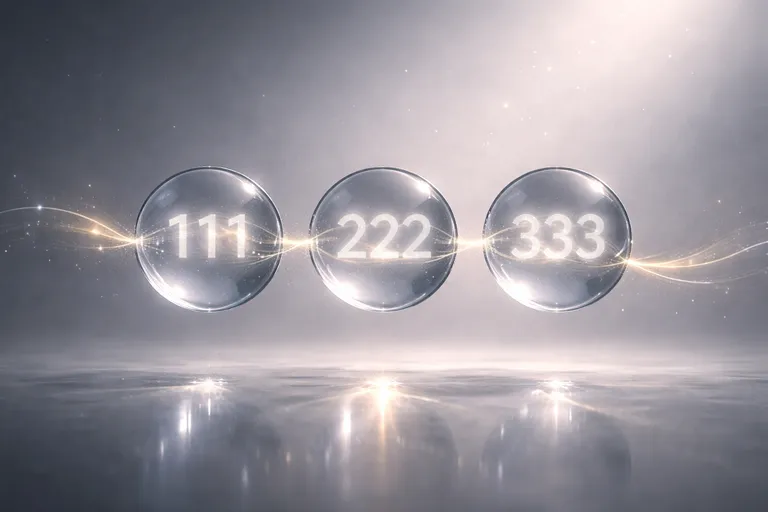
Numbers don’t approximate.
Everything else in a dream can be vague — a figure that might be someone you know, a room that’s almost your childhood home, a threat with no defined shape. But a number is exactly itself. 111 is not “roughly 110.” 333 is not “something like 330.” The brain chose to be precise, in a domain where precision is optional.
That choice is the first piece of information.
When a number appears in a dream — clearly, specifically, in a way that stays with you after waking — the brain isn’t being decorative. It’s selecting the most exact symbol available for something it needs you to notice. Not a color, not a texture, not a sensation. A number. Fixed. Unambiguous. Impossible to misread.
Numbers in dreams meaning starts there: with the fact that the brain could have been vague and wasn’t.
Quick Answer
- Numbers in dreams meaning begins with precision — your brain chose the most exact symbol available for something it needs you to notice
- 111 points to a direction forming before the decision to follow it has been made
- 222 marks two things in genuine tension that haven’t resolved into one
- 333 is something ready to emerge that’s still waiting for permission
- The triple sequences (111–999) each map a specific psychological state — not a cosmic message, a precise internal reading
- The number you keep seeing is the one that matches where you actually are right now
Common Scenarios
Clock shows 11:11 and you wake immediately → the transition point; your mind surfacing you at the exact moment it has something to hand you
Same number in three different contexts within one dream → the brain amplifying signal; this isn’t coincidence in the dream, it’s insistence
A number appears and you feel you already know what it means → you do; the interpretation isn’t arriving from outside, it’s surfacing from inside
The number is a date, an age, a year you recognize → the brain pulling a specific archive entry; the number carries personal history, not just symbolic weight
Sequential numbers: 111 then 222 then 333 within one dream → a progression the brain is mapping; something moving through stages that waking consciousness hasn’t tracked
What Your Body Already Knows
The specific alertness of a number that won’t dissolve on waking → your nervous system held it deliberately; it isn’t fading because it isn’t supposed to yet
Recognition without understanding → the feeling of knowing something is true before knowing why it’s true; the body ahead of the analysis
Warmth or dread depending on the number → your body already has a relationship with this sequence; it doesn’t need an explanation to react
The sense of having been handed something → not discovered — delivered; passive reception, not active search
Why the Brain Uses Numbers at All
Most dreams are built from images. Faces, rooms, movement, light. The brain composes primarily in the visual-spatial language of memory and emotion.
Numbers are different. They don’t belong to the image system. They belong to the precision system — the part of the mind that measures, counts, tracks duration, assigns order. Numbers are the brain’s most exact instrument. They don’t blur. They don’t shift meaning depending on context the way images do. A door can be a threshold or a barrier or a memory or an obstacle — the same door, different readings. A number is itself. Only itself.
You’re moving through a dream with the ordinary looseness of dreams — things almost-familiar, slightly-wrong, narratively unclear. Then a number appears. Suddenly. On a wall, a screen, a surface in the scene. And the dream sharpens around it. Everything else stays soft. The number is hard. Clear. It has edges in a place where edges don’t normally exist.
When the brain introduces a number into a dream, it is deliberately shifting registers — moving from the suggestive, approximate language of imagery into the precise, unambiguous language of measurement. It is saying: I am not being metaphorical here. This is exact. This is a reading.
What it’s taking a reading of is the question. The number tells you the precision. The rest of the dream, and your waking life, tells you what was being measured.
What 111, 222, and 333 Are Actually Saying
The triple sequences aren’t arbitrary. Each one maps a specific internal state — not a cosmic message from outside, but a precise reading of where you are psychologically right now.
111 — The Direction Is Already Forming
111 appears when something is beginning — but not in the way beginnings feel from the outside. You haven’t decided yet. You haven’t committed. But the direction has already started forming beneath the level of decision. The train has begun to move while you’re still on the platform deciding whether to board.
You see 111 and there’s a specific quality to it — something slightly ahead of you, something already in motion that hasn’t announced itself yet. Not a warning. More like a mirror held up to a movement you haven’t consciously acknowledged.
111 in a dream is the brain documenting the moment before commitment — when the path ahead is forming faster than your awareness of choosing it.
222 — Two Things That Haven’t Resolved
222 is the number of genuine tension. Not conflict, not crisis — the specific state of holding two real things that are both true and can’t both be acted on simultaneously. A relationship that gives you something real and costs you something real. A direction that’s right and wrong in equal measure. Two versions of yourself, both legitimate, pulling in different ways.
222 appears when you’re mid-balance. Not off-balance — in the active state of balancing two things that both have weight. The dream surfaces this not to resolve it but to make it visible. You’ve been holding the tension without naming it. The number names it.
222 is not asking you to choose. It’s telling you that you’re in the choosing, whether you’ve acknowledged it or not.
333 — Something Ready That You Haven’t Released
333 maps the state of something prepared and withheld. A creative work that’s been developing longer than it should be developing before being brought out. A truth that’s been forming in you for months that hasn’t been spoken. A version of yourself that’s ready but hasn’t been given permission to exist yet.
333 has a specific pressure to it — not the pressure of something wrong, but the pressure of something complete being held back past its completion. Like a breath held past the natural point of release.
333 in a dream is the brain registering the gap between what’s ready and what’s been allowed. Not a warning. A notice.
What 444, 555, and Beyond Are Mapping
The sequences continue, and each carries its own precise reading.
444 — The Question of What’s Actually Solid
444 appears during periods when what feels stable may not be as stable as it seems — or when what you’ve assumed is uncertain is actually more grounded than you’ve given it credit for. It’s the brain auditing your foundations, checking the load-bearing structures.
You see 444 and somewhere underneath the recognition, a question forms before you’re aware of asking it: is this actually as solid as I’ve been treating it? The number doesn’t answer. It just makes the question visible.
555 — Mid-Transition
555 is the number of the in-between. You’ve left something. You haven’t arrived somewhere. The old configuration has dissolved; the new one hasn’t solidified. 555 appears when you’re inside the transition rather than at its beginning or end — when the bridge is the location.
999 — The Ending That’s Already Decided
999 is the heaviest of the sequences. It maps an ending that has already become true, whether acknowledged or not. Something has completed its arc. The cycle has reached its natural close. 999 doesn’t cause the ending — it documents that the ending is already present in the structure of things, whether waking life has caught up or not.
999 appears in dreams with a specific finality — not dramatic, not violent, just complete. The way something feels when it’s genuinely over rather than just paused.
The Numbers That Come From Your Personal Archive
Not all numbers in dreams are symbolic sequences. Some are simply yours.
The brain stores numbers the way it stores faces — with emotional context attached. A birth year. The house number of somewhere that mattered. An age at which something changed. A date that still carries weight. These numbers don’t follow the 111/222/333 symbolic logic. They carry whatever they meant to you personally, in the specific moment of your history when they became significant.
When a number appears in a dream and feels less like a symbol and more like a memory — when recognition arrives before interpretation, when you know this number from somewhere specific — the brain has pulled it from archive rather than from pattern-matching. It’s surfacing an emotional time stamp.
You see the number and you know immediately: that’s the year. Or that’s how old I was when. The number isn’t giving you new information. It’s retrieving something that was filed without being fully processed.
These archive numbers follow different logic. What they’re pointing to isn’t a symbolic state — it’s an unfinished piece of personal history that the current moment has activated. Numbers in this form connect directly to how time and its specific pressure operates in dreams — where temporal markers stop being abstract and start being charged with what happened inside them.
Why the Number Feels Like a Message
There is a persistent feeling, nearly universal among people who have number dreams, that the number is being sent rather than generated. That something external is communicating rather than something internal surfacing.
This feeling is real, even if its interpretation is personal.
The brain’s signal-detection systems treat significant, repeated, highly specific inputs differently from background information. When something is precise enough and consistent enough, the brain flags it as intentional — as having an author, as being addressed to you rather than simply occurring around you. The feeling of receiving a message is the brain’s honest response to detecting a signal it has classified as significant.
Whether that signal comes from your own pattern-recognition system, from something you’d call spiritual, or from both simultaneously is a question that lives outside what this interpretation can settle. What it can say is this: the feeling of being addressed is real. The precision of numbers makes them uniquely capable of producing that feeling. And the content of what you’re being addressed about is almost certainly something you already know, at some level, without needing the number to tell you.
The number isn’t giving you new information. It’s confirming something your own system has already generated. The experience of seeing the same number return — across dreams, across waking life — is the brain intensifying a signal it believes hasn’t been received yet.
When This Dream Arrives
111 appears → something is already moving in a direction before you’ve named the movement
222 appears → you’ve been holding a genuine tension that hasn’t been acknowledged as a choice yet
333 appears → something ready in you has been waiting for permission longer than it should wait
A number from your personal history appears → something filed is being retrieved because the present has activated it
Sequential numbers appear in progression → the brain is tracking a movement through stages; something is developing across time, not just present in a moment
Why This Dream Happens — The Psychology Behind It
The brain’s threat and significance detection systems don’t restrict themselves to threats. They flag anything that crosses the threshold of importance — high enough frequency, high enough emotional charge, high enough precision to qualify as a signal rather than noise.
Numbers cross that threshold almost automatically. They’re designed for precision. They resist the brain’s ordinary tendency toward approximation and metaphor. When a number appears in a dream with clarity and stays in memory after waking, the brain has done something deliberate: it has moved something from the diffuse, approximate language of imagery into the exact language of number.
What it has moved there is specific to your waking life. The number is the brain’s most honest instrument. Whatever state it’s mapping — a direction forming, a tension unresolved, something ready, something ending — is a real state, accurately measured. Not fortune-telling. Not cosmic transmission. The most precise tool the brain has, applied to the most accurate reading it can take of where you actually are.
The Sentence This Dream Was Trying to Say
The brain chose a number because it needed to be exact — and what it measured is something I already know is true.
The Morning After
The number is still with you. Not fading the way images fade.
That’s deliberate. The brain held it with a different kind of grip than it holds ordinary dream content — because numbers require a different kind of attention to dissolve. They don’t blur with the morning. They stay specific.
Before the day makes it abstract: what state does the number correspond to in your life right now? Not what does 222 mean in general — what does tension-between-two-real-things mean for you, specifically, today? Not what does 333 mean in general — what specifically in your life is ready and hasn’t been brought out yet?
The number already did the precise part. The personal part is yours to finish.
FAQ
What do numbers in dreams mean? They mean the brain chose its most precise symbol for something it needs you to notice. Numbers don’t approximate — they’re exact. When the brain moves from the ordinary language of images into the language of number, it’s shifting registers deliberately: this is a measurement, not a mood. What’s being measured is a specific state in your waking life. The triple sequences (111, 222, 333, etc.) each map a distinct psychological position — a direction forming, a tension unresolved, something ready, a transition mid-point, an ending already decided. The number you keep seeing is the one that most accurately matches where you are.
What does 111 mean in a dream? 111 maps the moment before conscious commitment — when something is already moving in a direction before the decision to move that way has been formally made. The path is forming. The train has started. You’re still deciding whether to board. 111 appears when the brain has detected a direction that hasn’t yet been named or owned. It isn’t predicting the future. It’s documenting a movement that’s already begun below the level of conscious choice.
What does 222 mean in a dream? 222 maps genuine tension between two things that are both real. Not conflict — the specific state of holding two truths simultaneously that can’t both be acted on at once. A relationship that gives and costs in equal measure. A direction that’s right and wrong simultaneously. 222 appears when that tension has been running without being acknowledged as a choice. The dream doesn’t resolve it. It makes the holding visible.
What does 333 mean in a dream? 333 maps something prepared and withheld — something ready in you that hasn’t been given permission to emerge. A creative work held past completion. A truth formed but not spoken. A version of yourself developed but not inhabited. 333 has a specific quality of pressure — not wrongness, but fullness past its natural release point. The brain is noting: what’s ready has been waiting longer than it should.
Why do I remember the number so clearly after waking? Because the brain held it with deliberate specificity — using the part of memory that stores exact information rather than the part that stores impressions. Numbers are designed to be retained precisely. The clarity on waking is intentional: the brain wants you to carry the number into the day so it can be matched against something in your waking experience. The precision is the retention mechanism.
Next Stages
If the number kept appearing — in this dream and others, on clocks and receipts and random surfaces → the repetition itself is its own signal: dreaming of repeating numbers meaning — when the brain keeps sending the same precise message because the situation it’s measuring hasn’t changed
If the number felt like it came from a specific time in your past — an age, a year, a date with weight → the archive is speaking rather than the symbol system: dream symbols and their spiritual meanings — the broader layer of how the brain selects its most precise instruments
If alongside the number there was a feeling of time accelerating — of moments passing before they could be inhabited → the number may be marking a temporal pressure rather than a psychological state: time moving too fast to control — when the brain’s precision is measuring pace rather than position