Falling From a Height Dream Meaning
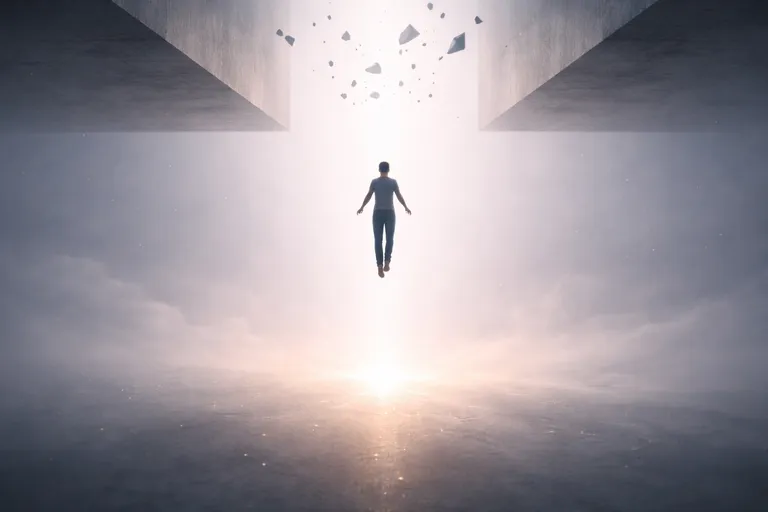
You were high enough to know exactly how far the ground was.
That’s the specific thing about this version of the dream. Not just falling — falling from a position where the distance was calibrated and real. Where you could see the ground with precision. Where the fall had a measurable length from start to where it would end.
Most falling dreams don’t give you the distance. You fall and the ground is simply there — present, inevitable, not particularly quantified. But falling from a height is different. The dream shows you the elevation before it shows you the fall. You see where you are. You register how far up. And in that registration — in the specific moment of knowing how high you are — the ground below becomes not just present but calculated. You are X distance from solid ground. You know exactly what falling from here means.
That calibration is the first piece of the interpretation. Because the height in this dream is not a setting. It’s a measurement. And what it’s measuring is not geography.
Quick Answer
- Falling from a height means you were elevated — in position, in achievement, in exposure — and the fall is measured against that elevation
- The height corresponds to how high you have risen or been placed in something in your waking life; the dream is proportional
- The further the fall, the greater the elevation that preceded it — the dream calibrates against what was at stake
- Being at height means being visible: the specific vulnerability of exposure that comes with elevated positions is the dream’s central territory
- This is not the same as the ordinary falling dream — ordinary falling is about the ground giving way; falling from height is about the specific precariousness of having ascended
Common Scenarios
Standing at the edge, not yet fallen → the most precise version; the dream giving you the full awareness of height before the fall; still in the position, already calculating the distance
Falling from a building or structure → the constructed elevation; something built that you were on top of; the fall from human-made height corresponds to social, professional, or creative achievement that has become precarious
Falling from a cliff or natural height → something elemental rather than constructed; the foundations more geological, more primal; what you stood on existed before you reached it
Falling slowly, watching the distance close → the dream extending the experience; the ground arriving measurably; each second the distance reduced
Falling from great height and not landing → the dream processing the full scope of the fall without resolving it; the extent of the distance without the terminus
Being at height with others who don’t seem to notice the edge → the exposure is yours specifically; the precariousness visible to you and not to them
What Your Body Already Knows
The altitude still in the stomach → the specific vertigo of height that transferred out of the dream; not the fear of falling but the physical registration of being elevated before the fall
The specific weight of the drop → your nervous system ran the trajectory; it knows how far it was
The exposure that stayed → being seen from below, from all directions, from a distance — the visibility of height didn’t dissolve when the dream did
The specific moment before the fall still present → not the falling — the standing at the edge with the knowledge of what stood below; the calm-before that had its own specific quality
The Height You Were at Was Real
Here is the distinction that matters most.
The ordinary falling dream takes you from ground level or somewhere unspecified and introduces a fall. The elevation isn’t the point; the loss of footing is. But falling from a height begins at height — and being at height means something specific in dream language.
You were elevated. Before the fall, there was an ascent. Something had risen — in position, in visibility, in the distance between where you are and where most people are. The height in this dream corresponds to an actual elevated position in your waking life: the professional role that carries weight and exposure, the creative project that has achieved a level of visibility, the relationship or family position that places you above others in a specific way, the success that put you somewhere you hadn’t previously been.
You’re on the roof. Not how you got there — you’re there. The city below is small in the specific way things get small when you’re high enough. You can see further than people on the ground. You’re also more visible — anyone looking up from below can locate you precisely. You know, with the knowledge that comes with this altitude, exactly what it would mean to fall from here. The distance is not abstract. It’s specific.
The height in the dream is not decoration. It’s telling you how high you had gotten. And the precariousness at height is telling you about the specific vulnerability that comes with having gotten there — the visibility, the exposure, the specific quality of being seen from below while you look down.
The fall, when it comes, will be proportional to the height. That proportionality is the dream’s most specific information about what’s at stake.
Visibility Runs in Both Directions
At ground level, you’re relatively invisible. Among the crowd. Not singled out by your elevation.
At height, the visibility is bidirectional.
You can see further. The view from elevation is part of what the position offers — more context, more perspective, a longer horizon. But you are also more visible to everyone below. Your position is legible from a distance. Anyone looking up can see where you are and how far you are from the ground. The exposure that comes with height is one of the things the dream is registering.
From up here, you can see everything below in its small, organized way. You can see how it all connects, the layout of the city, the patterns that aren’t visible from street level. But the people below — if they looked up — they could see you too. Your position is apparent. Your height is apparent. The distance between you and the ground is apparent to anyone who looks.
This is the specific anxiety that falling-from-height dreams carry that ordinary falling dreams don’t: the fall would be public. At ground level, you fall among peers. At height, you fall from visibility. The ground below will see it happen. They know how high you were.
The vulnerability of having risen is not the same as the vulnerability of simply having footing. When you’re at height, the stakes of losing balance are calibrated against the distance — and the distance is something everyone can see.
How You Got to Height Tells You What the Dream Is About
The dream rarely shows you the ascent. But the ascent is implicit in the position. And there are different ways of being at height, and they carry different meanings.
You climbed there — the height was earned; you made the ascent through effort and progression; the position was achieved. This version corresponds to waking situations where something was worked for, where the elevation is the result of real investment. The fall from achieved height has a specific quality of reversal — what was built might be undone.
You were placed there — the height was appointed rather than climbed; you’re in an elevated position you were put into rather than reached through gradual ascent. The instability of this version often corresponds to positions of responsibility or visibility that arrived faster than the inner architecture for holding them could fully develop.
You appeared at height with no sense of how — the dream version of being at height without the ascent. The position is real; the route is unknown. This corresponds to the specific disorientation of finding yourself with more than you knew how to navigate, more elevation than you know what to do with, more visibility than feels comfortable.
You were at height and you chose to look down — the looking precipitated the awareness of distance; looking down made the height real. This is about the moment of self-assessment that makes an elevated position feel precarious — when you looked at how high you were and the height became uncomfortable in a way it hadn’t been before you looked.
The View From the Top Is the Problem
There’s a quality in this dream that is unique and rarely examined: the position at height has a view, and the view is part of what makes the position destabilizing.
From height, you can see further than people on the ground. You have context they don’t have. The perspective is real — the ability to see how things connect, what the patterns are, what the lay of the land looks like from above. That view is part of what elevation offers.
It’s also part of what makes it harder to simply stand.
You see the whole of it from here — the distances, the relative scale of things, how much further it is to some things and how close others are that looked far from below. The view is accurate. The view is also the proof of how high up you are. Every piece of information the view provides also confirms: you are not on the ground. You are very far from the ground. And you can see exactly what that means.
The perspective that height offers comes packaged with the knowledge of height. You can’t have the view without knowing how far you have to fall. The clarity of the elevated perspective includes the clarity of what the fall would be.
This is why achievement that comes with significant elevation often produces this dream at its peak: the clarity of having gotten there comes with the clarity of what getting there means, and one of the things it means is that the fall from here is further than it’s ever been.
The Specific Precariousness of Elevation
At ground level, stability is relatively simple. You have direct contact with the ground. The surface is below you. If you lose balance, the fall is short.
At height, stability requires something different. You’re not simply in contact with the ground — you’re elevated above it, and what keeps you there is not the ground itself but the structure you’re standing on, your own balance on that structure, and the conditions that maintain both. The stability of height is more active than the stability of ground level. It requires more to sustain.
This is the specific anxiety the dream surfaces: not just “the ground might give way” but “what keeps me at this height requires more maintenance than being simply on the ground.” The elevated position is more precarious by nature, not because something went wrong but because elevation is inherently that.
When this precariousness becomes active — when the repeated experience of losing and regaining height, losing and regaining balance — the falling from height becomes a cycle rather than a single event. The dream runs the instability of elevation not once but in patterns that correspond to the sustained experience of maintaining a position that requires continuous active management.
The fall from height, when it comes, is not a failure. It’s the honest consequence of what height costs to maintain.
When This Dream Arrives
When a position of elevation has become newly precarious → something changed in how the height is being held; the footing felt different; the dream is registering the instability
When visibility has increased beyond what feels manageable → the exposure of the position has exceeded what the inner architecture is comfortable with; the dream is the body registering the height from the outside looking in
When the distance between position and capacity is showing → the height is real but something about what it takes to sustain the height has started to exceed what’s available
Why This Dream Happens — The Psychology Behind It
The nervous system’s response to height is one of its most ancient and automatic systems. The instinctive awareness of elevation, the calibration of distance to ground, the specific physical response to edges — these are pre-installed, older than any learned fear.
The brain recruits this ancient system when it needs to represent the specific vulnerability of elevated positions in waking life. Not general instability — the specific instability that comes with being in a position where the fall would be from somewhere, where the elevation was real, where the distance to the ground is proportional to how high the position was.
Falling from height dreams appear when the brain is processing a situation that has the structure of elevation: visibility, achievement, responsibility, the specific precariousness of positions that carry more weight, more exposure, and more to lose in the falling than ordinary positions at ground level do.
Dream Timestamp
The falling-from-height dream arrives when an elevated position has recently become genuinely precarious → not when the position was first reached — when something specific changed in how the height is being held; the dream appears when stability at elevation has shifted, not at the moment of achievement
The dream calibrates to the actual height of the waking position → the further the fall in the dream, the higher the elevation in the waking life; someone newly in an elevated role has different height dreams than someone at the peak of a career; the dream is proportional and honest about the stakes
The edge-without-falling version arrives when instability is present but the fall hasn’t yet occurred → this is the most diagnostic version — the full awareness of height and edge before any fall; it appears when the waking situation has the structure of precariousness without having yet produced the loss of position
The public-fall version arrives when the elevated position is highly visible → when the position is known — professionally, socially, creatively — the fall in the dream is witnessed; the social dimension of the elevation is part of what makes the potential fall feel like more than a private loss
The recurring version tracks the sustained nature of the precariousness → when the instability at height is not an acute moment but a chronic condition; the dream returns each night the elevated position remains unstable; it stops when either the position becomes stable or the elevation changes
The Sentence This Dream Was Trying to Say
I’ve climbed high enough that the fall would be visible — and I’ve been aware of the edge since before I looked down.
The Morning After
You’re at ground level. The bed is solid beneath you. The distance to the floor is ordinary.
Before the day rebuilds the position: feel for a moment the specific quality of the elevation the dream was showing you. Not the fall — the height. Where in your waking life are you standing on something elevated? What position carries the specific exposure of being up high, visible from below, with a view that comes packaged with the knowledge of how far the ground is?
The dream isn’t saying you’ll fall. It’s saying you’re high enough that falling is specifically, measurably real. That’s different from being unsafe. That’s the honest acknowledgment of what position costs.
One question: what would it mean to be at that height and stop calculating the distance to the ground — not because the ground isn’t there, but because the calculation was taking more of you than the standing was?
FAQ
You were elevated before you fell — and the elevation is the first information. This is not the same as ordinary falling, which is about footing giving way at ground level. Falling from height is about the specific precariousness of elevated positions: the visibility, the exposure, the fact that the fall is proportional to how high you had risen. The height in this dream corresponds to an actual elevated position in your waking life — professional, creative, relational — where the stakes of losing stability are calibrated against how high you had gotten.
The ordinary falling dream doesn’t begin with elevation — the ground simply gives way from an unspecified position. Falling from height begins at height: the dream shows you the elevation before it shows you the fall. The distance to the ground is calculated, specific, visible. The vulnerability is the specific vulnerability of having ascended — the visibility, the exposure, and the fact that the fall would be proportional to and witnessed from the position that was achieved.
The most precise version — full awareness of height and edge before any fall. The dream gives you the complete registration of precariousness without the fall itself. This version appears when the instability is real in the waking situation but the fall hasn’t yet occurred. You’re at height. You’re at the edge. The fall is possible. The dream is showing you exactly where you are before anything is decided — not predicting the fall, but making the elevation and its implications fully legible.
Yes. The type of height encodes the nature of the elevation. A building — human-made, constructed — corresponds to social, professional, or creative achievement: something built through effort and design. A cliff or natural height corresponds to something more elemental: foundations that preexisted you, ground whose authority is older than any personal achievement. Stairs correspond to incremental ascent — step by step, with clear intermediate points. Each type tells you something about how you got to height and what kind of stability it rests on.
Not in a predictive sense. The dream is diagnostic, not prophetic. It’s registering the current state of an elevated position — specifically, that the position has a quality of precariousness that the nervous system is tracking. The fall in the dream represents the brain’s honest accounting of what height costs to maintain and what losing it would mean. It’s not announcing that you will fall. It’s acknowledging that you’re high enough that falling is real — which is different from being unsafe, and different from being destined to fall.
Because the interval — being in the fall, no longer at the previous height and not yet at any new position — is where the psychological processing happens. The landing would represent resolution. The brain stops the dream at the moment of maximum positional uncertainty because that’s the content requiring processing: the experience of having left the elevated position without yet having arrived anywhere else. The fall that doesn’t land is not an incomplete dream. It’s a dream that stopped exactly where it needed to.
Next Stages
If the fall didn’t stop — if the height produced a fall that kept going, or that kept resetting → when elevation becomes a pattern rather than a single event: losing balance and falling repeatedly — when the instability of height becomes cyclical rather than acute
If what the dream was actually about was the exposure — being seen at height, visible to everyone below → when visibility and its specific vulnerability are the center: dream about losing control when your mind feels overwhelmed — when the weight of the elevated position generates overwhelm rather than just instability
If at height you froze — if the edge produced immobility rather than a fall → when height produces paralysis rather than descent: dream about not being able to move meaning — when the awareness of the height locks the body rather than sending it over