Dream About a Friendly Dog — Meaning & Interpretation
Most dog dreams are complicated. This one was warm. And the warmth, somehow, is the complicated part.
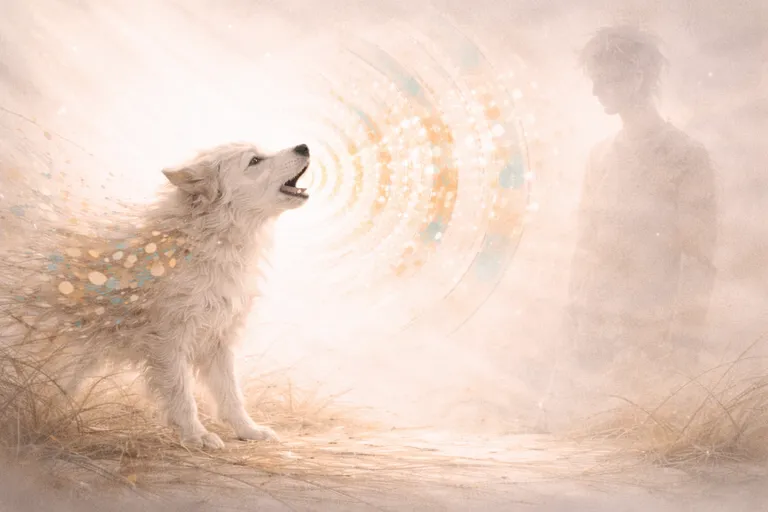
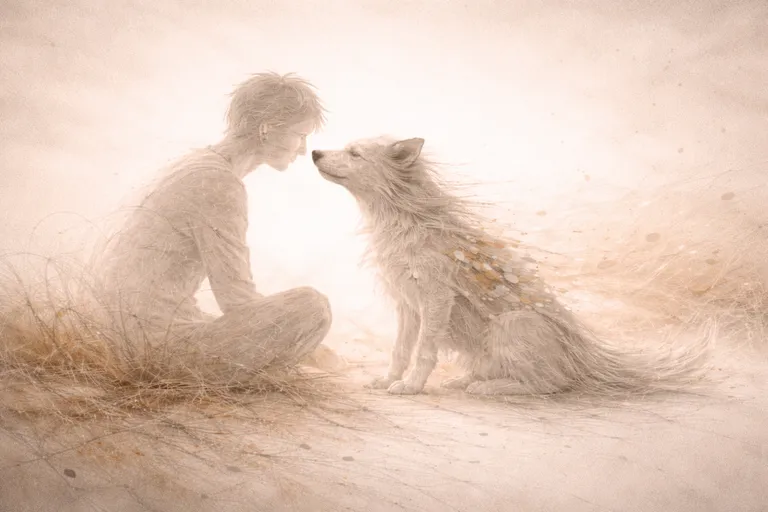
You expected the dream about a dog to have threat in it — a bite, a chase, a loss. Instead it had a dog that wanted to be near you. Tail moving. Body loose. No tension in it anywhere. It came to you with the specific ease of something that had already decided you were safe, before you’d decided anything about it.
And your reaction to that ease is the entire interpretation.
Not the dog. Your reaction to the dog. Whether you reached back. Whether you let the warmth actually arrive. Whether you were able to receive something simply offered, or whether something in you started scanning — for the threat that should be here, for the catch, for the thing that would explain why this trust can’t be as clean as it appears.
The friendly dog dream is the rarest of the dog dreams. Most people dream about dogs attacking, chasing, dying, barking. The friendly dog is the exception. And the reason it’s the exception is that simple, clean, uncomplicated warmth is the exception. Most trust in waking life carries history. Carries conditions. Carries the accumulated weight of everything that came before it.
The brain generates the friendly dog when it needs to show you trust that is, at least for this moment, free of all of that. Clean. Warm. Available.
The question the dream is quietly asking: can you let that in?
Quick Answer
- A dream about a friendly dog means genuine trust is present — or trying to be present — and something in you is deciding what to do with it
- The dog is not the subject. Your response to the dog is the subject.
- Friendliness in dreams is rare precisely because clean, uncomplicated trust is rare — when the brain generates it, it’s pointing at something specific
- If you reached back: something in you is ready for this. If you held still but didn’t lean in: the warmth arrived but wasn’t quite received. If you pulled away: the self-protection activated before the threat did.
- This dream doesn’t warn you. It invites you. And your response to the invitation is the interpretation.
Common Scenarios
Dog approaches and you don’t move — neither toward nor away → the warmth was registered; neither accepted nor refused; the holding-still is its own answer about your current relationship to receiving
You reach out to pet it and it stays → the receiving happened; something closed the distance; the warmth moved in both directions
Dog approaches and you step back → automatic self-protection; nothing threatening triggered the protection except the warmth itself
Dog follows you without being asked → trust that is choosing you without conditions; it didn’t wait to be invited; this commitment landed before you’d decided
The dog felt like it was yours → the recognition of something familiar; something that used to be close, or something that is close to the real version of you
Dog is friendly but belongs to someone else → warmth that feels available but not quite yours to accept; connection you can see but aren’t sure you’re allowed
What Your Body Already Knows
The warmth still in the hands → whether you touched the dog or not, the body registered the warmth that was available; the sensation of what could have been received
Whether you exhaled or held your breath → the body’s most honest response to warmth being offered; the exhale is permission; the held breath is the scan for what’s wrong
The strange quality of the ache on waking → this dream is supposed to feel good; if it left something that felt like wistfulness or low grief, the body is registering the gap between what was offered and what was received
Whether the warmth felt safe or suspicious → the body’s prior experience with warmth is in this response; the scan for the catch is in the hands before it’s in the mind
Why Warmth Is the Complicated Part
This is the thing that most interpretations of this dream miss entirely.
The threat dreams are easy to process — not comfortable, but legible. Something threatening. You respond. The response makes sense. The emotion follows the logic.
Warmth is different.
Receiving warmth requires something threat-response doesn’t require: openness. Actual openness, not managed openness. The willingness to let something good actually arrive rather than meeting it at the door with the part of you that checks credentials. Threat activates known systems — fight, flee, freeze. Warmth requires something more specific and more vulnerable: the willingness to not be guarded in the moment that something good is happening.
It pushes its head against your hand. The weight of it — real weight, warm, the specific pressure of a living thing that has decided you’re safe. You feel it. And underneath the feeling, very quietly, something that sounds like: what if this changes? What if I let this in and then it leaves? What if the warmth is real right now and becomes something else later? The dog stays still. The dog isn’t asking these questions. Only you are.
If warmth has been followed by withdrawal before — if connection has preceded abandonment, if trust has been followed by betrayal — then the response to warmth becomes complicated in a way that has nothing to do with the current warmth. The friendly dog is perfectly safe. The history is not.
The dream generates the friendly dog precisely because it’s showing you warmth without complication, warmth with no history attached. And your response to that warmth is showing you what your relationship to receiving has become.
The Gap Between Warmth Offered and Warmth Received
Here is the specific thing this dream is mapping.
Not whether warmth exists. Warmth exists in the dream — that’s given. The dream showed you a friendly dog, which means warmth is present and available.
What the dream is mapping is the distance between the warmth that’s available and the warmth that you actually received.
That distance is the interpretation.
Zero distance: you reached toward the dog, you let it be close, the warmth moved in both directions, the dream had the quality of genuine connection received. This corresponds to something in your waking life that you have actually, genuinely been letting in.
Some distance: the dog was warm, you were present but slightly guarded, you felt the warmth but something kept a small space. Not rejection. Not full reception. The warmth was real and something just kept it from landing completely.
Significant distance: the dog approached and something in you pulled back. Not because the dog was threatening. Because the warmth was offered. The self-protection activated in response to the availability of warmth rather than any specific threat.
It comes to you. Everything about it is fine — the tail, the ease, the way it moves toward you as though there was never any question about whether you were safe. And you stand there and you feel the warmth radiating from it and you keep a small, specific space between you and the dog. Not large. Not dramatic. Just enough to not be fully in contact with something that very much wants to be in contact with you.
The way warmth arrives between two people — the reaching and the receiving and the specific moment when something decides to close the distance — is the same territory the friendly dog dream maps in its most relational form. Both are about the willingness to let something warm actually touch you.
If You Recognized the Dog
There is a version of this dream that carries the most weight and the most specificity.
The friendly dog approaches and something in you recognizes it. Not the breed or the markings — something more fundamental. The way it moves toward you, the specific ease of its presence, the quality of its warmth. You know this.
Not necessarily a specific dog from waking life. Something the dog is carrying — something in the quality of its friendliness — that belongs to a part of your own experience.
It comes to you and you feel the recognition before you can explain it. The specific warmth of it. The way it settles as soon as it’s close to you, as though it was always going to be here, as though this is where it was headed and you were always the destination. Something in you responds that had been very quiet for a while. Not memory exactly. Recognition.
When the dream produces this recognition, what it’s showing you is one of two things.
Either a specific trust in your waking life that has the quality of something you’ve known before — warmth that feels familiar in a way that precedes the current relationship. Old trust, recognizable in new form.
Or a part of yourself. The version of you that existed before whatever made openness complicated. The self that trusted more easily, that opened before the reasons not to open had accumulated, that let warmth in without the prior accounting. The dream is showing you who you were. The question it’s asking is whether you want to find your way back to being that accessible.
What the Dog’s Approach Tells You
In this dream, the approach is everything. The approach tells you about the nature of the trust being offered.
The dog that approaches slowly, waits, approaches again → trust that is patient; something that knows it might not be immediately received and is willing to wait; the quality of this warmth is endurance — it came and it will keep coming
The dog that approaches directly, no hesitation → trust without doubt; something that has made no calculation about whether you’re safe and simply moved toward you; the absence of hesitation is its own kind of warmth
The dog that approaches and then looks at you → trust that’s asking something back; not demanding, but checking in; this warmth wants mutuality, not just acceptance
The dog that approaches while you’re doing something else → trust arriving without announcement; warmth that doesn’t wait for the right moment or your readiness; the interruption is the gift
The dog that approaches from behind → something behind you — in your past, in the life before whatever changed — is trying to reach you again; the warmth is coming from a direction you haven’t been looking
The Rarest Dream
Most people search for the meaning of difficult dog dreams. The chase, the bite, the attack, the dying.
Very few people search for the meaning of the friendly dog.
That rarity is itself information. The full range of what dogs represent in dreams — trust given, trust held, trust turned, trust lost — runs through an entire emotional spectrum. The friendly dog is at the warmest end of that spectrum. And that warmth is rare in dreams because what it corresponds to is rare in waking life.
Clean, uncomplicated trust. Warmth that comes without a preceding history of cost. Connection that is simply available without needing to be negotiated or earned or carefully managed.
The dog is there. It’s warm. It’s simple. No catch. No history. No accumulated weight of what came before. Just this: something that wants to be near you because you are who you are, without conditions. You stand in the middle of this and you feel it and you know — somewhere before the analysis — that this is the thing the dream is about. Not what the dog is. What you do with the simplicity of it.
This is why the dream can produce such a strange reaction on waking — the quiet ache that seems wrong for a dream that was warm. What you’re aching for is not what happened in the dream but what the dream was showing you is possible. The warmth was real. The question is whether you let it in. And if the answer is “not quite, not fully, not without the scan” — then the ache is the recognition of the gap between what’s available and what you’re able to receive.
Dream Timestamp
When something genuinely safe has entered your life → the dream is confirming what your intuition already knows; the brain generating the warmth as acknowledgment of what’s present
During a period when you’ve been keeping real connection at a distance → the dream is showing you what you’ve been holding away from; the warmth is available in waking life and not fully being received
After a period when trust was complicated → the brain generating the simplicity of the friendly dog as contrast; as a reminder of what trust can feel like when it’s clean
Why This Dream Happens — The Psychology Behind It
The brain generates warmth in dreams when something available in waking life isn’t being received at full amplitude.
When connection is present but being managed at a slight distance — when trust is available but being met with the partial guardedness that has become automatic — the low, quiet stress of that gap accumulates. Not the sharp stress of threat. The particular stress of something good not quite arriving.
The friendly dog is the brain’s clearest available image for uncomplicated warmth: a bodied, warm presence that approaches without conditions, that wants to be close without asking you to perform or manage or defend. The cognitive load the dream is processing is the gap between the warmth that’s available and the warmth that’s being received.
The dream doesn’t judge the gap. It makes it visible. With the specific gentleness of something that came to you warm and waited to see what you’d do.
The Sentence This Dream Was Trying to Say
Something warm is trying to reach me — and the only thing keeping it at a distance is a protection I forgot I was still running.
The Morning After
The dog is gone from the dream. The warmth might still be slightly present — or the specific ache of something offered that wasn’t quite received.
Before the day makes it abstract: what was the dog? Not the breed — what was the warmth? Where in your waking life is something genuinely safe, genuinely warm, genuinely available — that you’ve been meeting with a version of the scan, the slight guardedness, the barely-conscious step back?
And one specific question, worth sitting with honestly:
When warmth arrives simply now — without history attached, without conditions visible — what is the first thing that activates in you?
The answer to that question is more useful than any interpretation of the dream. The dream showed you the warmth. The question is what you do when it shows up in the room.
FAQ
What does a dream about a friendly dog mean? It means genuine trust is present or trying to be present in your waking life — and the dream is mapping your relationship to receiving it. The dog is not the subject. Your response to the dog is. Whether you reached toward it, held still, or pulled away despite nothing threatening — that response is the interpretation. The brain generates the friendly dog when it needs to show you warmth without complication and let you see what you do with simplicity.
Why does a warm dream sometimes leave a strange ache? Because the ache is the gap. Between the warmth that was available in the dream and the warmth that was received. If the dog was friendly and something in you still didn’t quite lean in — if the self-protection activated in response to warmth rather than threat — the waking feeling is the recognition of that gap. Not grief exactly. The specific quality of something good being close but not quite landing. The ache is the gap made audible.
What does it mean to pull away from a friendly dog in the dream? It means self-protection activated before any threat did. Something in you responded to the warmth being offered by creating a small, automatic space — not because the dog was threatening, but because warmth itself has become something that triggers the protective response. This isn’t a flaw. It’s a pattern. And identifying it is the most useful thing the dream offers: not “there is a threat” but “I am creating distance from something that’s safe.”
What does it mean if the friendly dog felt like it was mine? The recognition — that specific feeling of the warmth being familiar, of the dog feeling like it belonged to you or near you — is the dream showing you something from the real version of yourself. Either a trust in your waking life that resonates with something you’ve known before, or a part of yourself that was more open, more trusting, more willing to receive before whatever accumulated to make openness complicated. The question the recognition asks: is this something you want to find your way back to?
Next Stages
If the friendly dog turned at some point — if the warmth shifted into something else → when trust that seemed clean turns: dream about a dog attacking you — when the warmth was real and the shift was also real, and both things are true
If the friendly dog felt like it had been without a home before it found you → when warmth arrives from something displaced: dream about a stray dog — when the connection was wandering before it found its way to you, and the warmth carries the history of that wandering
If the friendly dog seemed to need something from you — if the warmth came with its own vulnerability → when the trust is mutual and both directions matter: dream about saving a dog — when the warm thing also needs you back, and what you do with that need is the interpretation