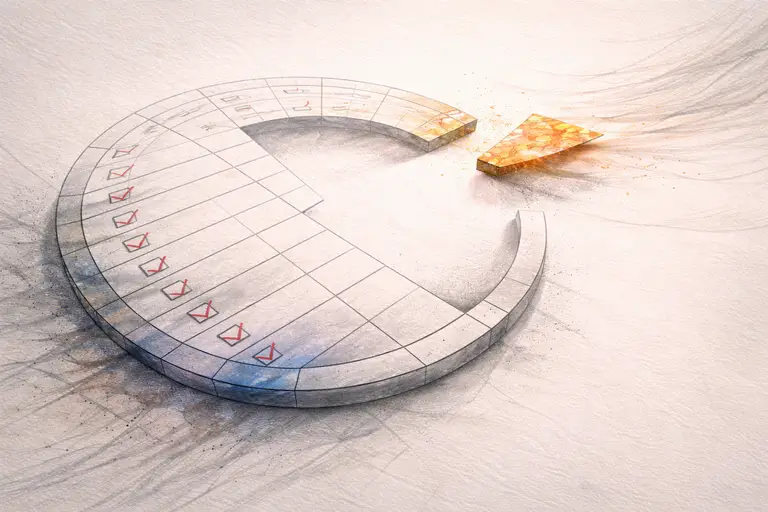
Running Out of Time in an Exam Dream — When What’s Required Exceeds What’s Available

The clock says seven minutes. You have twenty questions left.
The math is not working in your favor and you know it. You’ve done the calculation multiple times already — compulsively, the way you do when you already know the answer doesn’t look good but can’t stop checking. Seven minutes. Twenty questions. The hand is moving. The answers aren’t.
What distinguishes this dream from every other failure in the cluster is its mechanism. In the blank-paper dream, the framework is missing. In the forgetting dream, the access collapsed. In the wrong-answers dream, the trust failed. In this dream, none of those things happened. The material is there. The access is working. The trust is intact. The problem is purely and specifically temporal: there is not enough time for what you have to offer to be delivered through the window that’s closing.
That combination — adequate capability, genuine effort, insufficient time — is what the dream is built on. Not incompetence. Not unpreparedness. The specific, particular, precise experience of watching the window close before what you actually have can make it through.
I want to say this directly: every person who has this dream was trying. The hands were moving. The pen was going. The effort was real. The time ran out on effort, not on absence of effort. That distinction matters — both in the dream and in the waking situation the dream is reporting on.
Quick Answer
- The running-out-of-time dream is specifically about the gap between adequate capability and the available window to deliver it — not incompetence, not unpreparedness, but the temporal constraint becoming the limiting variable between what you have and what the situation can receive
- Robert Sapolsky’s research on stress and the prefrontal cortex establishes the neurological mechanism: under sustained time pressure, cortisol levels that are chronically elevated impair the prefrontal cortex’s planning and executive functions — the very faculties needed to use the available time efficiently; the pressure consumes the resource it was supposed to protect
- Daniel Kahneman’s two-system model adds the second layer: under severe time pressure, the slow, deliberate System 2 is forced to operate at System 1 speed, producing the worst of both — neither the speed of intuition nor the accuracy of deliberation; the dream stages exactly this collision
- The specific combination the dream encodes — you have the knowledge, the preparation was real, the effort is genuine, and the time is still closing — maps a waking situation where the limiting variable is not capability but the ratio of demand to available resource
- When you stop trying before time actually runs out, the dream is encoding pre-emptive surrender: the prediction of impossibility arrives before the impossibility itself, and the prediction ends the effort before the outcome is determined; this has an active address in waking life
- The clock’s neutrality is the hardest part of this dream — it isn’t hostile, it isn’t punishing, it simply measures; the specific experience of being evaluated by a system that doesn’t adjust for circumstances is what the clock represents in waking life
- When others are finishing while you are still behind, the temporal pressure is specifically yours — the dream is encoding the experience of a demand-to-resource ratio that differs from those around you, and the social visibility of that difference
- When the clock jumps forward in the dream — when time seems to accelerate — the urgency in the waking situation has been accelerating; the dream’s clock is calibrated to the actual felt pace of the waking deadline pressure
- When the hand cramps from writing faster, the dream is staging the specific futility of trying to solve a temporal problem through physical effort: the body doing more of the same thing when more of the same thing cannot address the actual constraint
- The dream appears specifically during sustained deadline conditions — not a single approaching deadline but the chronic state of operating with multiple time constraints simultaneously at a pace that doesn’t give the effort enough room
Common Scenarios
Seven questions left, three minutes remaining — the gap is undeniable. The foundational version. The math has been run and it doesn’t close. You know before the clock announces it. What the dream is staging is not the moment time runs out but the moment you see clearly that it will — the specific experience of certainty-before-the-fact that something won’t make it through the window. In waking life, this is the point at which the cumulative demand calculation becomes undeniable: the delivery that won’t be ready, the project that won’t complete, the conversation that won’t happen before the context closes.
The hand cramps and you write faster anyway. The futility version. The body is doing everything it’s been asked to do — more, actually, more than it would normally be asked to do — and the constraint it’s working against isn’t physical. Writing faster cannot solve a problem that is temporal rather than physical. The cramping is the dream’s specific image for the waking experience of applying more effort to a problem that effort can’t address: working harder when the constraint is the structure of time rather than the structure of the work.
You stop before time runs out. The pre-emptive surrender version — the most specifically diagnostic scenario in this cluster, and the one that produces the most confused aftermath. There are still minutes left. There are still questions unanswered. And something in you stops. Not because the time has run out but because the calculation has run and the verdict of impossibility has arrived before the actual impossibility has. What the dream is encoding is the moment the prediction ends the engagement before the outcome is determined. In waking life, this is already happening somewhere. The door you stopped trying to open before it was confirmed closed. The application you decided not to submit because the assessment of rejection arrived before the rejection did.
Others finish and hand in their papers. The comparison version. The people around you have a different relationship to the clock. They’re in the same room, under the same rules, running against the same deadline — and it’s working for them in a way it isn’t for you. The dream is encoding the specific experience of a demand-to-resource ratio that differs from those around you. Not that they’re better. That your specific load — the total of what you’re carrying, the pace at which things are arriving, the available time relative to what’s required of you specifically — doesn’t correspond to the load the structure was designed for.
The clock jumps forward. The acceleration version. You look up and minutes have dissolved without warning. The rate at which time is moving doesn’t match the rate at which the work is advancing. In waking life, this version corresponds to the specific experience of urgency that compounds: each deadline that doesn’t fully resolve generates pressure that makes the next deadline harder to manage in the time available. The jump isn’t about time moving strangely. It’s the brain being accurate about the felt pace of accumulated deadline pressure.
You write anything — something, whatever — just to have something written. The output-for-its-own-sake version. The standard of correctness has been abandoned in favor of the standard of completion. Something is better than nothing. Anything that produces an output is better than the pure blankness of time running out with nothing on the page. In waking life, this is the moment when the bar has been lowered not from laziness but from the honest acknowledgment that the available time cannot meet the original standard — and the choice is between something imperfect and delivered, or nothing perfect and not.
What Your Body Already Knows
Woke up with the chest still compressed — not fear, something with more urgency and less exit → because Sapolsky’s research on the urgency stress response documents a specific physiological signature: the tight chest of time pressure has a different texture from the tight chest of threat; fear has a direction you can flee; time pressure has no direction; the body was holding the compressed quality of the closed window throughout the dream, and compression has a somatic residue that persists briefly past waking
Woke up with the hands carrying a faint residue — not pain, the memory of the cramping → because the motor cortex was running the fast-writing simulation throughout the dream at full somatosensory resolution; the body was doing the writing; what remains in the hands is the body’s record of having tried to solve through physical effort what physical effort couldn’t solve
Woke up and the pace of the morning already felt wrong → because the urgency state the dream was running extends briefly into waking before the actual pace of the room confirms it’s unnecessary; the morning that follows a time-pressure dream has a quality of already-behind that precedes any actual demand; the body is still in the configuration of the dream’s pace
Woke up and a specific project, deadline, or demand was already present in consciousness before any deliberate thought → because the clock in the dream was always measuring something real; the dream had an address; the first thing that arrives in waking consciousness before any analysis is the address the dream was running against
Woke up with the specific quality of having stopped before finishing something → because the dream may have generated the pre-emptive-surrender scenario; the body carries that specific quality — the sensation of effort withdrawn before completion — as its own distinct residue; what it feels like to have stopped before the time actually ran out is different from what it feels like to have been stopped by time
The Specific Neuroscience — Why Urgency Consumes the Resource It Needs
Robert Sapolsky’s three decades of research on stress physiology produced a finding that changes the entire reading of the time-pressure dream: the stress response is supposed to help with acute crises, and under sustained conditions, it actively interferes with the capacities required to manage them.
Documented in Behave and across Sapolsky’s longitudinal research: under acute stress, the body mobilizes energy, sharpens attention, and focuses resources on the immediate situation. This is the adaptation that makes physical crisis manageable. Under sustained stress — the kind produced by chronic deadline pressure rather than a single acute event — something different happens. Elevated glucocorticoid levels, maintained for weeks or months, begin to impair the prefrontal cortex’s function. The planning capacity. The ability to prioritize. The executive functions that allow efficient allocation of limited time.
The mechanism is self-undermining: the pressure that’s supposed to be motivating the efficient use of time is degrading the neural systems that would allow time to be used efficiently. The cortisol that rises to help with the deadline is the same cortisol that’s making the deadline harder to meet. Sustained urgency consumes the capacity that acute urgency was supposed to activate.
This is why the dream generates the specific scenario it generates: the capability is there, the effort is real, the time is closing. It’s not staging incompetence. It’s staging the actual physiological experience of trying to deliver through a window that has been narrowed by the sustained operation of the urgency response itself.
Daniel Kahneman’s research on System 1 and System 2 adds the second layer. System 2 — the slow, deliberate, analytical process — is what allows you to prioritize which questions to attempt first, to allocate time strategically across the exam, to make the small executive decisions that convert capability into completed answers. Under severe time pressure, System 2 is forced to operate at System 1 speed. The result is neither the accuracy of deliberation nor the speed of intuition — it’s a degraded hybrid of both. More specifically: the person jumps between questions, can’t decide where to focus, writes faster without writing better, and produces less in the time available than they would have produced under the same capability with more time.
The dream is running this state at concentrated intensity. The capability is there. The system that would convert the capability into delivery is compromised by the very urgency that was supposed to make the delivery happen.
The clock says four minutes. You have the answer to question twelve — you can feel it, it’s there, it’s accessible. There is no time to write it in the form it deserves. You write it anyway, faster than handwriting is supposed to go, and you look at what you produced and it’s almost right. The clock says two minutes. There are still six questions. The four minutes produced one almost-answer. The math keeps not working.
Failing an Exam Dream — What Your Brain Is Actually Being Evaluated On maps the full architecture of why the exam room is the brain’s most efficient image for high-stakes evaluation — and why the specific failure mode the dream stages tells you more about the structure of the waking evaluation than about any actual academic anxiety.
The Moment You Stop Before Time Does
This is the most specific thing the dream encodes, and the one most worth examining directly.
Somewhere before the clock reaches zero — with minutes remaining, with questions on the page, with time that technically still belongs to you — something in you stops. The assessment of impossibility arrives before the actual impossibility does. The prediction that the window can’t be closed becomes the thing that closes it.
This is pre-emptive surrender, and it’s the dream’s most specific diagnostic tool because it has an active correspondence in waking life. Not the running-out-of-time itself — the stopping before the running-out.
The conversation that ended before it was finished because the assessment of “this isn’t going to resolve” preceded the opportunity for it to resolve. The application withdrawn because the prediction of rejection was treated as the rejection. The work set down because the belief that the deadline wasn’t meetable became the thing that made the deadline not met. The engagement that withdrew because the gap looked too large to close — when the outcome was not yet determined.
What distinguishes the pre-emptive surrender from rational strategic withdrawal is the moment it happens: before the outcome is established. The dream is showing you the specific cost of predictive pessimism that arrives before the prediction can be tested.
The Clock That Doesn’t Know You
Here is the most honest thing the running-out-of-time dream has to say about the waking situation it’s processing.
The clock is not against you. The clock simply doesn’t know you’re there.
This is the specific quality of temporal constraints that produce this dream: the experience of being evaluated or measured or delivered against by a structure that doesn’t adjust for context. The performance review that measures what was delivered without reference to what was demanded during the delivery period. The deadline that doesn’t bend for the complexity of the actual work. The external standard whose pace is set without reference to the specific circumstances of the person meeting it.
Not hostile. Indifferent. And indifference, in this context, is harder to metabolize than hostility. With hostility there’s something to push against, something to argue with, something that might be persuaded. Indifference just measures. The clock keeps moving. Your situation doesn’t alter the measuring.
The dream generates this experience as a clock because the clock is the most concentrated available image for the specific quality of external standards that don’t accommodate internal realities. The clock is accurate. The clock is also completely unaware of you. Both things are simultaneously true.
Writing Wrong Answers in a Dream — When the Problem Isn’t What You Know maps the adjacent failure mode — when it isn’t time but the evaluating system itself that becomes the constraint; the distinction between running out of time before what you know can be delivered, and having what you produce doubted before it can be submitted.
Dream Timestamp
The time-pressure dream arrives during sustained deadline conditions — not a single approaching deadline but the ongoing state of operating with multiple constraints simultaneously at a pace that doesn’t give effort enough room → not the night before one important presentation — during the extended period when multiple things are simultaneously in the state of running against their time constraints, when the total temporal load has exceeded what the available time can accommodate
The pre-emptive surrender scenario becomes more frequent as the sustained pressure extends → the longer the urgency state has been running, the more the brain generates the scenario of stopping before time runs out; the pre-emption is proportional to the accumulated experience of prediction-confirmed-by-outcome; each time stopping early turned out to have been approximately correct, the prediction system recalibrated to stop earlier
The others-are-finishing version arrives when the differential between your pace and the available time has become socially visible → when the mismatch between your demand-to-resource ratio and the apparent ease of others in similar positions has crossed from a private calculation to something that can be observed in the environment
The hand-cramping version arrives when the current effort mode is physically unsustainable → when the pace of output being maintained in waking life has exceeded what the body was designed to sustain; the cramping is the body’s honest report on a rate of output that cannot be continued at current levels
The dream stops when the demand-to-resource ratio genuinely changes → not when you try harder — when either the demand reduces, or the time available increases, or the scope of what’s being attempted is aligned with what the available time can accommodate; the dream tracks the ratio, not the effort
The Sentence This Dream Was Trying to Say
“I have everything the situation requires except the time to deliver it — and somewhere in the middle of trying, I stopped before the time actually ran out.”
The Morning After
The chest has loosened. The room’s pace has replaced the dream’s pace.
Before the demand reloads today with the same structure: two questions worth sitting with separately.
First: what in the current arrangement of your life has been producing the specific combination of adequate capability, genuine effort, and insufficient time? Not a single deadline — the pattern. The sustained condition.
Second, more specific: where have you been stopping before the time runs out? Where has the prediction of impossibility been arriving before the impossibility itself, and the prediction been the thing that ended the effort before the outcome was established?
The dream was most precise about the second one. The clock was the image. The stopping before the clock was the content.
FAQ
The dream encodes a specific and important distinction: adequate capability, genuine effort, and insufficient time. Not incompetence — the limiting variable is the ratio of demand to available resource. In waking life, this corresponds to the sustained experience of operating under deadline pressure that consistently exceeds the available time, at a pace where what you actually have cannot be fully delivered through the window available to deliver it. The clock is the brain’s most concentrated available image for external structures that measure output without accommodating the circumstances of the person producing it.
Because sustained urgency is self-undermining. Robert Sapolsky’s research on stress and the prefrontal cortex established this precisely: under chronic deadline pressure, elevated cortisol levels impair the executive functions — planning, prioritization, efficient allocation of time — that would allow the available time to be used well. The pressure that’s supposed to help you meet the deadline degrades the capacity to meet it. The urgency consumes the resource it was supposed to activate. This is why the dream stages the specific scenario of trying harder producing less: the effort is real, and the system that would convert the effort into delivery is being compromised by the urgency itself.
Pre-emptive surrender — the prediction of impossibility arriving before the actual impossibility, and the prediction ending the engagement before the outcome is determined. This is the dream’s most specific diagnostic. It has a waking-life address: the application not submitted because the assessment of rejection preceded the rejection, the conversation abandoned because the assessment of fruitlessness preceded the attempt, the work set down because the belief that the deadline wasn’t meetable became the thing that made it not met. The dream is naming a pattern that’s already active. The question to ask: where is the stopping happening before the outcome is actually established?
Because the clock is indifferent, not hostile — and indifference is harder to metabolize than hostility. The clock doesn’t know you’re there. It measures. Your situation doesn’t alter the measuring. The specific experience of being evaluated by a structure that doesn’t adjust for context — the performance review without accommodation for circumstance, the deadline that doesn’t bend for complexity, the external standard whose pace is set without reference to the actual conditions of the person meeting it — is what the clock represents. You can’t argue with it. You can’t persuade it. It just keeps moving.
Almost always larger. The running-out-of-time dream appears specifically during sustained deadline conditions — not the night before a single important presentation but during the extended period when multiple things are simultaneously running against their time constraints. When the total temporal load has exceeded what the available time can accommodate on a chronic basis. When the experience of watching the window close has become the ongoing condition rather than a temporary state. A single deadline generates acute stress. Sustained deadline conditions generate this dream.
By genuinely changing the demand-to-resource ratio — not by trying harder, which is exactly what the dream is showing doesn’t work. The dream tracks the ratio of what’s being asked to what’s available to meet it. It stops when either the demand reduces, the available time increases, or the scope of what’s being attempted is brought into alignment with what the available time can accommodate. Working faster is the hand-cramping scenario. The solution is structural, not motivational.
Next Stages
Failing an Exam — What Your Brain Is Actually Being Evaluated On — the pillar of this cluster — why the exam room is the brain’s most efficient image for evaluation pressure, and what kind of external measurement generates the most concentrated dream response
Forgetting Everything in an Exam Dream — The Betrayal That Comes From Inside — the adjacent failure mode — when time isn’t the constraint but access is; what happens when the material was there, the effort was real, and the retrieval failed specifically at the moment it was needed
Not Finishing the Exam — When the Questions Remained on the Page — the aftermath version of the same experience — when running out of time produced a specific image of questions left unanswered rather than the urgency of the running itself
Writing Wrong Answers — When the Problem Isn’t What You Know — the version where time produces output but the output fails — when urgency doesn’t just prevent completion but corrupts what gets produced