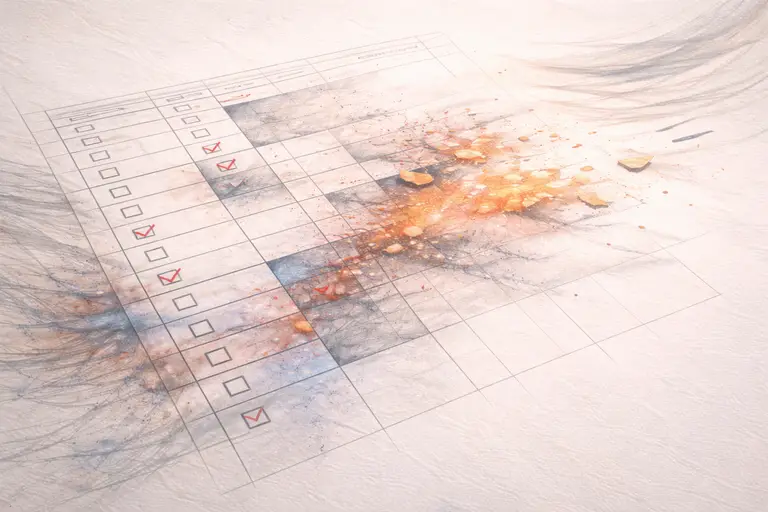
Missing an Exam in a Dream — The Window That Closed While You Were Somewhere Else
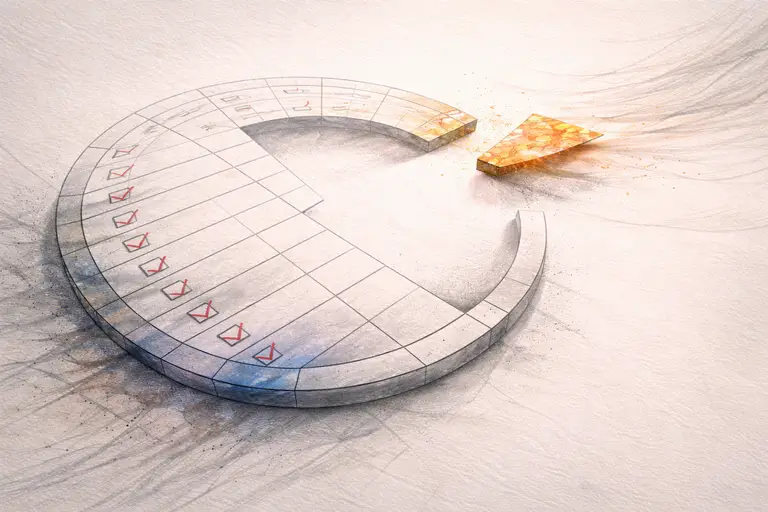
You didn’t fail it. You weren’t there for it.
That’s the specific difference and it matters more than it appears to. In the failing dream, you showed up. You tried. You were present for the measuring and the measuring went wrong. In this dream, the outcome is determined before the trying even begins. The exam happened. The clock ran its course. The room completed itself. You weren’t in it.
The missing exam is the dream of the window that closed while you were somewhere else.
Not a failure of performance — a failure of arrival. The distinction carries its own specific emotional weight. Failed is a verdict about capability. Missing is a verdict about timing and presence — about whether you were positioned in the right place when the window was open. These are different failures, and the brain generates different dreams for them because they require different processing.
I’ve worked with this dream across years of studying the exam cluster, and one thing stands out consistently: the people who have it most frequently are not people who habitually miss things. They’re people who are acutely aware of windows — who track opportunities carefully, who are sensitive to the limited availability of certain moments — and who are in a period where the anxiety about whether they are correctly positioned for what’s available has become the background condition.
The dream isn’t predicting that you’ll miss something. It’s processing the specific anxiety of someone who knows that timing matters and is unsure whether their timing is right.
Quick Answer
- The missing-exam dream is about timing — specifically the anxiety of windows that close and the specific dread of the already-closed; not capability, not preparation, but presence in the right place at the right moment
- Bluma Zeigarnik’s research on incomplete tasks established the mechanism underlying the specific quality of this dream: unfinished events remain in active processing with higher accessibility than completed ones; the missing exam represents a specific category of incomplete — not a task that was attempted and incomplete, but one that was never attempted; the incompletion is of a different order
- Daniel Kahneman’s research on loss aversion is directly applicable: the pain of a missed opportunity is neurologically disproportionate to what would have been gained by not missing it; the brain weights foregone outcomes more heavily than equivalent actual losses; the hollow quality of this dream is the brain running the counterfactual at full emotional intensity
- The most important diagnostic information in the dream is what caused the missing — sleeping through it, not knowing the date, never finding the room, losing the paper — each encodes a different kind of timing failure with a different waking-life address
- When you arrive just as everyone is leaving, the window closed recently and the evidence of its closing is immediately visible; the comparative dimension is present: others made it, you didn’t, and their having made it is now legible to you
- Missing is different from being late in the most fundamental structural sense: being late is still-possible, inside the window, the verdict still forming; missing is after-the-verdict, the outcome determined, the window gone
- The finality is the dream’s central emotional content — not anxiety about what might happen, but something heavier: the registration of what did; the stomach pit quality unique to this dream is the brain’s response to an already-determined outcome, not a threatening potential one
- When the recurring version appears — the same exam missed again and again — the pattern of not-being-positioned-when-windows-open has become structural; one instance points at a specific situation, the recurring version points at something about how you’re moving through time
- The dream corresponds to the Zeigarnik loop of an opportunity that was available and passed without completion: the brain keeps it in active processing because the incompletion signal hasn’t resolved; it can’t be resolved by action, only by processing the counterfactual to completion
- The dream stops when the timing anxiety resolves — either because the actual window is still open and you move through it, or because the counterfactual processing completes and the brain accepts the already-done quality of what passed
Common Scenarios
You arrive and everyone is already leaving. The most socially specific version. The room is emptying as you approach it. People file past you with their completed papers, their relieved or anxious faces, the visible evidence of having been present when the presence was what mattered. You are moving into the space they’re moving out of, and the direction of their movement is the clearest available signal that what happened in there has happened without you. In waking life, this is the version of missed timing that has a comparative dimension — not just that you weren’t there, but that others were, and their having been there is now visibly different from your not having been.
You slept through the alarm. The stasis version. You knew the window was there. The time was known. The alarm was set. And the alarm produced sleep rather than waking, and the sleep continued while the window moved. In waking life, this corresponds specifically to the experience of opportunity that passed during inaction — not ignorance, not incapacity, but the specific experience of staying still while time moved. The decision not made, the application not submitted, the conversation not initiated, the step not taken while the window that would have received it was still open.
You had the wrong date. The misinformation version. Your timing was right given the information you had. The information you had was wrong. The exam was on Tuesday and you prepared for Thursday, or the deadline was the 15th and your calendar said the 17th. The failure is epistemic — based in incorrect information about when the window would be. In waking life: missed opportunities that resulted from having the wrong map rather than making the wrong decision; situations where the information that would have allowed correct timing was unavailable, incorrect, or provided by someone who turned out to be unreliable.
You lost the exam paper right before it started. The last-moment-dissolution version. You had what you needed. You were there. You were positioned — correctly, in time, with preparation — and something dissolved at the final moment before entry. The credential was lost. The confirmation didn’t arrive. The permission was revoked. In waking life: opportunities that reached the threshold of access and then were removed — the job offer withdrawn after verbal acceptance, the acceptance letter that didn’t arrive, the path to the window that collapsed at the moment of crossing it.
You never found the room. The directionlessness version. The exam existed. Your intent to be there was genuine. The path to it was never clear enough to allow arrival. You searched. The room kept not being where it should have been. The wanting to be there was real; the capacity to navigate to there was absent. In waking life: opportunities whose route was never legible — the professional path that was available but whose access requirements were never communicated clearly, the relationship that required a specific entry point you could never locate, the goal whose approach was genuinely unclear regardless of the desire to arrive.
The exam was yesterday. The pure-past version. Not: the exam is happening now and you’re not there. The exam was then and you weren’t there then either, and the then is irrecoverable. There is no urgency in this version — no running, no panic — just the flat specific quality of something that is over and was over before you recognized it was happening. This version produces the most specifically grief-adjacent quality: not anxiety, not urgency, the hollow stillness of something that no longer has a present-tense.
What Your Body Already Knows
Woke up with the hollow stomach quality — not fear, something colder and more specific → because Kahneman’s research on loss aversion documents a specific neurological signature for the experience of foregone outcomes: the brain weights what was available and passed more heavily than equivalent actual losses; the hollow quality isn’t general distress; it’s the specific somatic response to the brain running the counterfactual — what would have happened if you’d been there — and producing the answer in full emotional detail
Woke up reaching for the phone or checking the time before being fully conscious → because the body was running the last-chance verification — is there still time? — before the mind confirmed the dream’s finality; this reflex is the body’s honest record of the urgency the dream generated; it precedes analysis because it’s operating from the system that was running the alarm; the checking is the survival system looking for the window that the dream was building toward
Woke up and the specific window in the waking life — the one that is closing or has closed — was identifiable before any deliberate thought → because the dream always had an address; the exam was always a reference for something real; whatever arrives in consciousness before analysis is the thing the dream was processing; and its arrival before deliberate thought confirms that it has been running at something below the surface of ordinary awareness
Woke up with the specific quality of already-done — not anticipatory dread, but something settled and past → because the dream processed the already-closed window, not the still-open one; the emotional texture of the missing exam dream is distinct from the being-late dream because the temporal position is different; the hollow is the body’s register of finality, not of urgency; it corresponds to how recently the window actually closed — the closer the actual window, the more present the hollow
Woke up not checking whether it was real, but checking whether there was still time — and finding there was → because some people wake from this dream with the specific relief of: it was a dream, the window is still open, the exam hasn’t happened yet; when this is the waking-moment quality, the dream is processing anticipatory anxiety about a window that is genuinely still open; the relief is the body confirming the window’s present-tense availability
What Zeigarnik Found — And Why This Dream Keeps Running
Bluma Zeigarnik’s discovery in 1927 — that incomplete tasks are held in more active, more accessible mental processing than completed ones — was initially demonstrated with waiters who could recall in-progress orders with perfect detail but forgot completed ones immediately. The brain holds open loops in working memory because open loops might still require something from you.
The missing exam is a specific category of incomplete that Zeigarnik’s framework helps explain. It isn’t a task that was attempted and interrupted. It isn’t a task that is in progress. It is a task that was never begun — whose window passed without the attempt occurring. This is a different kind of incompletion, and the brain processes it differently.
The missing window can’t be completed through action — the action-time has passed. The only available resolution is counterfactual processing: the brain running through what would have happened if the timing had been different, arriving at some resolution of the open loop through the completion of that processing rather than through actual completion of the task.
What I find important about this in working with the missing-exam dream: the dream often recurs not because the person keeps missing things, but because the counterfactual hasn’t been processed to completion. The brain keeps returning to the missing because the emotional loop of what would have happened — what the window would have produced, what being there would have meant — hasn’t been fully traced and resolved. The loop stays open because it hasn’t been followed to its end.
Kahneman’s loss aversion research adds the amplification mechanism: foregone outcomes — things that were available and not taken — are processed by the brain with more emotional intensity than equivalent actual losses. The missed exam produces more distress than the failed exam of equivalent stakes specifically because it involves a foregone outcome rather than a bad one. The brain weights the not-having-been-there more heavily than it would weight having-been-there-and-failed.
You push open the door. The room is clearing — chairs being pushed back, papers being gathered, the specific sound of an ending. The people who were in the room are coming out of it. They passed through the window when the window was open. You are arriving at the place where the window was, and what you find is the evidence of everyone else’s having been there. Yours is the only absence in the room’s accounting.
Failing an Exam — What Your Brain Is Actually Being Evaluated On maps the full cluster of evaluation-anxiety dreams — and why the brain’s choice of scenario (failure vs missing vs blank paper) is always diagnostic of which specific dimension of evaluation pressure the current waking life has activated.
What Caused the Missing — The Most Specific Information in the Dream
Here is the diagnostic reading of this dream that most people miss: what caused you to miss it is more informative than the missing itself.
Sleeping through the alarm points at stasis — at the experience of staying still while time moved, of inaction during a period when action was the thing the window required. In waking life: the opportunity you knew about and didn’t act on while the acting was available.
The wrong date points at misinformation — at having trusted an incorrect map, at having prepared correctly for the wrong target. In waking life: the missed opportunity that resulted from incorrect information rather than wrong decision.
Never finding the room points at directionlessness — at wanting to be there without having a navigable path. In waking life: the goal whose approach was genuinely unclear, where desire was present and the route was not.
Losing the paper at the last moment points at threshold failure — at having everything right until the moment of entry and having it dissolve there. In waking life: the near-miss rather than the clear miss, the opportunity that reached the access point and collapsed.
The specific cause is the dream’s most honest diagnostic tool because it corresponds not to the fact of the missing but to the mechanism — and the mechanism is what has a waking-life address. Not: I missed something. But: I missed it in this specific way. And this specific way keeps showing up because this specific mechanism is still operating.
The Already-Done Quality — Why This Dream Feels Different
Every other exam dream in this cluster generates anxiety — the anticipatory activation of the stress response, the urgency of something-is-going-wrong-and-might-be-fixable. The missing exam dream generates something else.
Not anxiety. Something colder. Something that doesn’t have the urgency quality because urgency requires a direction and there is no direction that would help. The hollow stomach pit that distinguishes this dream from all the others in the cluster is the body’s response to an already-determined outcome — the specific somatic signature of counterfactual processing rather than threat-response.
You are not afraid of what might happen. You are registering what did. These are neurologically distinct states and the body processes them differently. Anxiety mobilizes — it prepares for action, it raises the heart rate toward doing something. The hollow quality of the missing exam demobilizes — there is no action available, the outcome is determined, the only process remaining is the processing of what already occurred.
This distinction is worth sitting with on the morning after, because it contains the dream’s most honest message: whether the window the dream was built on is genuinely already closed, or whether the finality of the dream’s emotional quality has been borrowed by the anxiety about a window that is still open.
Both situations generate the same dream. Only you know which one you’re actually in.
Being Late for an Exam in a Dream — The Hallway That Keeps Extending maps the adjacent experience — the version where the window is still open, where the urgency is still directional, where the running is still toward something rather than toward the evidence of something that has already occurred.
Dream Timestamp
The missing-exam dream arrives when timing anxiety has become the primary background emotional condition → not before a single specific deadline — when the general experience of windows closing, or having closed, has become an active processing state; during life phases where timing genuinely matters — transitions, competitive windows, limited-availability opportunities — the dream appears when the anxiety about positioning has reached the level of sleep-level processing
The arrives-when-everyone-is-leaving version arrives when the comparative dimension is most active → when the timing failure has a social visibility — when others’ presence in the window that you were absent from is observable; this version intensifies when the missed window produced visible differences in standing or position between you and people who were present
The slept-through version arrives during periods of the deepest stasis → when inaction has been most sustained, when the experience of having stayed still while windows moved has been most repeated; this version clusters around decisions deferred and opportunities passed without clear rejection — the ones that weren’t chosen, just not moved through
The wrong-date version arrives when the most recent timing failure was based on incorrect information → relatively close to the experience of discovering that the map was wrong; this version has a specific quality of external attribution — the failure was real but the cause was outside rather than inside; the anger or confusion of having trusted incorrect timing information is part of this version’s aftermath
The recurring version means the pattern of missing is structural → not one instance but a mode of relationship to timing that keeps producing the same result across different windows; this version requires looking at the mechanism — what keeps producing the not-being-positioned-when — rather than any individual instance of the missing
The Sentence This Dream Was Trying to Say
“Something had a window — it was real, it was available, it had a specific period when it would receive what I had to offer — and that window moved while I was somewhere other than where it was.”
The Morning After
The hollow has mostly cleared. The room is available. Time is current.
The most important question to sit with before the day assembles itself: is the window actually closed?
The dream presents missing with the emotional quality of finality. But dreams borrow the emotional quality of past timing failures to process anxiety about current or future ones. The hollow stomach of a window that closed years ago feels identical, in the dream, to the hollow stomach of a window closing now or soon.
Only you know whether the exam in the dream corresponds to something that has actually passed — where the processing required is counterfactual, the completion of the Zeigarnik loop about what would have been — or to something that is still open, where the dream’s finality is the anxiety’s projection and the window is genuinely still available.
If the window is still open: the dream just showed you what it would feel like to miss it. That information has a use. If the window is closed: the dream is doing what Zeigarnik’s research predicts — processing the incompletion by running it toward its end. Let it run. The hollow clears when the loop closes.
FAQ
Timing — specifically, the anxiety of windows that close and the dread of the already-closed. Not capability, not preparation, but presence in the right place when the window was open. The brain uses the missing exam because it is the most complete available symbol for a specific kind of loss: not failure at the task, but absence from the task’s available period. Kahneman’s loss aversion research explains the emotional intensity — the brain weights foregone outcomes more heavily than equivalent actual losses; missing the exam feels worse than failing it of equivalent stakes.
The most structural distinction in the cluster. Being late is still-possible — inside the window, verdict still forming, urgency has a direction. Missing is after-the-verdict — window gone, outcome determined, the urgency has nowhere to go. This produces the different emotional quality: the late dream generates anxiety with direction (I might still make it); the missing dream generates the hollow quality of finality (the already-done). Zeigarnik’s incomplete-task research explains why the missing keeps being processed: the incompletion signal runs but can’t be resolved by action, only by processing the counterfactual to completion.
Because each cause encodes a different mechanism with a different waking-life address. Sleeping through it = stasis, inaction while time moved, opportunity passing during stillness. Wrong date = misinformation, correct timing for an incorrect map, external-cause failure. Never finding the room = directionlessness, desire without navigable path. Lost the paper = threshold failure, everything right until the access point collapsed. The mechanism is the most specific information the dream provides — not just that you missed something, but how the missing operates, which is what keeps happening in waking life.
Kahneman’s loss aversion research: the brain processes foregone outcomes — things that were available and not taken — with more emotional intensity than equivalent actual losses. Missing the exam activates the counterfactual processing of what would have happened if you’d been there. The failure dream processes a bad outcome. The missing dream processes the gap between the potential good outcome and the actual result of absence — which the brain weights more heavily. The hollow quality is neurologically disproportionate for this reason: the brain is running the full alternative-outcome sequence, not just the actual one.
The pattern is structural rather than situational. One missing-exam dream points at a specific instance. Recurring missing-exam dreams point at a mode of relationship to timing — something about how you move through time that keeps producing the not-being-positioned-when. Zeigarnik’s research explains the recurrence: the incompletion loop keeps running because it can’t be resolved by action. What the recurring version requires isn’t identifying the specific opportunity that was missed but examining what keeps generating the mechanism of the missing across different opportunities.
By resolving the timing anxiety — either through action (moving through the window that’s still open) or through completed counterfactual processing (following the what-would-have-happened loop to its genuine end for windows that have already closed). The dream tracks the Zeigarnik incomplete-task signal. It stops when the loop resolves: the window is taken, or the already-closed window is processed to genuine acceptance rather than managed at a distance. The hollow clears when the brain receives either the completion of the opportunity or the completion of the processing of its absence.
Next Stages
Failing an Exam — What Your Brain Is Actually Being Evaluated On — the pillar — what happens when you arrive and fail versus when you don’t arrive at all; the distinction between capability failure and timing failure, and what each tells you about the current evaluation structure
Being Late for an Exam — The Hallway That Keeps Extending — the still-possible version — the critical structural difference: when you’re inside the window and behind rather than outside it altogether; Cartwright’s research on what keeps the urgency active
Repeating the Same Exam Again — When the Loop Won’t Close — when missing becomes structural — the dream that generates the same exam again because the incompletion keeps requiring another attempt; the Zeigarnik loop that can’t find its resolution
Being Unprepared for an Exam — When the Gap Is Real and Known — the version where timing was right but readiness wasn’t; what it means when you were there and what you brought was the thing that was missing rather than your presence itself