Failing an Exam Dream — The Complete Guide to What Your Brain Is Actually Measuring
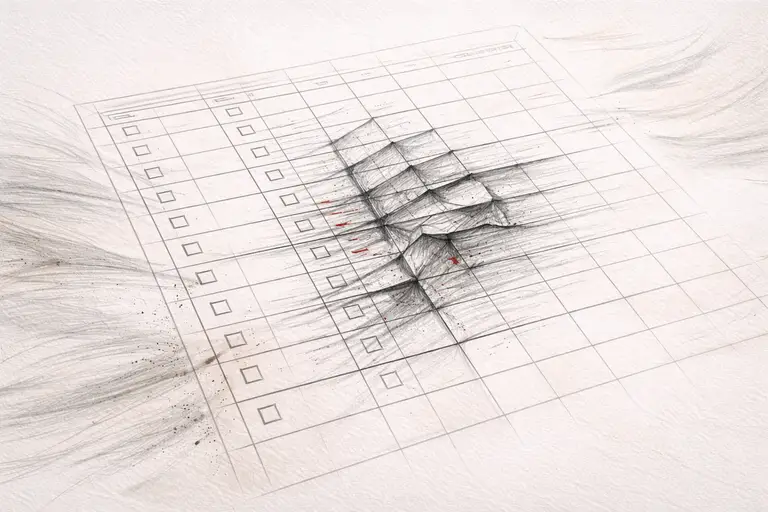
You haven’t been in a classroom in years. Some people — decades. The room keeps assembling itself anyway.
This is the most universally reported dream across all demographics, all cultures, all age groups. People who loved school have it. People who never struggled academically have it most intensely during their most successful professional periods. The seventy-year-old whose last exam was fifty years ago has the same dream as the graduate student sitting in the actual exam room this Thursday.
That distribution tells you everything. If this were about school, it would cluster around students. It doesn’t.
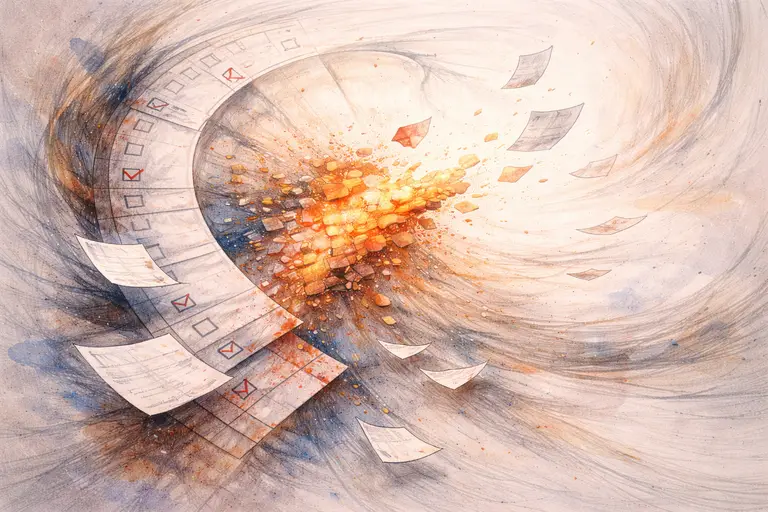
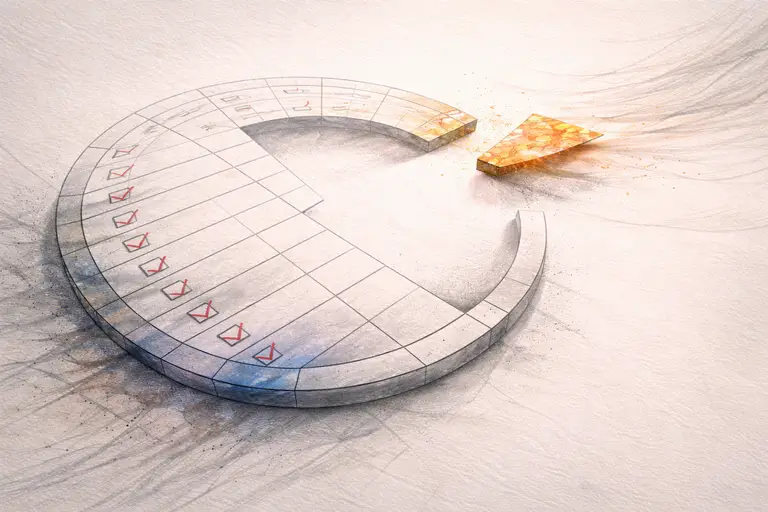
The exam room is the brain’s most efficient available image for a specific emotional combination: external measurement by someone whose assessment carries real consequences, preparation that may or may not be sufficient, a standard you didn’t set, and a verdict that hasn’t been delivered yet. School built that template over years of daily repetition. When adult life generates the same combination — a performance review, a professional transition, a relationship where what you actually are is being quietly evaluated, an internal standard you keep not meeting — the brain reaches for the most concentrated available image it has. The room assembles. The clock appears. The paper is face-down.
The dream was never about school. School was just where the architecture was built.
Quick Answer
- The exam dream processes a current evaluation situation — not a school memory; its universality across age groups is the clearest evidence of this
- Rosalind Cartwright’s three decades of dream research at Rush University established why it recurs: the dreaming brain returns each night to emotionally unresolved material; the dream stops when the waking evaluation resolves, not when you understand the dream
- The brain cannot distinguish social-status threat from physical threat at the amygdala level — Robert Sapolsky’s research documents this precisely; the physiological intensity of the exam dream is neurologically proportional, not dramatic
- Joseph LeDoux’s two-pathway model explains the blank mind: the fast amygdala alarm route can close the hippocampal retrieval pathway under evaluation pressure; the knowing is there; the alarm came for the bridge
- The specific scenario the dream generates — blank paper, running out of time, teacher watching, forgetting everything — is always diagnostic; the version tells you which dimension of the current evaluation is most active
- The dream appears most intensely not in people who are incompetent but in capable, invested people under genuine sustained evaluation pressure — because capability under threat is what the system was built to process
- Matthew Lieberman’s research in Social established that the human brain devotes more computational resource to social cognition than to any other domain; being formally evaluated by someone with authority is processed as a survival-relevant event, not a social discomfort
- Naomi Eisenberger’s 2003 paper in Science showed that social rejection activates the same neural pathways as physical pain; the racing heart you wake with is accurate physiology, not exaggeration
- The recurring version tracks the ongoing state: the dream returns every night the waking evaluation is unresolved; understanding it intellectually does not stop it
- The version you’re having right now has a specific address in your waking life — and it arrived before deliberate analysis, which means the brain already knew exactly what it was about
Common Scenarios
You didn’t study and you know it before you sit down. The only exam dream where the outcome is certain before the paper arrives. Not anxiety — recognition. You’re carrying a real gap into a room that will reveal it. This is the most honest version and the one that requires the most direct response: not anxiety management but the actual closing of the distance between what’s required and what you currently have.
You studied but can’t remember anything. The most exhausting version and the one that most needs the neurological explanation. The preparation was real. The effort was genuine. And at the moment of required delivery, nothing comes. Not because the knowledge left — because LeDoux’s fast amygdala pathway closed the hippocampal retrieval route under the pressure of the evaluation conditions. The knowing is in storage. The alarm came for the bridge. These are different problems, and conflating them — treating it as evidence of incapability rather than access disruption — is the interpretation error that makes this dream most corrosive.
The paper is blank — no questions. Everyone else is writing. The framework was distributed and yours is missing. Mark Solms’ predictive processing model explains the specific distress: the brain generates strong prediction errors when expected input doesn’t arrive. In waking life: the role where the standard was never clearly stated, the expectation that exists and hasn’t been named, the context where “you should know what’s required” is the operating assumption and you don’t.
You write answers that look wrong the moment they exist. Tim Wilson and Jonathan Schooler’s verbal overshadowing research documented this mechanism: conscious monitoring of intuitive production degrades the production itself. The watching makes the output worse. The judge has been installed — by a manager, a parent, a partner — and now runs faster than the producing system, condemning output before it can be submitted. This dream has a specific person at its source, and that person is almost always identifiable.
Time runs out. The demand exceeded the available resource. The material was there, the effort was real, the window closed before delivery could complete. Sapolsky’s research on sustained stress and the prefrontal cortex explains why urgency undermines the very capacity it was supposed to activate. The solution is structural — change the ratio of demand to available time — not motivational.
A teacher watches. Not just failure — failure converted into evidence. Eisenberger’s social pain research: the dorsal anterior cingulate cortex processes being negatively evaluated by someone with relational authority at the same intensity as physical pain. The face the brain assembled in the dream was never random. It came from the specific current person whose assessment carries the most consequential weight. Find the face.
What Your Body Already Knows
The racing heart that had already settled before you were fully awake — that was the completion of a genuine physiological response, not a simulation. The body processed a survival-level threat throughout the dream period, and the cortisol, cardiovascular activation, and stress-hormone cascade were real biological events. What persists on waking is the metabolic residue.
The immediate identification of the waking situation before any analysis — the professional context, the relationship, the project — arrived first because the dream had a precise address. The brain does not generate the most elaborate available symbol for a vague discomfort. It reaches for the exam room specifically because the waking situation is specific.
The specific quality of the failure that remains — the shame of exposure, the hollow of the missed window, the quiet erosion of effort that didn’t translate — tells you which version you were having. Each has its own somatic signature. The shame quality belongs to the watched-failure versions. The hollow belongs to the missing-exam versions. The erosion belongs to the prepared-and-still-failed versions. What the body is carrying when you wake is the most honest available diagnostic.
What I Found After Five Years
When I started working on what became Oneirox, the exam dream was the first one I spent serious time with. Not because it was the most dramatic — the death dream carries more obvious weight — but because of the distribution problem. Every person I spoke with had it. The sixty-year-old accountant. The college dropout. The person who graduated with honours and never struggled once.
The universality was the question that wouldn’t leave me alone.
Rosalind Cartwright’s The Twenty-Four Hour Mind was where the answer started. Her longitudinal work tracking dream content through waking-life transitions — following divorced adults through depression and recovery, watching how their dreams changed as their lives changed — established something that reordered everything: the dreaming brain processes the current emotional state with specificity. Not memories. Not fears in the abstract. The actual ongoing emotional condition of the current life. The exam dream recurs because the evaluation situation it’s built from hasn’t resolved. Each morning reloads the charge. Each night the REM system begins processing it again.
Matthew Walker’s Why We Sleep clarified what REM is actually doing during that processing — not replaying the emotional content but attempting to integrate it, to strip the charge from the memory while preserving what matters. The dream keeps coming because the waking situation keeps providing more charge than the overnight processing can fully integrate.
LeDoux’s The Emotional Brain explained the blank mind — which I had read as the dream’s most dramatic feature until I understood it as its most neurologically precise one. The two-pathway model: the fast amygdala route fires before the cortical assessment completes, and at sufficient intensity, closes the hippocampal retrieval route. The knowing is genuinely there. The alarm system, designed to protect the person from threat, closes access to the very resource the threatened person needs. Not a malfunction — a miscalibration between the alarm’s activation threshold and the actual nature of the threat.
Sapolsky’s Behave gave me the social hierarchy dimension. The amygdala cannot distinguish between status threat and physical threat. Being found inadequate in a formal evaluation activates the same cascade as physical danger — because, in the evolutionary environment where this system was built, those two things had the same consequences. The exam dream is physiologically accurate. The body is not overreacting. It is responding correctly to what the brain is classifying as genuine threat.
Lieberman’s Social and Eisenberger’s research added the social pain layer — why the watching figure in the dream carries more weight than everything on the paper, why the sound of other students writing is the detail people remember most vividly. The human brain’s social cognition architecture is its largest and most metabolically expensive system. Being formally assessed by someone with authority over your standing is processed as a survival-level event. The dream is not being dramatic. It is being accurate about what the brain is doing.
You sit down. The paper is face-down. The specific clarity of knowing what’s about to happen — the assessment is imminent, the preparation has been whatever it has been, the gap between what you have and what will be required is about to become visible — has its own physical texture. Not fear exactly. The specific quality of a moment before measurement, when nothing can be changed and the measurement is going to happen regardless.
The Version You’re Having — A Diagnostic Map
The brain selects the scenario precisely. Which version appears tells you which dimension of the current evaluation is most active.
Prepared and failed → the effort-outcome mechanism broke down; Seligman’s learned helplessness territory; more effort in the same direction won’t help → Failing the Test You Prepared For
Forgot everything → LeDoux’s bridge was closed by the alarm; Sapolsky’s cortisol impaired retrieval; the material is there; the conditions disrupted access → Forgetting Everything in an Exam Dream
Blank paper → Solms’ prediction error; the framework was never provided; someone was responsible for stating the criteria and didn’t → A Blank Exam Paper in a Dream
Wrote wrong answers → Wilson and Schooler’s overshadowing; Clance’s installed judge; whose voice arrives the moment you produce something → Writing Wrong Answers in a Dream
Ran out of time → demand exceeded resource; Sapolsky’s cortisol undermined executive planning; structural solution required → Running Out of Time in an Exam Dream
Arrived late → behind-while-evaluated is the ongoing condition; Cartwright’s research; the hallway keeps extending because the gap keeps not closing → Being Late for an Exam in a Dream
Teacher watching → Eisenberger’s social pain; Lieberman’s social brain; the face was specifically assembled; find who it was → A Teacher Watching You Fail in a Dream
Didn’t know anything → LeDoux’s fast pathway disrupted the bridge; the knowing existed in the hallway and disappeared in the room → Not Knowing Answers in a Test Dream
Missed it entirely → Kahneman’s loss aversion; Zeigarnik’s incomplete loop; the most structurally different dream in the cluster — not failure but absence → Missing an Exam in a Dream
Knew the gap before arriving → Bandura’s developmental zone; Clance’s impostor phenomenon as contrast; the honest version — real gap, real room → Being Unprepared for an Exam in a Dream
Dream Timestamp
This dream arrives when the waking evaluation structure has been active long enough that nightly REM processing cannot complete the integration before the next day reloads the charge. It appears during sustained periods of genuine evaluation pressure — not before a single deadline, but during the extended condition of being-measured-and-uncertain.
The first occurrence tends to correspond to the evaluation approaching its most acute moment. The recurring version tracks the ongoing unresolved state. The version that changes — shifts from blank paper to time pressure to teacher watching — is the brain updating its processing as different dimensions of the evaluation become more salient.
The dream stops when one of two things happens: the evaluation resolves and the uncertainty ends, or the waking situation changes in a way that removes the evaluation structure entirely. Managing anxiety about the dream does not stop it. What built the dream is what needs to change.
The Sentence This Dream Was Trying to Say
“Something in my current life has the complete structure of formal evaluation — external measurement, real stakes, preparation that may or may not be sufficient, a verdict still pending — and my brain assembled the clearest available image for what that feels like from the inside.”
The Morning After
The clock is whatever time it actually is. The room is wherever you actually woke up.
One question before the day covers it: which version was it — and what does that version specifically point at?
Not the dream’s exam. The current evaluation. The specific situation whose emotional architecture the brain was processing. It arrived in consciousness before deliberate thought, which means it was already known. The dream just made it impossible to avoid for the length of the night.
The exam room was borrowed. What it was built from was not.
FAQ
Because academic success is irrelevant to this dream. The exam room is the brain’s image for formal evaluation with stakes — it reaches for it when current life generates that combination, regardless of what your actual academic history was. In many cases, people who performed well academically have this dream more intensely in professional contexts precisely because they’ve internalized the expectation of performing well under assessment. The dream tracks the current evaluation pressure, not the historical one.
In a specific sense: the dream reflects genuine investment. It appears in people who care about the outcome of the evaluation it’s processing. Someone who is genuinely indifferent to a performance review or professional assessment doesn’t generate this level of alarm activation. The intensity corresponds to the stakes — which are only high if the result actually matters to you. The dream is evidence of investment, even when investment is uncomfortable to carry.
Because the dream is processing something real, and the awareness that it’s a dream doesn’t change what it’s processing. The relief of “it’s just a dream” is accurate about the exam — the actual exam isn’t real. It’s not accurate about the waking evaluation the dream was built from. The brain returns to the room because the evaluation is ongoing. The lucid awareness doesn’t resolve the emotional charge, and the next night’s REM will likely return to the same territory.
Because that specific exam carries the emotional template the brain needs. The brain selects the evaluation memory that most closely matches the emotional structure of the current situation — same kind of stakes, same type of external evaluator, same quality of preparation uncertainty. The specific historical exam that keeps appearing isn’t necessarily the most important academic moment you had. It’s the one whose emotional architecture most precisely matches what the current life is generating.
Success often raises the stakes of the next evaluation. After a significant achievement, the expected level of performance increases — the professional bar moves, the relational expectation shifts, the internal standard adjusts upward. The dream can appear specifically after success because the new altitude makes the next potential fall more consequential. The evaluation pressure didn’t decrease with the success; it recalibrated to the new position.
Not the same dream — but the same dream category triggered by the same shared evaluation pressure. If you and your partner are both navigating a shared high-stakes situation — a major financial decision, a relational transition, a period of significant external scrutiny — both nervous systems can generate the evaluation-anxiety dream simultaneously. The specific versions will differ because the specific fears are individual. The shared template is the exam room. What each person’s brain puts in it corresponds to their particular relationship with the shared pressure.
Next Stages
Being Unprepared for an Exam — The Gap You Already Knew Was Real — the only version where the gap is known before the exam begins — not anxiety about being found out, but the specific experience of carrying a real developmental gap into a room that will reveal it; Bandura’s self-efficacy zone and Clance’s impostor phenomenon as contrast
Forgetting Everything in an Exam — The Betrayal That Comes From Inside — when the preparation was real and the access failed anyway; LeDoux’s amygdala pathway closed the bridge to the hippocampus; Sapolsky’s cortisol disrupted the retrieval; the material is in storage and the alarm came for the route to it
Running Out of Time — When What’s Required Exceeds What’s Available — the resource version — capability present, effort genuine, window closing before delivery completes; why Sapolsky’s cortisol undermines the executive planning needed to use the available time efficiently, and why trying harder makes it worse
Writing Wrong Answers — When the Problem Isn’t What You Know — the self-disconfirmation version — the answer exists, the access is working, and the internal judge finds the output wrong before it can be submitted; Wilson and Schooler’s verbal overshadowing; whose voice was installed and when
A Blank Exam Paper — When Performance Is Expected Without Terms — the missing-framework version — not the absence of answers but the absence of questions; the specific stillness of readiness with no target; Solms’ prediction error and the sound of everyone else writing
A Teacher Watching You Fail — When Failure Becomes Evidence — when failure acquires an observer who converts it into a verdict about what you are; Eisenberger’s social pain research; the face the brain assembled was never randomly chosen — find who it was
Not Knowing Answers in a Test — When the Mind Goes Blank on Purpose — the bridge-down version — the knowing existed in the hallway and disappeared in the room; LeDoux’s fast pathway and what it does to retrieval under evaluation pressure; the knowing-that-you-knew on waking is the clearest signal
Missing an Exam — The Window That Closed While You Were Somewhere Else — the most structurally different dream in the cluster — not failure at the evaluation but absence from it; Kahneman’s loss aversion explains why missing feels worse than failing of equivalent stakes; Zeigarnik’s incomplete loop and what finally closes it
Being Late for an Exam — The Hallway That Keeps Extending — the position-gap version — still inside the window, behind before the exam began, the corridor generating more length than movement closes; Cartwright on the behind-while-evaluated condition and why the dream tracks it precisely
Failing the Test You Prepared For — When Effort and Outcome Stop Speaking to Each Other — the non-contingency version — the preparation was real, the effort was genuine, the outcome failed anyway; Seligman’s learned helplessness and the specific quiet erosion that follows when effort stops translating into results