Not Knowing Answers in a Test Dream — When the Mind Goes Blank on Purpose
The question is in front of you. You read it carefully. You read it again.
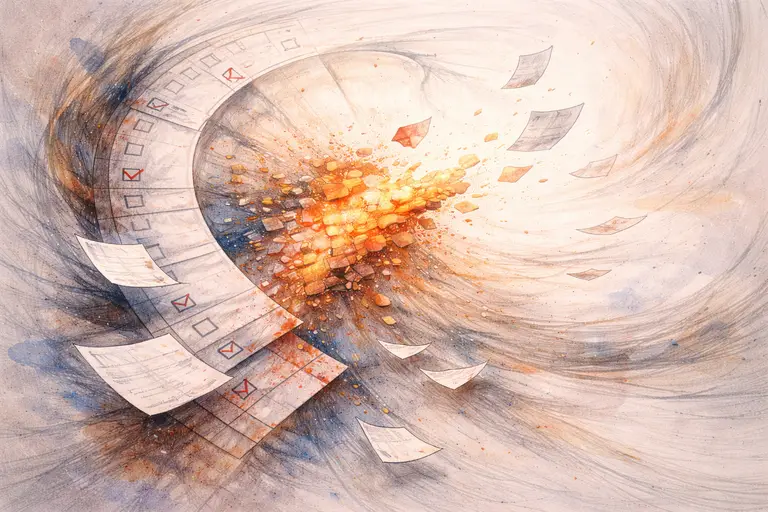
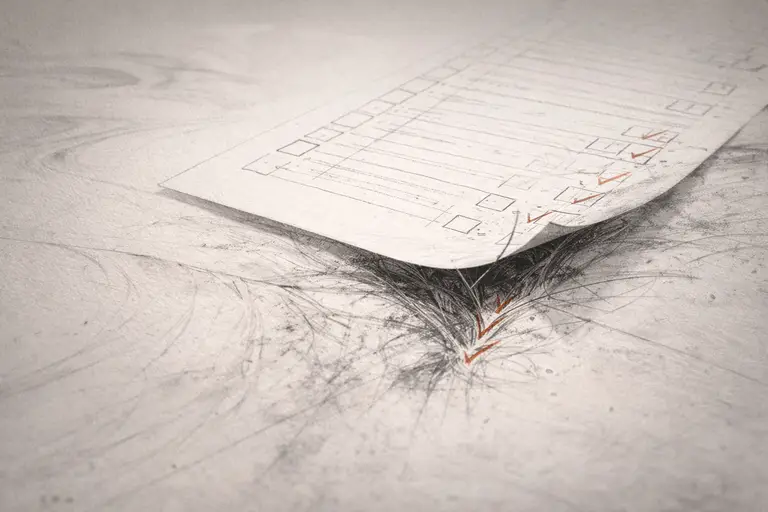
The words are clear. The sentence makes sense. What the sentence is asking for is completely accessible to you as a question. And the answer — the information that was in you, that you reviewed, that existed in you with the specific density of real preparation — isn’t coming. You look at the paper. The paper looks back. The mechanism that usually connects question to answer has gone somewhere you can’t follow.
The pen is in your hand. The pen has no instructions.
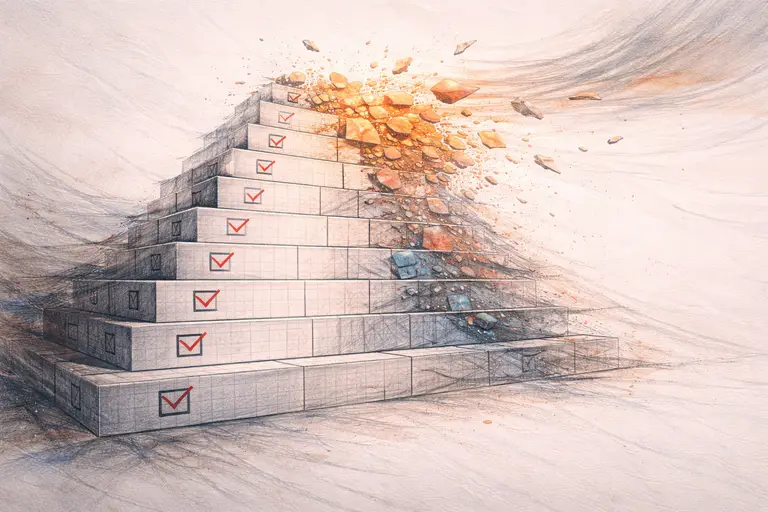
What distinguishes this dream from every other blank-mind scenario in the cluster is its specific structure. In the forgetting dream, the material vanished. In the blank-paper dream, the question was never there. In the unprepared dream, the knowledge was genuinely absent. This dream removes none of those things. The question exists. The knowledge exists. The bridge between them is what has been taken down — and not by chance, and not by failure of memory. By the specific conditions of being watched while being required to produce.
I’ve spent years sitting with this dream and the people who have it, and the pattern is consistent enough to say directly: this is not the dream of someone who doesn’t know. This is the dream of someone whose knowing becomes inaccessible precisely when they most need to demonstrate it. The capability is there. The evaluation conditions are what’s doing the interrupting.
The dream is being neurologically specific about what happens to the prefrontal cortex under sufficient evaluation pressure. Joseph LeDoux’s research on the amygdala’s fast pathway established the mechanism: when the social threat alarm fires — being evaluated and found lacking by someone with relational authority — it can activate before the cortical retrieval process completes, effectively closing the access route mid-reach. The knowing was there. The alarm came for the bridge.
Quick Answer
- This dream is specifically about access failure under evaluation conditions — not absence of knowledge, not failure of preparation, but the interruption of the mechanism connecting what you know to your ability to demonstrate it under the specific conditions of being watched and measured
- Joseph LeDoux’s research on the amygdala’s two-pathway system explains the mechanism: the fast subcortical alarm route can activate under high-stakes social evaluation before the cortical retrieval process completes — effectively closing the hippocampal access route while the material is still in storage; the alarm came for the bridge, not the knowledge itself
- Robert Sapolsky’s glucocorticoid research adds the physiological layer: cortisol released under evaluation stress specifically impairs prefrontal cortex function — working memory capacity decreases, retrieval reliability drops, and the executive processes required to produce clear answers under time pressure are precisely the ones most affected; the stress response is impairing the capacities it was supposed to mobilize
- The distinction from every other blank-mind dream is structural: forgetting removes the material from storage; blank paper removes the question; this dream leaves both material and question intact and removes only the bridge between them under the specific condition of observation
- Daniel Kahneman’s System 2 framework helps locate the failure precisely: System 2 — the deliberate, effortful retrieval process — is the one that operates under evaluation pressure, and it is also the one most vulnerable to interference from the stress response; the automatic System 1 knowing exists and cannot be demonstrated through System 2’s compromised pathways
- “Other students writing” is the detail that carries the most psychological weight — not the blank page but everyone else’s pages that aren’t blank; the comparative isolation is the dream’s specific image for struggling in a way that appears unique to you inside a shared evaluation
- When you write something and it looks completely wrong the moment it exists, the interference is active during production, not just retrieval — the evaluating system is running simultaneously with the producing system and finding the output wrong before it’s finished
- When you raise your hand and the teacher doesn’t see, every resolution channel has been closed — not just the primary failure but the fallback has also failed; this version corresponds to situations where neither performance nor the request for accommodation is accessible
- The recurring version means evaluation pressure in the waking life has been sustained at the level that generates this specific interference — not one high-stakes moment but a sustained period of high-visibility performance demands
- The dream stops when the activation level of the stress response during evaluation conditions reduces to the range where prefrontal function is no longer being impaired — not by studying more but by reducing the alarm that’s closing the access route
Common Scenarios
You read the question repeatedly and nothing comes. The foundational version. The question is clear — you understand it — and the direction toward the answer keeps returning empty. This is the dream’s purest image for the specific experience of the bridge being down: the departure is clear, the destination was known, the path between them has been removed by exactly the conditions that required you to take it. In waking life: the presentation you’ve delivered successfully before that became inaccessible in the room that mattered. The answer that was clear in the hallway that disappeared at the table.
You write something and it looks wrong the moment it exists. The production-interference version. You’re not blank — you’re producing. The output is appearing on the page. And the moment it appears, something in you finds it inadequate in a way you can’t fix by writing more. The interference is running during production, not just retrieval: the evaluating system and the producing system are operating simultaneously, and the evaluating system is rendering the output wrong faster than the producing system can generate it. This version maps the experience of performing while the internal critic runs at maximum — where every sentence is condemned as it’s written.
Everyone else is writing and you’re the only one not. The isolation version. Not just the blank page — the sound of other pens. The room has a sound that functioning performance produces, and you are the only absence in that sound. The comparative dimension is the specific content: not struggling in general, but struggling in a way that is uniquely yours inside a shared context. In waking life: the meeting where everyone else seems to have context that wasn’t provided to you, the professional context where peers appear comfortable with something you find difficult, the social situation where ease is apparently universal except in your specific case.
You raise your hand and the teacher doesn’t see. The resolution-blocked version. The primary mechanism has failed — you can’t answer from your own knowledge. The fallback mechanism has also failed — the request for help isn’t being received. Every channel for resolution has been closed simultaneously. This version tends to correspond to waking situations where not only the performance is under pressure but the route to accommodation or acknowledgment of difficulty has also become unavailable — where struggling is both present and invisible to the people who could address it.
You write something and erase it and write the same thing again. The loop version — adjacent to the wrong-answers dream but distinct. The production is happening but cannot find a stable form. The writing-erasing cycle is the motor image of a cognitive state where no output can pass the internal evaluation long enough to remain. In waking life, this maps the specific experience of work that keeps being undone before it can be completed — drafts that get deleted, decisions that get reversed, positions taken and abandoned before anyone else sees them.
The question changes every time you read it. The destabilizing version. The evaluation is moving — you can’t answer because what’s being asked keeps shifting before the answer can arrive. In waking life: evaluation criteria that keep changing, standards that shift before performance can meet them, the feedback that keeps identifying different problems so there’s no stable target to prepare for.
What Your Body Already Knows
Woke up with the hands carrying the residue — the specific tension of having held a pen with no purpose for it → because the motor system was running the writing simulation throughout the dream without receiving the cognitive input that would have given it instructions; the hands were ready, positioned, waiting — and the waiting has its own somatic signature that persists briefly past waking; not effort, not pain, the specific quality of readiness that was never used
Woke up with the dry throat and the faint sweating quality — not fear exactly, something more specifically evaluative → because Sapolsky’s documentation of the social-evaluation stress response identifies a distinct physiological signature from general fear: the cortisol release is real, the heart rate elevation is real, the specific suppression of salivation under this particular stress load produces the dry throat; the body ran the evaluation-threat response throughout the dream and carries it briefly into waking
Woke up with the knowing already present — not the answer, but the certainty that the answer exists somewhere → because the material is in storage; the dream was processing access failure, not absence; and on waking, in the absence of evaluation conditions, the access restored; the specific quality of knowing-that-you-knew is the body’s accurate report that this was never about the knowledge itself
Woke up and the domain where you know what you know but keep not demonstrating it was immediately identifiable → because the exam always had an address; the bridge that was down was always over something real; whatever arrives before deliberate analysis is the waking-life situation where evaluation conditions have been interfering with what you’re actually capable of
Woke up and the first instinct was to test something — to recall a fact, retrieve a piece of information, confirm that access was working → because the retrieval-verification behavior the dream was running extended briefly into waking; the system checking its own function; what you reached for and found is the confirmation that the material is there; what the dream was about was the conditions, not the content
What LeDoux’s Research Means for This Specific Dream
Joseph LeDoux spent decades at NYU documenting the architecture of fear processing in the brain — work collected in The Emotional Brain that changed how neuroscience understands the relationship between threat and cognition.
The finding most directly applicable to the blank-mind dream is the two-pathway system. When a threat signal arrives — including social threat, including the threat of being evaluated and found lacking — it travels simultaneously through two routes. The fast route goes directly to the amygdala via the thalamus, generating an alarm response before the cortex has completed its assessment. The slow route goes through the cortex, producing a more nuanced evaluation of the situation.
Under ordinary evaluation pressure, both pathways operate in sequence and the result is performance anxiety that is manageable. Under high enough social evaluation threat — the specific conditions of being watched by someone whose assessment matters, being required to demonstrate capability publicly, the stakes being high enough that failure carries real consequences — the fast amygdala pathway can activate at an intensity that interferes with the slower cortical pathway’s work. The alarm fires before the retrieval completes. The knowing was there. The alarm came for the access route.
Sapolsky’s glucocorticoid research adds the physiological mechanism: the cortisol released by the alarm suppresses hippocampal function — specifically the retrieval operations the hippocampus mediates — while simultaneously impairing the prefrontal cortex’s working memory and executive function. The stress response that was supposed to sharpen performance has activated at an intensity that is impairing the specific cognitive operations performance requires.
The dream is staging this process spatially and temporally. The question is there. The knowledge is there. The bridge between them — the specific neural operations of retrieval and executive function that translate stored knowledge into produced answers — has been disrupted by exactly the activation that the high-stakes evaluation generated.
This is not a dream about not knowing. It is a dream about what evaluation pressure does to knowing. The distinction is not comfortable, but it is specific, and specificity is what this dream requires.
The question is there. The answer has a location — you can almost feel the shape of where it lives, the surrounding territory of related material that would ordinarily lead you right to it. The location is clear. The path to it has been closed. Not removed — closed. As if a door you’ve walked through a hundred times is, for the duration of this evaluation, locked. You stand outside the door. You know what’s on the other side. The door doesn’t respond to knowing.
Failing an Exam — What Your Brain Is Actually Being Evaluated On maps the full cluster architecture — why the brain reaches for the exam room for evaluation anxiety, and how the specific failure mode that appears tells you precisely which dimension of the evaluation structure is currently active in the waking life.
The Other Students Writing — Why This Detail Matters More Than the Blank Page
When I work with people who have this dream, they consistently remember two things: the blank mind and the sound of other pens. Almost never the specific question. Almost never the room’s specific details. The blank and the sound.
The sound is the comparative dimension of the dream’s content, and it carries more specific psychological weight than the blankness itself.
Not knowing alone is uncomfortable. Not knowing while everyone else demonstrates competence is a different experience — it adds the social layer that Matthew Lieberman’s research at UCLA documented so precisely: the human brain processes comparative social evaluation through the same circuitry as resource threat. Being the only person who can’t produce the answer in a room full of people who can isn’t just uncomfortable. The nervous system processes it as information about social standing and belonging.
The other students writing is the dream’s image for a specific waking experience: the meeting where everyone else seems to have context you weren’t given. The professional situation where peers appear comfortable with something you find difficult — not necessarily because they are, but because their difficulty, if it exists, isn’t producing the visible signal yours is. The social context where ease appears universal and your specific difficulty appears to be the exception.
What makes this the most loaded detail in the dream is the isolation it produces: not the isolation of being alone, but of being the only exception inside a shared situation. The room is full. The exam is happening. The performance is occurring. And you are the only person for whom the mechanism isn’t working in the way the mechanism is supposed to work.
In waking life, this comparative isolation is the specific quality of certain evaluation environments — where not performing visibly marks you as different from a group whose performance is functioning, and the marking itself adds to the interference the marking was created by.
The Knowing That Was There in the Hallway
Here is the most specific version of what this dream is processing, and the one that requires the most honest attention.
You knew it in the hallway. Before you walked in, before you sat down, before the paper appeared — you knew it. The specific information that the question requires, or the capacity the evaluation is measuring, was available to you in the conditions outside the evaluation room. It was accessible, usable, clearly yours. And then the conditions changed — the room, the observation, the stakes, the being-watched — and the access changed with them.
This is the hallway problem. And it is one of the most consistent findings in the psychology of performance: skills and knowledge that function reliably in private, in low-stakes, in ordinary conditions, become unreliable in exactly the conditions that are supposed to be their occasion for demonstration.
Lieberman’s research on the social brain explains part of the mechanism: the brain’s social monitoring system consumes cognitive resource when activated, and it activates strongly under evaluation conditions. The cognitive resource that goes to tracking the observer’s response, managing the impression being made, monitoring for signals of evaluation — all of this is resource that in the hallway was available for the retrieval itself.
The hallway had no observer. The retrieval had the full resource. The room has an observer. The retrieval has whatever’s left after the social monitoring system has taken its share.
What the dream is pointing at: where, in the current waking life, is the knowing that exists in private failing to transfer into demonstrated performance? Where is the hallway knowledge that keeps not making it through the door?
Writing Wrong Answers in a Dream — When the Problem Isn’t What You Know maps the adjacent case — when access works but the output of the access keeps being found wrong; the distinction between the bridge being down (this dream) and the output being doubted the moment it arrives (that one).
Dream Timestamp
This dream arrives when evaluation pressure has been sustained at a level that generates consistent LeDoux-pathway interference with hippocampal retrieval → not after a single high-stakes performance — after enough of them, or a long enough sustained period under evaluative observation, that the alarm-to-retrieval interference has become a pattern; the dream appears after the pattern has established itself in waking life
The others-are-writing version arrives when the comparative dimension has become the primary frame → when the evaluation pressure is specifically social — when the assessment is being made relative to visible peer performance rather than against an abstract standard; when the failure to produce is occurring in a context where production appears to be happening normally for everyone else
The write-and-erase-loop version arrives when the interference has moved from retrieval to production → when the output is being generated and simultaneously condemned; when the evaluating system has become so fast and so present that no production can stabilize long enough to be submitted; this version tends to correspond to perfectionism-under-observation rather than simple access failure
The recurring version means the evaluation conditions generating the interference are ongoing → the alarm that’s closing the access route is still being activated at the level that causes interference; the dream recurs as long as the conditions persist; it stops when the activation level reduces — not when more studying happens but when the alarm is no longer firing at the intensity that closes the bridge
The Sentence This Dream Was Trying to Say
“I have what the question requires — and the evaluation conditions are the specific thing that’s making having it irrelevant to demonstrating it.”
The Morning After
The pen has been set down. The room is ordinary. The knowing is accessible again — it was always there.
Before the day reinstates its conditions: notice the specific quality of the access right now, in the morning, in the absence of evaluation pressure. The material is reachable. The bridge is up. The ordinary mind is functioning at its ordinary level.
Now: where, in the current arrangement of your waking life, does evaluation pressure consistently produce the version of you that was in the exam room — the you who knows and cannot reach what they know? What is the evaluation condition, specifically? What is the observer whose presence activates the alarm that comes for the access route?
The bridge isn’t structurally down. It goes down under specific conditions. The dream identified the conditions. The morning is the time to name them.
FAQ
Access failure under evaluation conditions — not absence of knowledge. The question is there. The knowledge is in storage. The bridge between them has been disrupted by the specific conditions of being observed and evaluated. Joseph LeDoux’s research on the amygdala’s two-pathway system explains the mechanism: high-stakes social evaluation can activate the alarm route at an intensity that closes the hippocampal retrieval pathway before it completes. The knowing was there. The alarm came for the bridge. In waking life: competence that functions reliably in private and becomes inaccessible in the exact conditions designed to demonstrate it.
No — and this is the most important distinction in the cluster. The unprepared dream is about genuine absence of preparation. This dream stages something specific: the knowledge is present and the access to it has been closed by evaluation conditions. Sapolsky’s glucocorticoid research established the mechanism: cortisol released under evaluation stress specifically impairs prefrontal cortex working memory and hippocampal retrieval — the exact faculties required to demonstrate what you know. The dream isn’t saying study more. It’s saying the stress response is impairing the capacities it was supposed to mobilize.
Because the evaluation conditions dissolved when the dream ended. The material was never gone — it was inaccessible under specific conditions. On waking, in the absence of observation, time pressure, and social evaluation threat, the access restores. The specific quality of knowing-that-you-knew on waking is the most honest piece of evidence the dream provides: this was never about the knowledge. The bridge goes down under specific conditions. The morning is what it looks like when those conditions are absent.
Because the dream is encoding the comparative dimension of performance anxiety: the specific experience of struggling inside a shared context where the struggle appears unique to you. Matthew Lieberman’s social brain research establishes why this carries extra weight — the brain processes comparative social evaluation through the same circuitry as resource threat. Being the only person who can’t produce in a room full of people who can carries genuine neurological urgency. Their pens moving isn’t just context — it’s the dream’s image for structural isolation inside apparent shared competence.
The interference has moved from retrieval to production — the evaluating system is running simultaneously with the producing system and finding the output wrong faster than it can be generated. This is adjacent to the writing-wrong-answers dream but distinct: there, the judge was installed by a specific source; here, the judgment is being produced by the evaluation conditions themselves. The output is being condemned by the pressure of the context rather than by an internalized critical voice. Different mechanism, different solution.
By reducing the alarm that’s closing the access route — not by studying more. The dream tracks the activation level of the stress response during evaluation conditions. It stops when that activation level reduces to the range where prefrontal function is no longer being impaired. This means addressing the conditions that are generating the alarm: the specific evaluation context, the specific observer whose presence activates it, the specific stakes that have made the social-evaluation threat high enough to trigger the LeDoux fast pathway at the intensity that closes retrieval. The solution is about the conditions, not the content.
Next Stages
Failing an Exam — What Your Brain Is Actually Being Evaluated On — the pillar — the full evaluation architecture; why the exam room is the brain’s most concentrated symbol for social assessment, and how LeDoux’s social brain research explains the intensity of the alarm
Forgetting Everything in an Exam Dream — The Betrayal That Comes From Inside — the adjacent case — when the material genuinely vanished rather than being blocked; the distinction between the bridge being down and the storage being disrupted
Writing Wrong Answers — When the Problem Isn’t What You Know — the installed-judge version — when the bridge is working but the output of the crossing keeps being found wrong; whose evaluating voice is running and where it came from
A Teacher Watching You Fail — When Failure Becomes Evidence — the observer version — when the blank mind has a face watching it; Eisenberger’s social pain research and why the specific observer in this dream is never randomly assembled