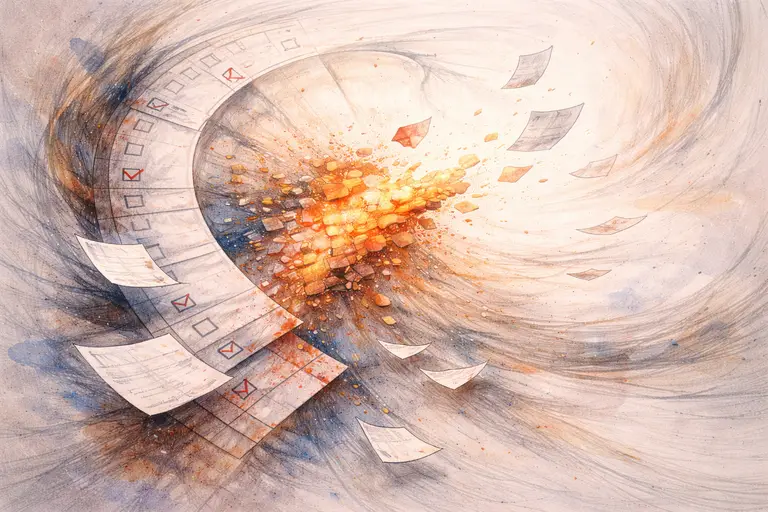
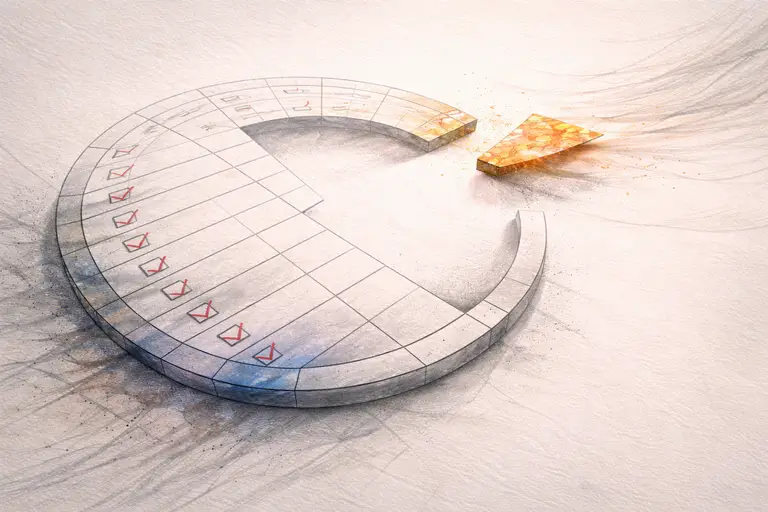
Dream About Losing Exam Paper
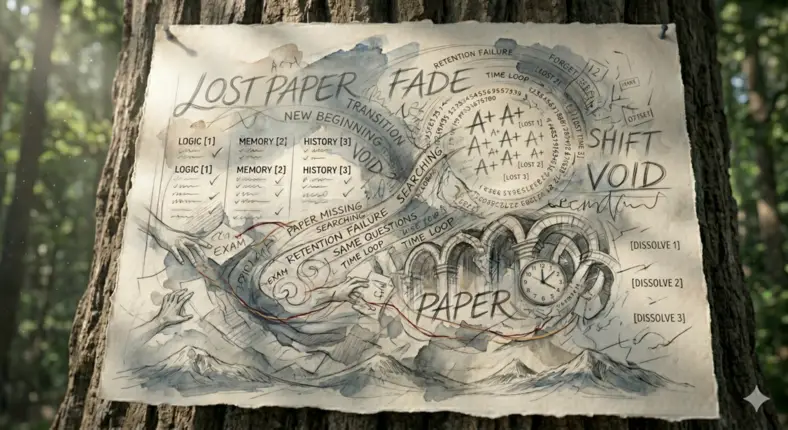
You had it. That’s the part that stays.
Not the failing — you never got to that. Not the blank page, not the wrong answers, not running out of time. You never reached any of it. You had the paper, and then you didn’t, and then the rest of the dream was the search.
The specific frustration of this dream isn’t failure. It’s proximity. You were one step from beginning. In the chair, in the room, pen in hand. Everything that was supposed to get you here was working. The preparation was real. The showing-up was real. And then the thing you needed to start — the single object between you and the ability to demonstrate everything you’d built — was gone.
That’s what this dream is actually saying. Not: you weren’t ready. Not: you couldn’t do it. Specifically: you were ready, you could do it, and the entry point was taken before any of that could be shown.
Quick Answer
- The paper is the entry point — not the test itself, not the grade, but access to beginning
- The obstacle isn’t inside you — something external removed your ability to start
- You’re not broken. You’re blocked. Those are different and the dream knows the difference
- The search is what the dream is actually about — not the loss, but the loop that follows
- This dream surfaces when something in waking life keeps revoking the condition you need before you can act
Common Scenarios
Had it, then didn’t → you were holding it, set it down for one moment, looked back and it was gone; the impossibility of that interval runs through the whole dream like static
It never arrived → everyone else received theirs; the stack came and stopped one desk short; you wait, raise a hand, nothing happens; the clock starts without you
Found it, lost it again → you track it down — under something, in the wrong pocket — and for one second everything is fine, and then your hands are empty again; the recovery resets before it means anything
Something, but wrong → another subject, blank sheets, someone else’s name; you’re holding paper but it isn’t yours; almost-but-not-quite is harder to process than pure absence because you can’t even start the right search
What Your Body Already Knows
The hands are what stay.
Long after the dream, before you’ve analyzed anything — your hands still remember moving. Through the bag, under the desk, through pockets you already checked twice. That searching motion: automatic, systematic, completely impotent.
There’s a specific quality to this that isn’t panic. Panic is sharp. This is pressured and continuous. Your system was fully primed to perform and had nowhere to put that charge. The readiness had to go somewhere, so it went into the search. And the search went on. The body ran the full activation sequence and never got the resolution that performance would have brought. That’s the specific residue this dream leaves in the chest — not fear, but pressure with no outlet.
You Had It. You Know You Had It.
This is the detail that makes this dream precise.
You didn’t misplace it on the way in. You didn’t forget to bring it. You had it — you can feel the specific certainty of having had it — and then between one moment and the next, it wasn’t there.
That gap is impossible and your brain knows it. Objects don’t disappear from a two-foot radius. The paper you were holding forty seconds ago doesn’t stop existing. But in this dream, it does. And the impossibility of that — the absolute certainty of having had it combined with the absolute absence of it — generates a very specific kind of cognitive distress that nothing else produces quite this way.
In waking life, this is the experience of access that was present and then revoked. Not something you never had. Not something you lost through negligence. Something that was genuinely yours — a role, an opportunity, an agreement, a resource — that ceased to be available through no logic that traces back to anything you did.
The certainty of having had it is what makes this worse than never having had it at all.
Recognition Without Exit
You’ve been here before.
Not just in other dreams. In this quality of situation — ready with nowhere to put the readiness, searching for something with no good reason for being missing, stuck while everyone else is already three pages in.
You recognize this. Not déjà vu — actual, specific recognition. The shape of this experience lives in you because you’ve lived a version of it in waking life. The project that stalled at the entry point. The approval that was almost there and then moved. The situation that reset to zero after you’d covered most of the distance.
You sit down and something in your chest goes quiet — not because you’re calm, but because you know what’s coming. And knowing doesn’t help. That’s the specific thing this dream does that ordinary nightmare logic doesn’t account for: understanding the pattern doesn’t release you from it. You can see exactly what’s happening, name it clearly, watch it from a slight remove — and you’re still in the chair, still searching, still stuck.
Lucid entrapment is its own category of difficulty.
Stuck Is Not the Same as Broken
The dream draws this distinction precisely, and it matters.
The exam nightmares where you don’t know the answers — where the material has gone blank or was never there — are about a gap inside you. The failure has an internal source. The dream has the quality of exposure: being discovered as someone who wasn’t ready.
This dream has none of that. There’s no shame in the interior of it. The feeling is closer to obstruction. A wall. A closed door on a room you have every credential to enter.
You know what you would do if the paper were in your hands. You can feel the shape of what you’d write, the approach you’d take. The capability is intact. The obstacle isn’t your readiness — it’s that the situation has withdrawn the thing you need before any of that capability can be demonstrated.
Stuck looks like broken from the outside. Inside, they feel completely different. When you’re broken, the deficit is yours and the solution points inward. When you’re stuck, the deficit is situational and the solution — if there is one — doesn’t live in you. The dream is making a specific claim: the problem isn’t in you. And that changes what the situation actually requires.
The Loop That Doesn’t Respond to Strategy
You check the desk. Nothing. You check the bag. Nothing. You check the desk again.
There’s nothing new in the desk. You already know that. But you check anyway, because the motion of checking is the only available action, and doing nothing feels worse than doing the wrong thing.
This is what the loop does: it makes effort available and resolution unavailable. You can try harder, be more systematic, approach from different angles — the paper still won’t be there. The loop doesn’t care about method. It doesn’t respond to thoroughness or patience or persistence. The search continues because your system hasn’t found an exit condition and won’t.
In waking life, this is one of the most draining experiences available: sustained effort at something that isn’t responding to effort. Not because you’re doing it wrong. Because the variable that would produce a result isn’t within reach. The bucket has a hole. You keep pouring.
This connects the dream directly to a broader pattern — the situation that keeps repeating regardless of what you adjust because the problem isn’t in the execution. It’s in the structure.
The Room Full of People Who Are Already Past You
No one notices.
The other students are writing. The invigilator has walked past twice without making eye contact. You’re doing something visibly unusual — crouched, searching, motionless while everyone else moves — and you’re completely invisible in your specific crisis.
You could raise your hand. You probably won’t. Because saying it out loud — I lost it, I can’t begin — feels like admitting something that goes beyond the paper. It feels like admitting that something is fundamentally wrong with how you arrived. The paper isn’t the thing. The paper is just the thing you’d have to explain.
So you keep searching. Quietly. Watching the clock from the corner of your eye. While everyone else is past the page you never opened.
This is one of the lonelier qualities of this dream: the problem is invisible and unspeakable simultaneously. The room is full. You are completely alone. The people around you aren’t hostile — they’re just unreachable. Your crisis doesn’t have a language this room can receive.
Dream Timestamp
This dream doesn’t come during acute crisis.
When things are actively collapsing — the relationship ending, the moment of diagnosis, the job disappearing — dreams tend toward rupture and chaos. Things breaking in real time.
This dream comes in the long middle. The stretch where nothing is falling apart, but nothing is moving. The period after you’ve done everything within your control and the situation hasn’t responded. Three weeks into waiting on a decision that should have come already. A project that’s ready but dependent on something upstream that isn’t resolving. A conversation that needs to happen before the next thing can move, and keeps not happening.
The dream marks a specific emotional location: readiness without entry. You are prepared. You are present. The door isn’t open. And there’s no clear indication of when it will be, or what you could do that would change that.
The Psychology Behind It
This dream maps a specific version of activation-blockage that most accounts of frustration don’t isolate cleanly.
Most frameworks focus on inability — you want to do something, you can’t, the gap produces distress. This dream is structurally different: you can do it, you’re entirely capable of doing it, and the obstruction is external to that capability. The system is ready. The entry point is gone.
During waking life, this produces a distinctive strain: readiness without outlet keeps the nervous system activated without the discharge that performance would bring. It doesn’t discharge through more preparation (you’re already prepared). It doesn’t discharge through more effort (effort isn’t the variable). It doesn’t discharge through waiting (waiting is the problem).
This dream belongs to the same territory as exam failure dreams broadly, but marks the specific variant where the failure isn’t about you. The block is external. The question the dream is asking isn’t whether you’re capable. It’s why the entry point keeps not being there.
The Sentence This Dream Was Trying to Say
You were fully ready. Access was revoked before readiness was ever asked to prove itself.
The Morning After
The hands have stopped searching. The ordinary mind is running at its ordinary level.
Before the day covers it: there is something specific you’re waiting on right now. Not a vague feeling of being stuck — something concrete. A decision. An approval. A conversation that hasn’t happened. A situation that was supposed to open and hasn’t. You’ve been ready for it. You’ve been ready for it for a while.
The dream is asking a precise question: is the door actually closed by something outside your control — or have you been standing at the wrong door, waiting for access that isn’t how entry works in this particular situation?
Sometimes the door is genuinely blocked and waiting is the only honest response. Sometimes the wait has become the default not because the door is locked, but because waiting feels safer than finding the other entrance.
The dream doesn’t answer that. It just shows you how long your readiness has been sitting unused — and leaves the question of why in your hands.
FAQ
What does it mean to dream about losing your exam paper? It means something external is blocking you from beginning — not because you’re unprepared, but because the access you need to act keeps being unavailable. The paper represents whatever condition must be met before your capability can be used: an approval, a resource, a decision someone else hasn’t made, a conversation that hasn’t happened. The dream is precise about where the obstruction lives: outside you, not inside.
Why does searching harder never work in the dream? Because the dream isn’t about the paper. It’s about a waking situation where the variable that would produce resolution isn’t within your reach. No amount of thorough searching finds something that isn’t there to be found. The loop continues because the system needs an exit condition, and the exit condition isn’t available.
What does it mean if I find it and then lose it again? That cycling quality — recovery that immediately resets — maps a specific waking pattern: situations where forward movement keeps being reversed before it consolidates, where brief improvements return to the same stuck point. The loop tends to appear when a real-life situation has the same structure: not progressive failure, but circular failure.
Is this the same as dreaming about being unprepared? No, and the difference matters. In the unprepared exam dream, the gap is internal — the problem is in the preparation itself. In this dream, the preparation is intact. You were ready. The obstacle is the revocation of access, not the absence of readiness. Different problem. Different waking-life correspondent. Different kind of solution.
Why does this dream feel more isolating than other exam nightmares? Because the problem is invisible. In a dream where you don’t know the answers, you’re failing at the same thing everyone else is attempting. In this dream, your crisis has no external evidence. You look exactly like someone who should be fine. The isolation isn’t from having people nearby who can’t help — it’s from having a problem that can’t be named in a room that has no category for it.
Next Stages
If losing the paper collapsed into the clock running out — if the search ate all the time → when blockage and deadline merge, the pressure compounds in its own specific way: dream about running out of time in exam
If the paper eventually arrived but the failure came anyway — if having it didn’t fix the outcome → the obstacle shifted from access to something deeper: dream about failing a test you studied for
If the deeper feeling was never having been ready to begin with — if the loss felt like confirmation of something you already suspected → the angle isn’t blocked access but original absence: dream about being unprepared for an exam